
STURBRIDGE — From Maine to Connecticut and every state in-between, local sugar shacks and farms are starting to tap maple trees, collect sap, and boil it down into maple syrup.
It is maple sugaring season in New England, which often runs from February through early April, and one farm participating in the longtime tradition is Old Sturbridge Village.
The largest outdoor history museum in the Northeast — which depicts a rural New England town of the early 19th century with its more than 40 historic buildings — is also a working farm.
“We have been holding Maple Days at the Village for at least the last 50 years as an effort to expand our story,” said Rhys Simmons, director of interpretation at Old Sturbridge Village, in an interview with The Republican.
In the early days of the museum, the focus was on sharing old items collected by the Wells family, who founded Old Sturbridge Village. But around the 1970s, Simmons said, the village shifted into telling the story of a more “full-picture” New England in the 1800s, which included farming.
“So, now what we are doing is trying to highlight the different seasonal parts of life from back then such as sugaring off at this time of the year,” Simmons said.
“At a time when everyone is dying for spring to arrive when our maple trees start to wake up, people are anxious to get outdoors and we are proud to be able to focus on seasonal activities of the time when farmers would have been tapping the trees and collecting maple sap, then boiling it down for sugar,” he added.
As part of Maple Days, which will be held Wednesday through Sunday now until March 15, the Village’s working sugar camp demonstrates maple sugaring as it was done in early 19th-century New England.
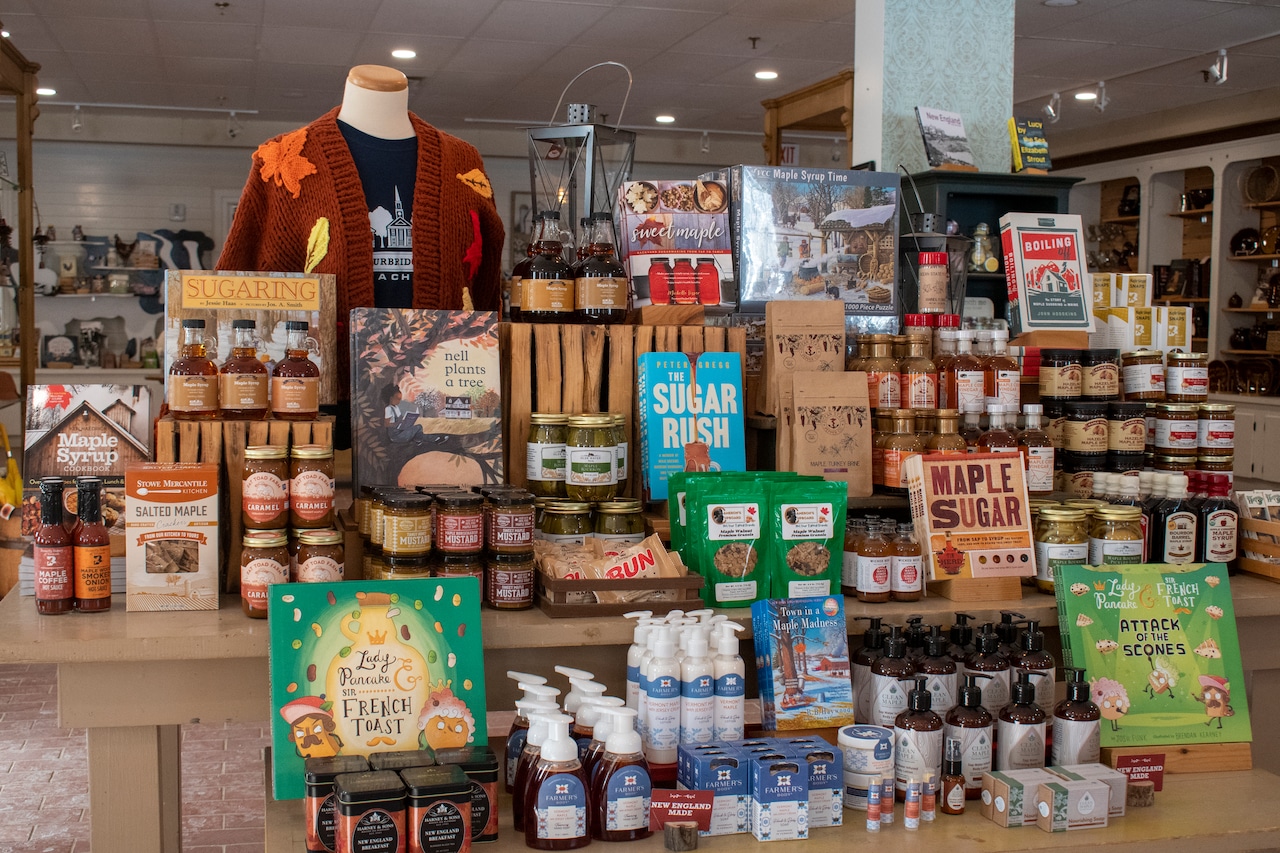
Visitors can watch the entire sugar-making process, from tapping the trees to “sugaring off,” and learn why maple sugar was more commonly used than maple syrup in early New England. Visitors can also watch as costumed historians cook period foods made with maple products, and purchase maple-related products at the Village shop.
Simmons noted this year they have cleared out a new grove near one of the brooks on Powder House Hill, where there are about two dozen maple trees that have not been tapped for several years.
“We are excited to open that space and offer more of a guided tour experience for visitors this year. So, we will be taking people there from our Woodland Walk and once they arrive, they can watch the whole process. They can help to make spiles from sumac, many of which are already in the trees, which are dripping sap into a trough to be collected in buckets and then brought down the hill to six large cast iron kettles at our boiling area near the Cabinetmaking Shop. And it is there that visitors can watch the sap being boiled down into sugar, not syrup that many of us place on our pancakes today,” Simmons said.
From there, visitors can go inside and watch the next steps as sugar is made into loaves and watch costumed interpreters baking goods with that sugar at an open hearth.
“Visitors can stop into the Small House where we will be showing the actual sugaring off process by taking the syrup they are making at our sugar camp and boiling out the extra water content and turning it into actual loaves of granular sugar. These loaves could be kept for the entirely of the year, unlike syrup, which would spoil,” said Marlene Healey, coordinator of the households at Old Sturbridge Village.
She noted that throughout the Village there will be various baking and cooking demonstrations by costumed interpreters showing how that maple sugar – similar to using white or brown sugar that villagers would be buying at the store – would be used in the making of cakes, pies and other goods.
“In conjunction with Maple Days we often make Brooks Cake, a standard cake of the time period like pound cake, which connects to an abolitionary push against using white and brown sugar coming up from the South where it was being made on plantations,” Healey said.
Brooks, who was headmistress of the Concord Female Anti-Slavery Society, baked and sold her signature tea cake to raise funds for the anti-slavery cause, while at the same time bringing attention to how maple sugar could be used to replace white or brown sugar and saving money for other things that could be purchased at the village store. Brooks Cake was served at all Concord anti-slavery meetings.
“I think something people often don’t consider today is that back in the 1830’s time period the focus was on preservation and ensuring that things lasted a long time,” Healey said about maple sugar being used as a preservative, similar to the use of salt, for fruit including jams, jellies and preserves.
“I also think that it is important for people to know that maple sugaring originated with indigenous people and was something that European settlers were learning from them,” she added.
Simmons noted he considers Maple Days at OSV to be an educational experience.
“It is my hope that we can excite people to go home and potentially tap a few of their maple trees and boil the sap collected down to syrup as is more common today. The goal is for them to take that knowledge they experienced at Old Sturbridge Village and do it in a safe way without harming the tree and be able to experience that kind of harvest at home,” he said.
Here are some additional facts on sugaring in New England offered on the OSV website:
- The production of maple syrup is one of only a few agricultural processes in North America that is not a European colonial import.
- Maples are usually tapped beginning between 30 and 40 years of age. Maples can continue to be tapped for sap until they are more than 100 years old.
- Once temperatures stop fluctuating between below-freezing at night and above-freezing during the day, the sap stops flowing.
Current museum hours are 9:30 a.m. to 4 p.m. from Friday through Sunday.
Online tickets, available at osv.org, are $27 for adults 18 and older or $30 at the door, $25 for seniors age 60 and over or $28 at the door, and $12 for youth ages 4-17 or $15 at the door. Kids under 4 are free. Military with an ID is complimentary, including up to five family members.
For more information, visit osv.org or call 800-SEE-1830.