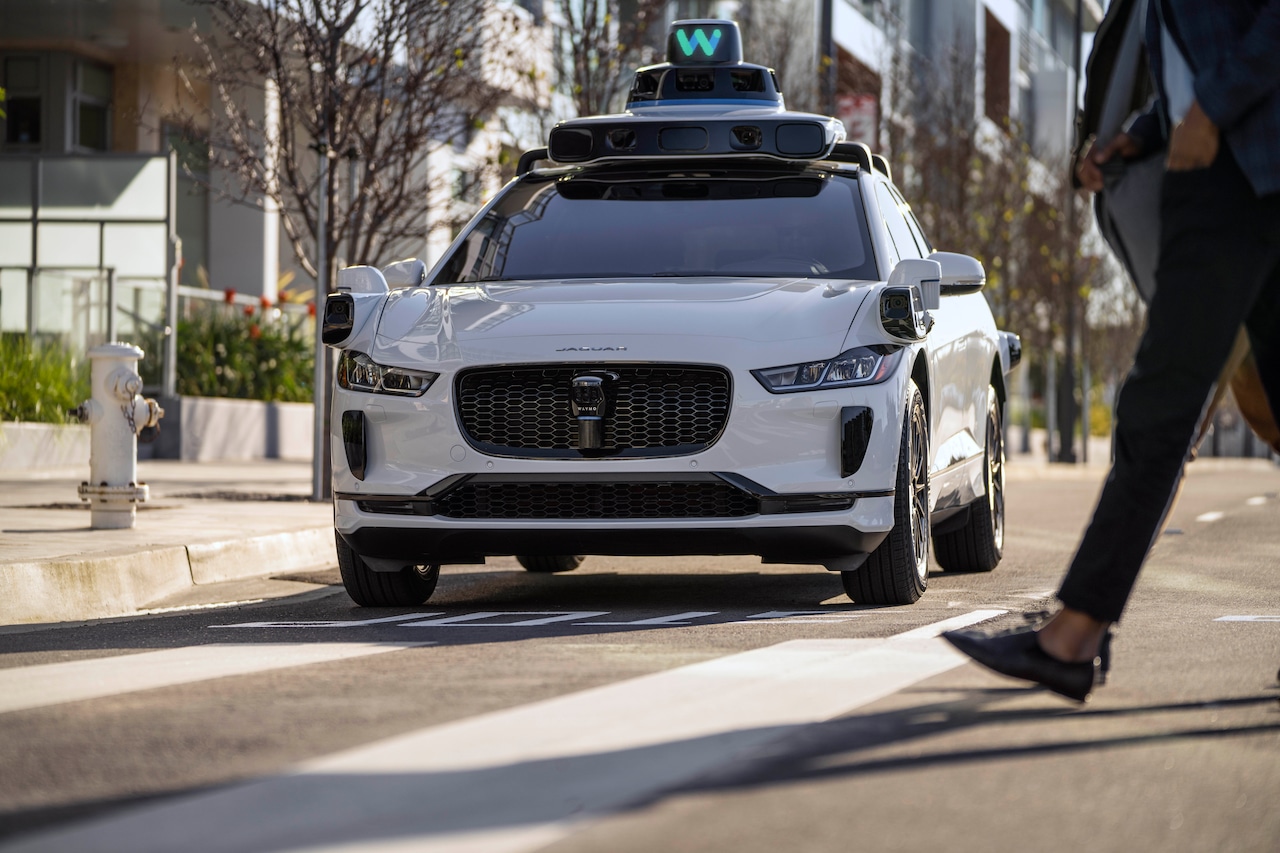
Last week, Waymo announced it had raised $16 billion in fresh capital and that it intends to launch its driverless taxi service in Boston.
Those two things are connected. The Silicon Valley company, which operates vehicles in six U.S. cities, said in a blog post that it hopes to begin “laying the groundwork for ride-hailing operations in over 20 additional cities in 2026, including Tokyo and London.”
In many of those places, laws don’t allow for autonomous cars on the roads, so Waymo will need to spend some of its newly collected cash lobbying elected officials.
Here are five things to know as that process plays out in Massachusetts.
Mass. was an early mover on testing
In 2016, Republican Gov. Charlie Baker issued an executive order to enable companies to start testing autonomous vehicles in the state. Later, the Baker administration worked with cities from Boston west to Worcester to expand the places where companies could test their cars.
This regulatory framework was created primarily for two MIT spin-out companies that wanted to test here: Optimus Ride and nuTonomy (now known as Motional). Waymo, which was founded as a project inside Google in 2009, wasn’t active in Massachusetts during this period.
While nuTonomy and the ride-sharing service Lyft announced in 2017 that they would launch an autonomous service in Boston’s Seaport district, that service actually had two humans in the front seat — a safety driver at the wheel in case something went wrong, and an engineer in the passenger’s seat. That pilot test didn’t lead to a full-scale launch of driverless Lyft service here.
Karl Iagnemma, former nuTonomy CEO, told me last year that the company, now known as Motional, started focusing on Las Vegas because it has better weather, more grid-like streets, and Nevada law allows fully driverless service.
He also quipped: “People tend to follow the rules of the road, and you don’t tend to see as many aggressive drivers as maybe you do in Boston.”
Waymo is already in lobbying mode
Since Waymo will need new laws to enable fully driverless operation in Massachusetts, it launched a campaign of persuasion on Beacon Hill last year, when it had vehicles here on a mapping mission.
Lobbying efforts are being led by New York-based Waymo employees Matt Walsh and Anthony Perez. Perez was in Boston for a meeting of the MIT Mobility Initiative last week. He also joined the board of the Boston nonprofit, A Better City, that seeks to influence policy on transportation, climate, and other issues.
Waymo has also hired two Massachusetts-based firms, Commonwealth Counsel and Issues Management Group, to support its efforts. Waymo spent $330,000 with those two firms in 2025, according to filings with the Secretary of the Commonwealth’s office.
Already lined up against Waymo’s launch here are several unions, including Teamsters Local 25 and a new union representing Uber and Lyft drivers, as well as some Boston city councilors, who last year proposed a ban on driverless service in the city.
Will legislators have first-hand experience?
Some legislators, like state Sen. Barry Finegold, D-2nd Essex and Middlesex, say they’ve had the opportunity to ride in a Waymo in other cities. Others, such as state Rep. Jessica Ann Giannino, D-16th Suffolk, have not.
Waymo spokesperson Ethan Teicher said that the company has in the past invited lawmakers to experience a ride in a Waymo with a human safety driver at the wheel — but that’s not a true representation of the experience the company is trying to get approved. So, Teicher said, “we’re doing less and less of that,” since there’s “cognitive dissonance” in experiencing a so-called driverless vehicle with a person sitting in the driver’s seat.
Several lawmakers didn’t respond to my requests for comment on where they stand with regard to autonomous vehicle legislation. Finegold of Andover, who chairs the legislature’s Joint Committee on Economic Development and Emerging Technologies, said he supports Waymo coming to Massachusetts.
Giannino of Revere, who is a vice chair of the same committee, introduced a bill last year proposing that any vehicle in the state, regardless of its technological capabilities, should have a “human safety operator … physically present.”
Massachusetts “should move carefully and deliberately,” she wrote in an email to MassLive.
“Recent incidents elsewhere underscore why caution is warranted,” she continued. “Federal transportation agencies have been reviewing Waymo’s response to stopped school buses in Texas. … Separately, Waymo’s fleet disruptions during a power outage in San Francisco raised real questions about resiliency and emergency response.”
Public opinion will matter
This leads us to efforts to shape public opinion as bills promoting and opposing autonomous vehicles make their way through the State House.
Michael Goldman, president of the communications consulting firm Goldman Associates, said that Waymo ought to be running a publicity campaign to persuade Massachusetts residents that autonomous vehicles are “a safe mode of transport.”
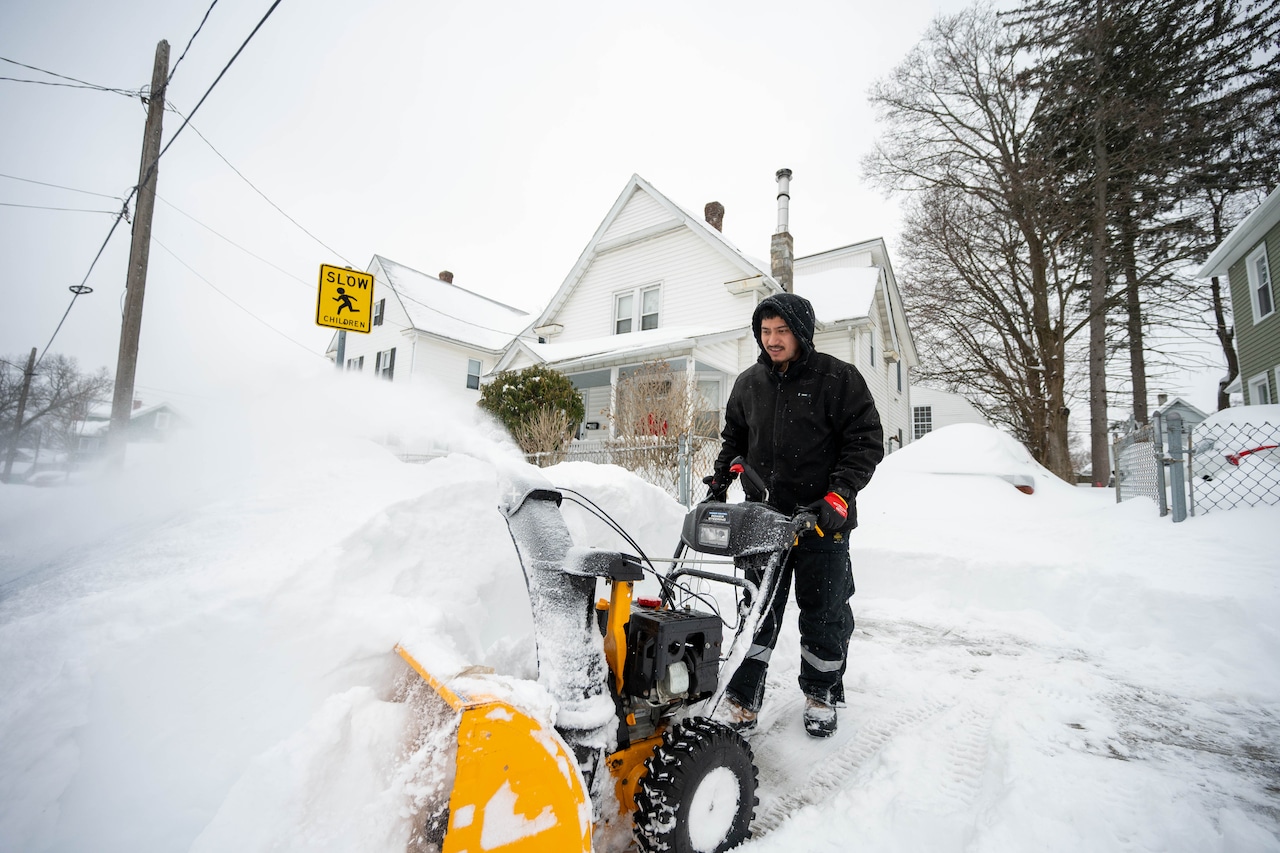
“If they’d come to me a year ago, I’d have said, ‘Spend the next year doing a whole bunch of events — at Boston Garden or Fenway or Foxborough for first games — and show people the driverless cars.’ Do it in the winter, during the biggest snowstorm,” he said.
Things Waymo doesn’t want you to think about
Most people think about Boston’s paved cowpaths and snowy winters when they start considering autonomous vehicles operating here. But two things that aren’t talked about enough are that Waymos waiting for their next ride will either drive around the city, adding to traffic, or park in metered spots, as they do in San Francisco.
And even though Waymo vehicles do occasionally execute illegal maneuvers, it’s still not entirely clear how a police officer issues them a ticket.
In San Bruno, California, last year, the police pulled over a Waymo that had made an illegal U-turn. But in a Facebook post, the police department noted, “Our citation books don’t have a box for ‘robot.’”
“We can and do receive citations and pay them in the places where we operate,” Waymo’s Teicher writes via email. “State regulators can also suspend (autonomous vehicle) operations for valid safety reasons.”
The Big Questions
There are a few big questions for legislators to consider with regard to Waymo — and potentially future operators of autonomous vehicles here:
• Early data about accident rates over the first seven million miles of travel without safety drivers, analyzed by Waymo, found that the rate of crashes that cause injuries is 85% lower when the computer is at the wheel, compared with a human driver.
• There is very little data about Waymo operation in winter weather. What should legislators reasonably expect to see in order to understand how safe they are — and their impact on traffic — in snowy or icy conditions?
• Are the rates of sexual harassment or sexual assault lower in driverless vehicles? Last week, a jury awarded $8.5 million to a woman raped by an Uber driver. Uber has said it will appeal. But Waymo cars have had their own issues, including incidents in which men forced a vehicle carrying a female passenger to stop so they could get in, and men following women to their destinations.
• To what extent do legislators want to protect the jobs of current Uber and Lyft drivers? And is there an environmental benefit to letting Waymo enter the state, given that its entire fleet is electric?
I’d love to hear where you stand on Waymo’s arrival in Boston. Drop me a line at the email address below.