
Ever come home from the beach with a large, painful bug bite? Or perhaps several?
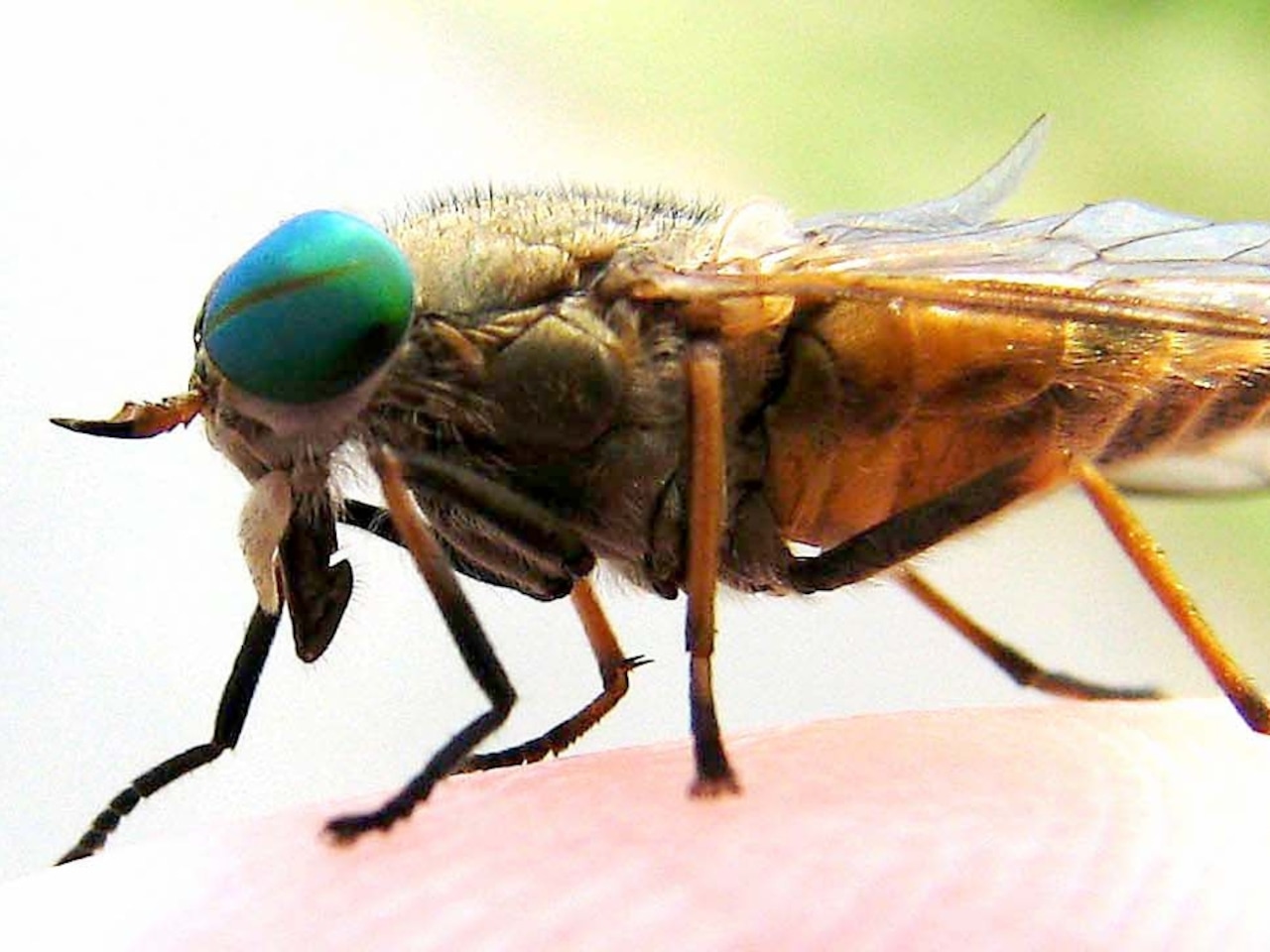
The greenhead fly was probably to blame, and — unfortunately — they are out and about again for the summer season in Massachusetts.
What are greenhead flies?
Greenhead horse flies — whose name is a reference to their large, greenish eyes — are native to the coastal marshes of the northeast, according to the Northeast Massachusetts Mosquito Control and Wetlands Management District. They appear in large numbers each year from June through August, typically peaking in prevalence during late July and early August.
During this time, female greenhead flies seek out “blood meals,” which provide a protein-rich food source that is necessary for their eggs to develop, the management district said. Only female flies of this species are capable of biting larger animals.
Greenhead flies have not been shown to spread disease, so they don’t pose the kind of public health risk that mosquitos do, according to the management district. But unlike many other bloodsucking insects, greenhead flies feed during the day and may fly miles away from their habitat to seek out a blood meal.
They are also more persistent when attacking than other biting flies, the management district said. And since many people have strong allergic reactions to their bite, they often leave big, painful welts.
“As a nuisance and economically, greenhead flies can be very harmful. In Essex County, they affect real estate values, beach use, golfing, outdoor recreation, and so on,” the management district wrote on its website.
What is being done to control their population?
Given how much of a pain greenhead flies are, one might assume that aggressive pest control methods would be warranted to keep their numbers down. But according to the management district, using conventional methods of biting fly control to tamp down on this species’ population comes with outsized environmental and monetary costs.
Because of the large size of both the larva and adult greenhead fly, higher concentrations of toxic pesticides are necessary for effective pest control, according to the management district. This can have a negative effect on other species in the area.
Additionally, trying to target greenhead flies through their habitat, such as by burning coastal marshes, has been found to be ineffective and costly, the management district said.
Furthermore, greenhead fly larvae prey on a variety of invertebrates — including deer flies, according to the management district. If their numbers dwindled too greatly, the local deer fly population could boom and become and even bigger problem.
But this doesn’t mean nothing can be done to keep greenhead flies in check. Each year, the management district places over 400 box traps in salt marshes near recreational and residential areas, keeping millions of flies away from coastal residents and visitors, it said.
There are also things you can do to ward off greenhead flies at home or while enjoying the outdoors, the management district said.
Tips for keeping greenhead flies away:
- Wear light-colored clothing.
- Dry yourself off thoroughly after swimming or engaging in other water activities.
- Wear long-sleeved shirts when appropriate.
- Install screens around pools, porches and patios.
- Keep car windows closed.
- Don’t wear perfumes or cologne while outdoors.
If you purchase a product or register for an account through a link on our site, we may receive compensation. By using this site, you consent to our User Agreement and agree that your clicks, interactions, and personal information may be collected, recorded, and/or stored by us and social media and other third-party partners in accordance with our Privacy Policy.