

It started as a national call to action: teach the public how to control life-threatening bleeding before help arrives. Now, the Department of Defense’s Stop the Bleed campaign is marking 10 years of doing exactly that — empowering people across the globe to act in emergencies when seconds matter.
Launched in 2015 at a White House event, the campaign has since expanded its reach to more than 160 countries, with millions trained in bleeding control techniques. The core message remains unchanged: the person standing next to a victim when the emergency occurs is often the one who can make the biggest difference.
Bridging the gap between injury and response
Uncontrolled bleeding is one of the leading causes of preventable death after trauma. It can take first responders 7 to 10 minutes — or longer — to arrive. It takes an average of 3 to 5 minutes to bleed out. In that gap, only bystanders can intervene.
Stop the Bleed trains civilians in the same techniques used by military medics and first responders — such as wound packing, applying direct pressure and using tourniquets. The program’s mission is to turn bystanders into immediate responders, equipping them with both the skills and the confidence to act.
May is Stop the Bleed Month
As the campaign marks a decade of impact, organizers are using May — Stop the Bleed Month — to encourage more participation across communities, schools and agencies. A key event is Stop the Bleed Day on May 22, which highlights awareness, action and training opportunities nationwide.
This year also introduces the first-ever Stop the Bleed Trainathon, supported by the program’s new Training Management System. The Trainathon is designed to be flexible — whether someone has 2 minutes or 2 hours, they can take part in a training activity that meets them where they are.
Law enforcement agencies, EMS providers and fire departments are encouraged to host public sessions, promote internal refresher training and share the campaign’s materials with community partners.
Stop the Bleed grants and social campaigns
In support of grassroots training, the 2025 Stop the Bleed Grant Program is open through the end of May. To date, the program has distributed $250,000 in equipment, including bleeding control kits, to organizations expanding local training efforts.
To help build momentum, Stop the Bleed is also running several social media campaigns:
- #MyStopTheBleedStory invites individuals to share personal videos about their involvement with the campaign or what motivated them to get trained.
- Raise Your Hand and Would You Know are shareable graphics designed to spread awareness and spark conversations online.

Two identical Stop The Bleed modules come in a compact kit that fits into most existing AED cabinets.

Contains a chest seal, tourniquet, bandage, gauze, gloves, shears, marker and instructions.

Includes a military-style combat tourniquet, compressed gauze bandages and a chest seal.

Comes with a tourniquet, an Israeli pressure bandage, 2 compression gauze, a mylar survival blanket, shears, gloves, a permanent marker and 3 antiseptic wipes.

Includes a tourniquet, compressed gauze, trauma dressing, gloves (latex and powder free), trauma shears, a survival blanket and a permanent marker.
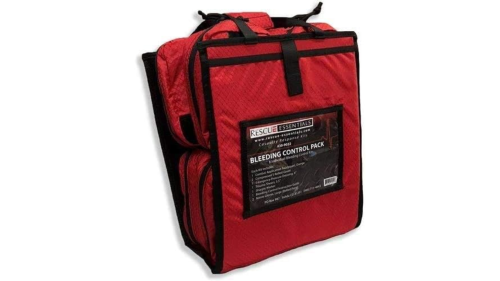
8 individual IFAKs each contain the essential tools to address severe bleeding. QuikLitters are also included.
A continued role for first responders
Firefighters, EMS providers and law enforcement officers have always been key supporters of the campaign, many of them delivering Stop the Bleed training themselves. As the initiative enters its second decade, that role continues to be critical, both in the field and through community education.
To explore training resources, campaign updates and grant opportunities, visit StopTheBleedProject.org or DoDStopTheBleed.org.

The man produced a firearm during a struggle with St. Louis County PD officers; when he began to pull away while still maintaining control of the gun, officers opened fire

“I believed that if I hadn’t done it at that time, I wasn’t going to go home,” said former Grand Rapids Police officer Christopher Schurr

“I will help you get through this,” a Warren PD officer can be heard saying as the man continued to resist officers’ rescue attempts

“Since January, LAPD officers have been working through the painstaking process … rendering approximately 500 firearms safe,” LAPD Chief of Detectives Alan Hamilton stated