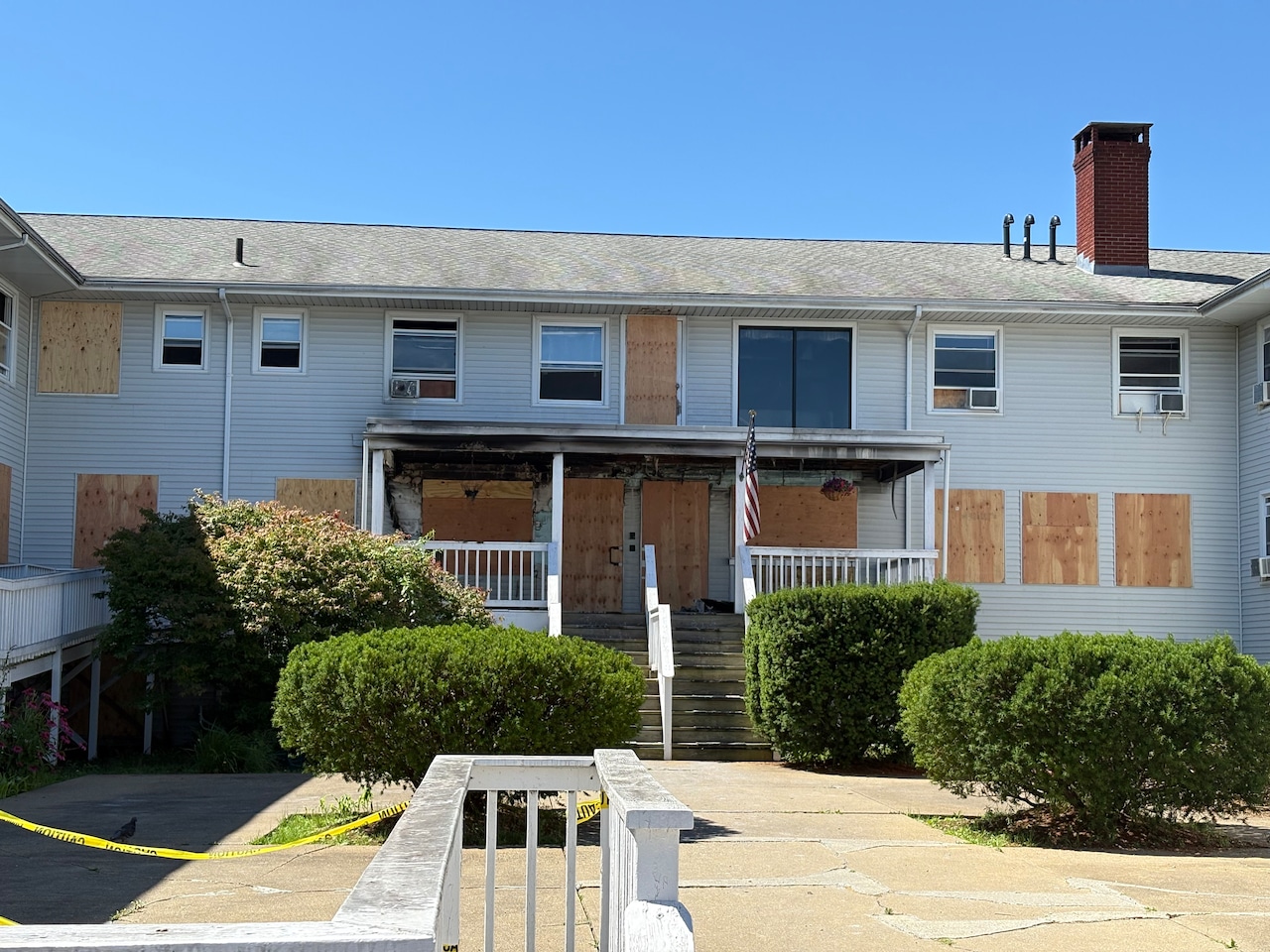
In the wake of the deadly Gabriel House fire, Massachusetts regulators may soon tighten safety inspection protocols at assisted living facilities to close loopholes that put vulnerable residents at risk.
A new proposal before the Assisted Living Residences Commission — introduced after a recent MassLive investigation revealed serious vulnerabilities in fire safety oversight — would require facilities to secure annual sign-off documentation from all local entities currently in charge of inspecting their buildings — fire departments, building inspectors and boards of health.
The document verification would be required to remain in compliance with the Executive Office of Aging and Independence, the agency that oversees assisted living in the state.
The proposal would also create a central tracking method — for the first time — for all safety inspections associated with these facilities, which are less regulated than nursing homes.
The sign-offs would confirm inspection dates and, most importantly, that there are no outstanding violations. They would have to be verified by state regulators and posted publicly at facilities.
If the commission moves forward with the recommendation, the proposal will take effect by Jan. 1, 2026. Public hearings are expected in the coming month or so.
Whitney Moyer, chief operating officer at the Executive Office of Aging and Independence, said there is currently a requirement that assisted living residences must be compliant with state sanitary, building and fire codes.
However, the proposal before the commission would add another level of inspection verification and tracking, giving the state agency more authority over assisted living facilities. It would also make the state partly accountable for code compliance, shifting some oversight from local authorities to Beacon Hill.
The inspection verifications would be included in the state’s biennial certification process for all assisted living residences in Massachusetts.
“This is something that we as an agency have been working on in close partnership with the Executive Office of Public Safety, the state fire marshal, folks who oversee local boards of health, as well as the Department of Professional Licensure to make sure that the approach we take makes sense in practice,” Moyer told commission members last week.
The Department of Fire Services confirmed that State Fire Marshal John Davine supports the fire safety-related recommendations proposed in response to the fatal Gabriel House fire in Fall River, where 10 people died in July.
“They will help both the facilities and the local (authorities having jurisdiction) stay on top of the fire and life safety regulations that keep vulnerable residents safe,” Jake Wark, Department of Fire Services spokesperson, said.
Immediately after the Gabriel House fire, Gov. Maura Healey and the Executive Office of Aging and Independence required all 270-plus assisted living facilities in the state to submit site-specific emergency plans and share them with residents and their families.
Robin Lipson, Secretary of Aging and Independence, has since stated that they achieved a 100% response rate.
Fire safety inspection ‘honor system’
A recent MassLive investigation revealed weaknesses in fire safety oversight at assisted living facilities and beyond, particularly regarding sprinkler systems.
Fire safety codes and standards place the legal responsibility for sprinkler inspection and maintenance on building owners, who typically hire certified third-party contractors to complete this work.
Massachusetts fire officials told MassLive that when they conduct their annual routine inspections of high-occupancy buildings or congregate living facilities, for example, they are mostly following up to confirm documentation exists reflecting inspections have been completed.
At least one fire official in Boston said this creates an environment where deficiencies not immediately apparent can slip through the cracks. But it’s the industry’s reality, given widespread staff shortages at fire departments.
At Gabriel House, sources previously told MassLive that, while owner Dennis Etzkorn said he had the sprinkler system visually inspected as required each year, he was missing a critical, mandated five-year inspection to ensure internal parts are working.
The sprinkler in the second-floor room where the fire started did not activate, sources with knowledge of the investigation have told MassLive, and residents have claimed the sprinklers didn’t work uniformly throughout the facility on the night of the July 13 fire.
Etzkorn stated that the sprinkler system was tested five days prior to the fire and found to be in working order. However, that same day, sources told MassLive, he was also notified of his ongoing failure to obtain the five-year inspection.
Etzkorn has not responded to specific questions about the sprinkler system claims, which are now also echoed in several lawsuits. However, he has stated through a spokesperson that he is cooperating with investigators and has turned over all relevant documents.
Since the fire and its immediate aftermath, a perfect storm of occurrences has further affirmed how lapses can occur, given the current inspection ecosystem.
First, the New Bedford Light recently uncovered that the New Bedford Fire Department had not inspected Whaler’s Cove, the city’s lone assisted living facility, for at least 18 years.
The reason, given by local fire officials, was that assisted living facilities are regulated by the Executive Office of Aging and Independence, and thus not the fire department’s responsibility.
The state office, however, said it doesn’t conduct fire safety inspections and instead defers to local fire departments.
- Read more: After Gabriel House fire, chief says recalled sprinklers could be in buildings across state
Then last week, Fall River Fire Chief Jeffrey Bacon widely publicized that his department had discovered decades-old recalled sprinklers in four additional congregate living settings in the city, an issue also present in the Gabriel House fire.
Bacon urged a coordinated approach among fire officials, inspectors, sprinkler contractors and property owners across the state to address the possibility of recalled sprinklers in other buildings.
The discovery in Fall River led State Fire Marshall Davine on Sept. 29 to send to every fire department in Massachusetts a sprinkler inspection “reminder” guide, in essence, outlining requirements and recommendations.
‘Zero tolerance policy’
At the early September meeting of the Assisted Living Residences Commission, one industry representative said there should be a “zero tolerance policy of any non-functional equipment” across all facilities.
“This is your first line of defense in an emergency and (it is) critical to buying as much time as possible for the fire department and EMS to arrive, assess and begin fire and rescue operations,” Jeffrey Lind, director of facilities engineering at Legacy Lifecare, told commission members.
Legacy Lifecare, based in Peabody, is a nonprofit organization that provides infrastructure and managerial assistance to senior care organizations.
Lind encouraged all assisted living facility owners and administrators to establish a relationship with their local fire captain or head of the fire prevention bureau, so that when the need arises, the right people are familiar with the facility.
“We take our guys out to lunch,” he said. “It’s always good to have a relationship with the people in these positions.”
Sen. Mark Montigny, D-Second Bristol and Plymouth, wants the commission to hear directly from state and municipal public safety officials before it releases its final recommendations in the coming months.
“I need objectivity from those that actually go in when people are burning or drowning or dying of some asphyxiation or a plague,” he said.
If you purchase a product or register for an account through a link on our site, we may receive compensation. By using this site, you consent to our User Agreement and agree that your clicks, interactions, and personal information may be collected, recorded, and/or stored by us and social media and other third-party partners in accordance with our Privacy Policy.