

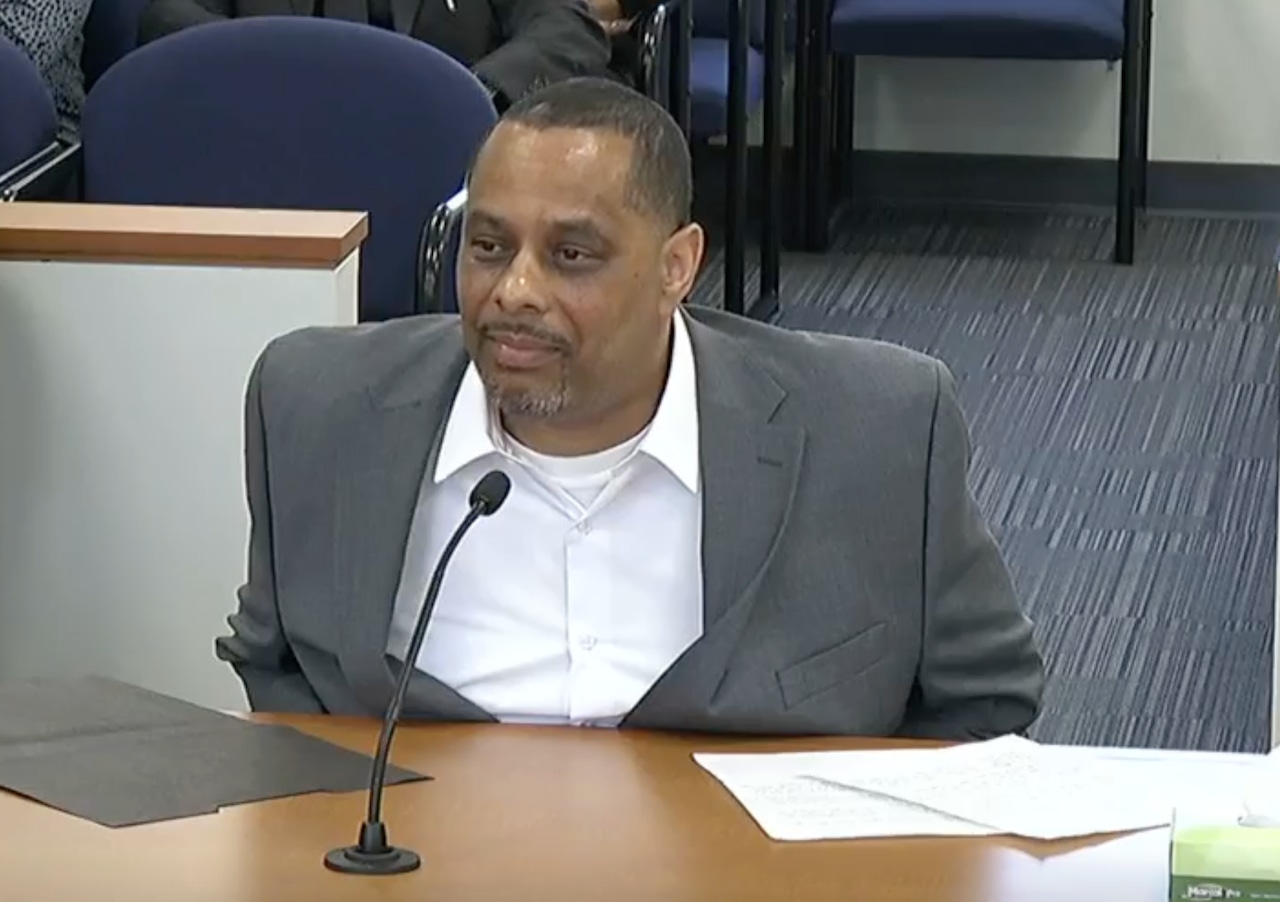
A Massachusetts man once believed he’d die in prison over a fight about “2 ounces of weed.” He turned his sentence into a cautionary tale to the younger men who were also incarcerated.
But his story had an unexpected turn: a change in the law gave him something he never thought possible — a second chance.
On Wednesday, Tyrone Dixon, 51, was granted parole after 90 days in a lower security prison.
At 18 years old, Dixon had been sentenced to life in prison without the possibility of parole.
He became eligible for parole after a recent Supreme Judicial Court decision that states emerging adults between the ages of 18-20 cannot be sentenced to life in prison without the possibility of parole. Due to the decision, Dixon was able to go in front of the Massachusetts Parole Board for the first time in March.
The parole board was impressed with his insights that led to the shooting, his work in various programs and his significant support system and re-entry plan.
Living a double life
Despite talking to younger men about why he was in prison, he continued denying it was true for years, including to his lawyer and family. He said he had an alibi that was supported by several witnesses.
“That was the one thing I couldn’t admit,” he told the parole board in March.
In 2011, he was granted permission to have DNA testing conducted on a baseball cap entered as evidence during his trial, the Taunton Daily Gazette reported.
“I never told my story intricately. In programs, I talked about how I was in jail for taking somebody’s life, but I never spoke about what actually happened inside of the vehicle,” he said. “I talked about what I was in jail for, but I never talked about those factors.”
Around 8 p.m. on Sept. 29, 1992, off-duty Officer Randall Rogers of the Taunton Police Department heard a loud noise and ran to the scene. He found Jeffrey Poissant, who had been shot twice in the chest, slumped over behind the wheel of a red Beretta, which had struck a utility pole. The man was conscious when the officer arrived but died shortly after arriving at the hospital.
Seven bags of marijuana were found inside the car.
Later that night, a man told police that two men had come to buy marijuana and that Dixon was one of those men.
Six months ago, that Dixon’s story changed and after being in prison for about 33 years, he admitted to shooting Poissant.
“I made the decision to bring a gun. I made the decision to pull it out. And I made the decision to shoot. Nobody else. Me,” he said. “So, coming to grips with that is tough when you actually talk about it outwardly and process it.”
He said the past six months have been difficult.
“It’s a lot of crying. It’s a lot of shame,” he said.
But the Bristol County Assistant District Attorney’s office remains worried about his honesty regarding remorse and how he’s changed after decades of lies.
Helping others
When Nurudeen Alabi was 17 years old, he found himself in prison with Dixon, where he remained for 15 years.
But Souza-Baranowski Correctional Center, he said, was “considered dangerous and was a place not to make friends.”
Alabi kept to himself but noticed Dixon’s bubbly personality. It wasn’t until they were both at a lower-risk correctional center that Alabi began talking to Dixon.
“I had to ask him why he was facilitating all these programs and doing all these positive things when he was serving a life sentence,” Alabi told the parole board. “He said, ‘I do this for the young guys coming in so they can learn from my mistakes and not have to live this life that [I’m] living.’ That was so powerful to me.”
Dixon continued to mentor Alabi, even after he was released two years ago.
Alabi later attended Boston College as part of a Prison Education Program.
A second chance
Dixon never expected to return home.
His siblings grew up, became adults and created their own families. His daughter, now in her 30s, lived her entire life only knowing Dixon through calls and visits.
Still, he strived to be a better person.
“Most of my life in prison, I lived my life to try to be the person that my parents wanted me to be when I was home, but I wasn’t,” he said. “So I tried to live that in prison.”
During his hearing, the parole board noted that they were impressed that a majority of Dixon’s work on changing his life around was made before he knew he’d ever have the possibility of parole, including getting his GED in 1998. He’s also currently waiting on a transfer to a lower-security prison.
“It says a lot about the progress that you’ve made to this point,” Tina M. Hurley, the Massachusetts Parole Board chairperson, said.
Emily Brown, a licensed psychologist, said when Dixon shot Poissant, he was “essentially living in the moment and just sort of being a kid” and that he was “susceptible to peer influences.”
But due to those around him at the time, a lot of those influences involved drugs and violence. He’s not that man today, she argued.
“He has genuinely rehabilitated and matured to a degree that he could be successful in the community,” Brown said.
Dixon said he’s seen other men sentenced to life in prison with the possibility of parole, get parole but end up back in prison. Most of the time, he told the parole board, it’s due to domestic violence or substance abuse.
He doesn’t want that to happen to him.
“What I learned from that is that I got to seek out help,” he said. “I was a broken kid. I had issues that I never talked about or that I thought was normal. I thought my life was normal because that’s what I seen every day.”
He hopes he can start going to therapy with his father, who has always been a big support system in his life and has loved him “unconditionally.”
He also is excited to start getting to know his siblings, who were about 2 and 4 when he went to prison. Now, they’re in their 30s.
His brother, Matthew Dixon, earned a bachelor’s degree in engineering and a master’s degree in finance. He has spent a little over a decade between corporate America and Wall Street, and now runs an investment firm. He’s married with two children.
But his life in New York City was becoming hectic. He sought advice from his older brother. From behind bars, Tyrone Dixon offered his advice, and the family moved out of the city.
“Tyrone helped influence that decision to be more balanced and to focus a bit more on family,” he said.
Even though he was granted parole, Tyrone Dixon said he will continue to relive that day in 1992 until the day he dies.
“This is what you did. This is the pain you caused,” he said he tells himself. “And you’re not going to forget it.”
If you purchase a product or register for an account through a link on our site, we may receive compensation. By using this site, you consent to our User Agreement and agree that your clicks, interactions, and personal information may be collected, recorded, and/or stored by us and social media and other third-party partners in accordance with our Privacy Policy.




