
I am not very good at making ice cream. I know this because I spent an afternoon with Jill Curran, the Director of Ice Cream for Kimball Farm* in Westford. She gave me a shot at making a batch of chocolate chip ice cream. The job seemed simple: Evenly sift the chips into a creamy vanilla mixture. The task was deceptively hard — for me.
But it was effortless for Curran. It was as if I were watching a tennis pro hit the perfect backhand. She spent the afternoon with me touring her operation. She detailed how a goopy mix was made into hard ice cream, how flavors like coffee Oreo were perfected and how each canister was placed into a freezer for 24 hours before making its way to the customer.
What might seem tedious or even boring to some was pure pleasure for her. She was at ease. She was also proud. It was the sort of pride born out of hard work and tenacity. “During Mother’s Day, we had about a 20-minute wait for our ice cream at each of our 12 windows,” Curran says. “And I thought to myself: ‘My team and I did this. These people are here because we built this.’”
They didn’t build it overnight.
It was March 28, 1998, when Curran’s mother drove her in a green Ford Explorer from their home in Chelmsford to Kimball Farm in Westford. Curran was just 14 years old. She spent that first afternoon washing stainless steel racks behind the shop. “They forgot that I was even out there,” says Curran, who speaks quickly and with intention.
At that point, Kimball Farm was a family-run, three-location ice cream shop that had been founded in 1939. Curran was fortunate to join at a time when the two grandchildren of the founders, Michael and Peter Kimball, were firmly in charge and eager to grow.
By the time she was 17 and a junior at Chelmsford High School, Curran was already promoted to a manager role. She found time to work shifts in between her studies and soccer; Curran would eventually become captain of her college team at Fitchburg State University, where she studied to become a teacher. “I worked because I liked the job. I was fortunate to have parents who weren’t asking me to work while I was in school,” she says.
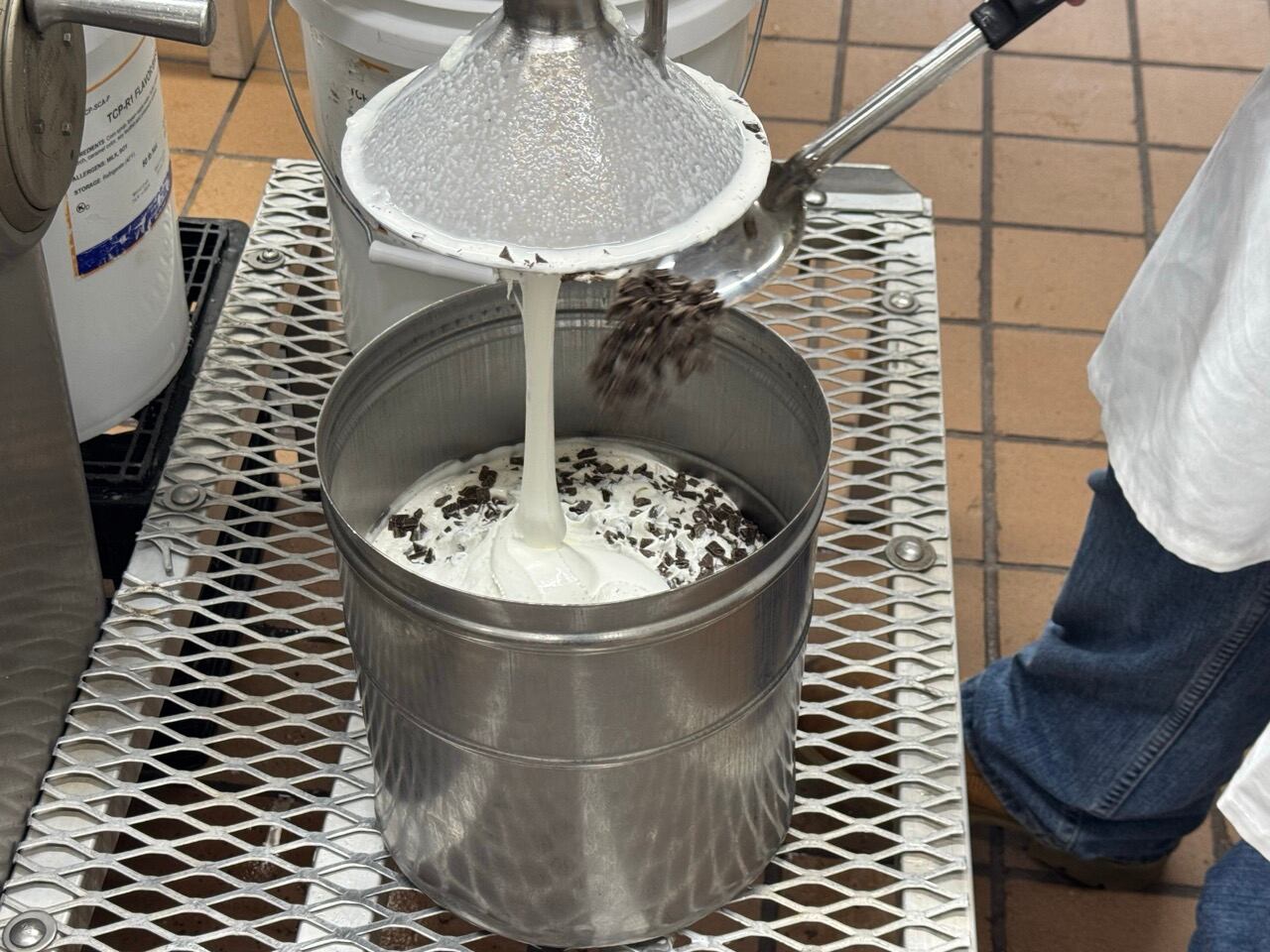
Making chocolate chip ice cream at Kimball Farm in Westford, on April 2, 2025. (John Beattie/MassLive)
Flash forward. Curran now oversees how the ice cream is made, stored, served and distributed to three other locations in Carlisle, Lancaster and Jaffrey, New Hampshire. She’s been recognized by her peers and is a past president of the North American Ice Cream Association. And Kimball Farm ice cream has been recognized as the best of the best.
When I asked Curran what she’s learned along the way, she sounded a lot like Tom Brady: “I learned to believe in myself. I just focus on being a better version of myself every day and somehow the hard work pays off.”
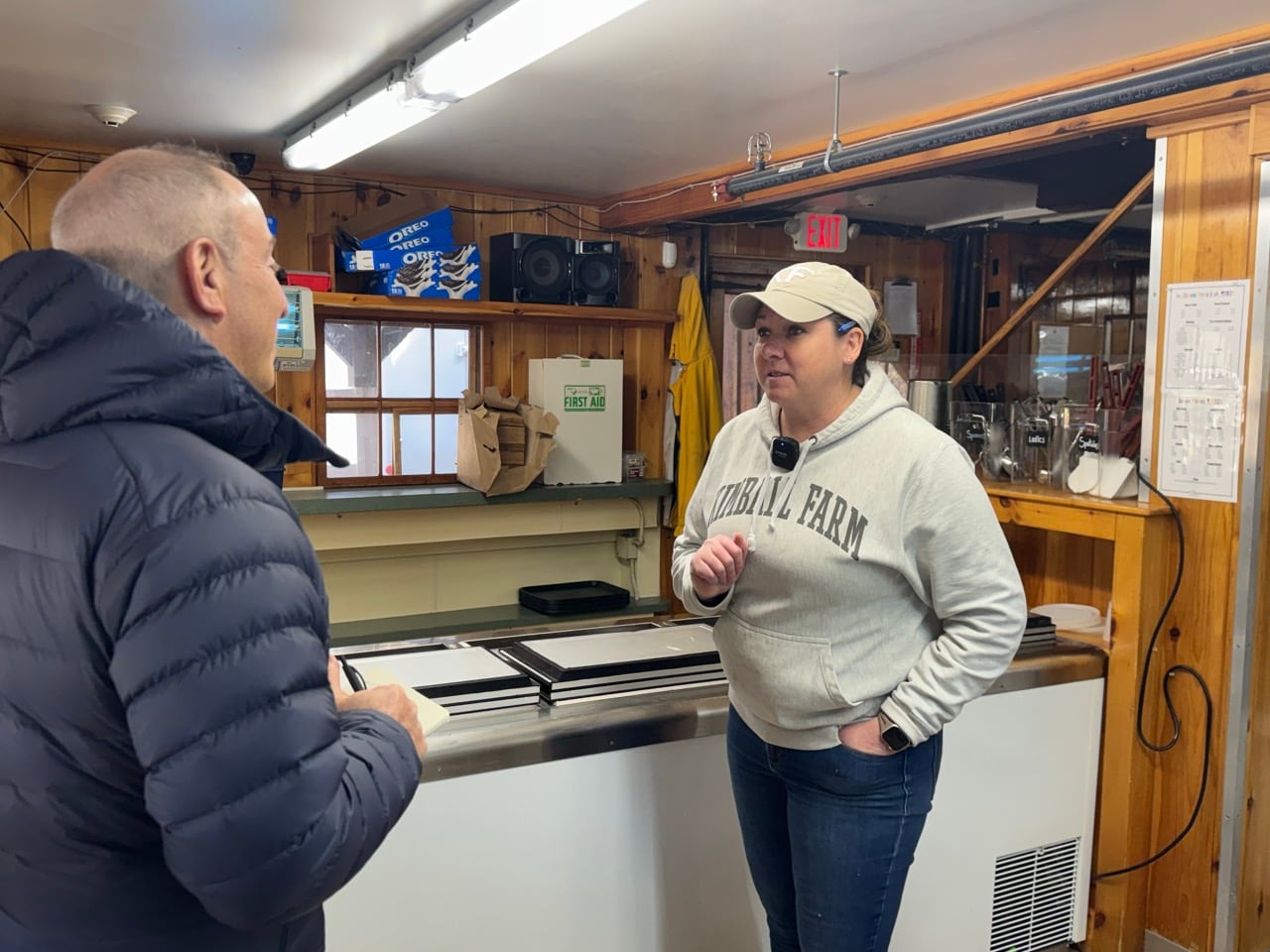
Jill Curran, Director of Ice Cream Operations at Kimball Farm in Westford, talks with Josh Macht, president of MassLive, on April 2, 2025. (John Beattie/MassLive)
Finding joyful work
For those lucky enough to afford a four-year college, the pressure to find a high-paying career path after graduation is enormous. The rapid shift to generative AI is only ratcheting up the anxiety levels. The fear is that even the traditionally stable paths — doctor, lawyer, accountant — appear to be threatened by automation. All this just shows it takes even more courage to follow a non-traditional career path–or do what Curran did, which was to make her own path.
Take a closer look at Curran’s career choices, and you can see that she holds many of the clues we’re all searching for as we look for satisfying work. Her story is a reminder that hard work isn’t just for a paycheck; rather, it can be fulfilling, even joyful.
I’m always looking for ways to bring joy into the workplace, so I thought it was worth delving into her story and pulling out key lessons for anyone who is questioning their own career choices, which seems to be so many of us these days.
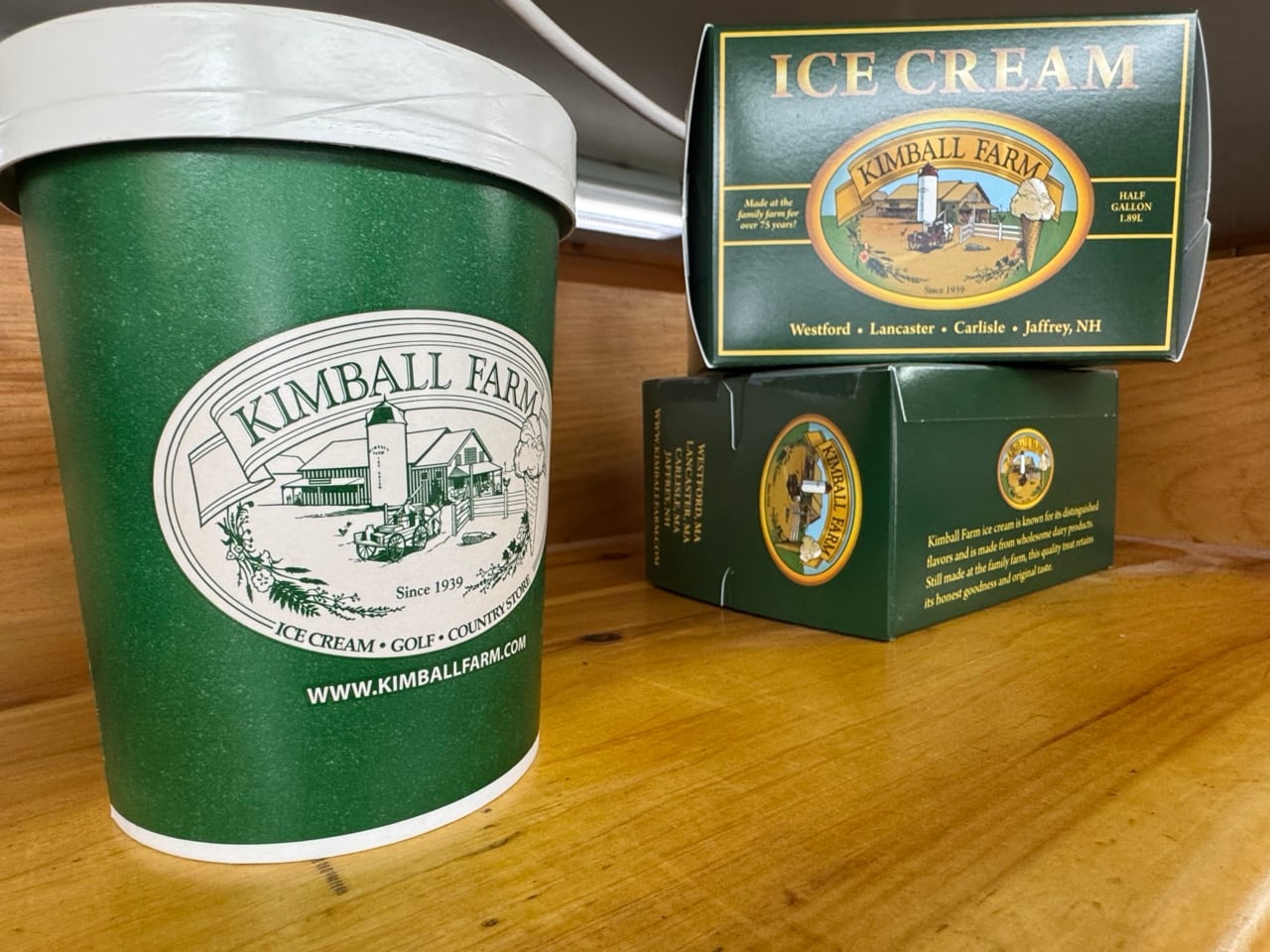
Containers of ice cream made at Kimball Farm in Westford, on April 2, 2025. (John Beattie/MassLive)
We want to do hard things
David Brooks recently wrote a piece in the New York Times about how we find pleasure in mastering difficult things. It’s a counterintuitive idea. Trying to get good at something — anything — is hard. You’d think we’d somehow want to avoid it. But that’s not often the case. Brooks elaborates:
“All around us there are people who endure tedium to learn the violin, who repeatedly fall off stair railings learning to skateboard, who go through the arduous mental labor required to solve a scientific problem, who agree to take a job managing other people (which is truly hard) or who start a business (which is insanely hard).”
But why do we find these things so often irresistible —especially when the work to get good at something can be such a grind?
Brooks describes it as a chain reaction of sorts that starts with what he calls “moments of ignition.” This doesn’t happen for everyone, but for those who are open to it, we can stumble upon something that captures our imaginations. This leads to deep curiosity, and then, eventually, to skill-building. It’s at this point where you need perseverance and resilience to weather the ups and downs of trying to master something.
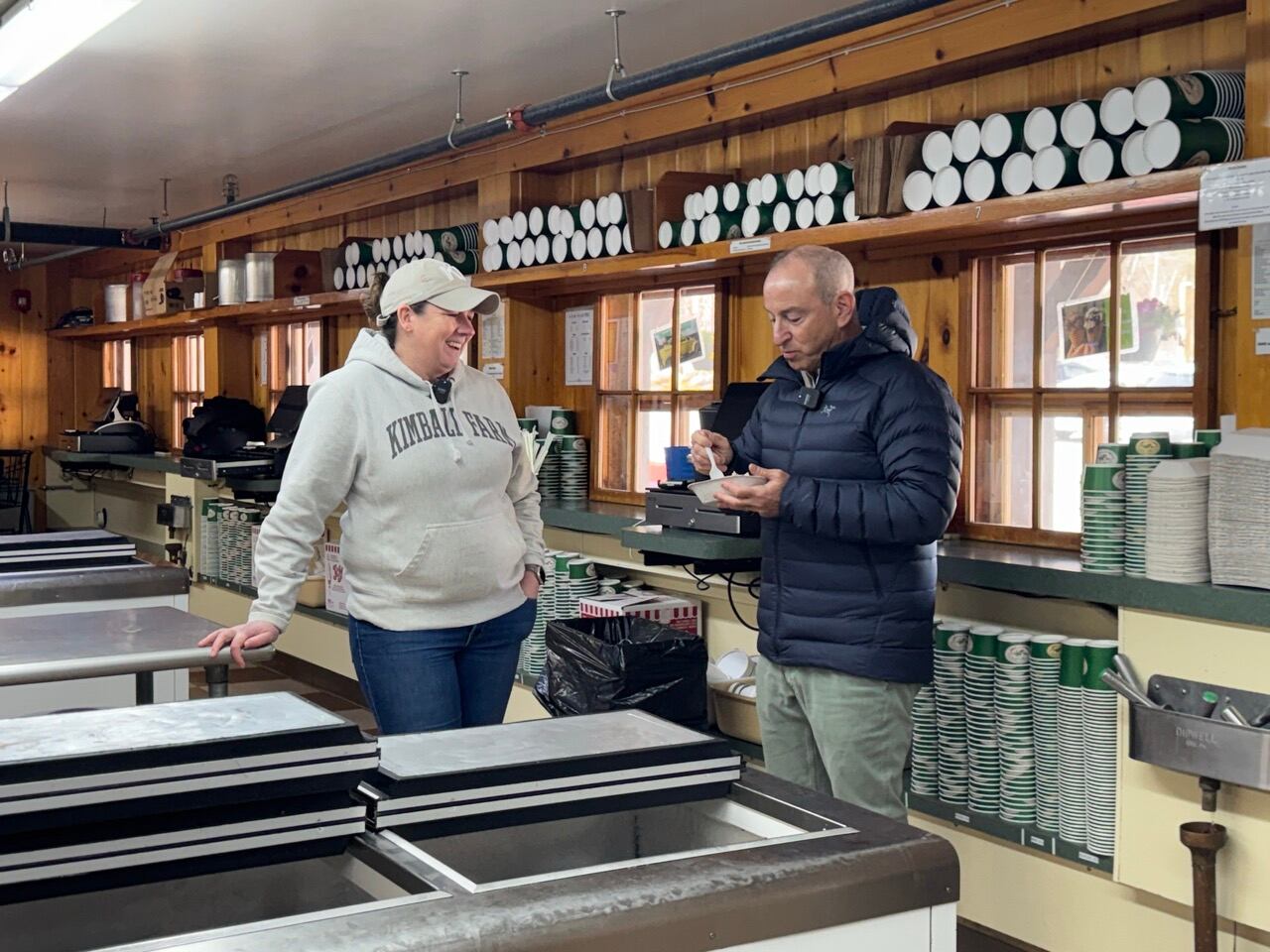
Josh Macht, president of MassLive, tastes ice cream made at Kimball Farm on April 2, 2025, as Jill Curran, Director of Ice Cream Operations, looks on. (John Beattie/MassLive)
In Curran’s case, she knew early on that she liked the work at Kimball Farm. Michael and Peter encouraged her from the get-go. Peter methodically taught her how to make ice cream, always reminding her that the “spatula is your friend.” Or, in other words, you can scrape every bit of goodness out of every batch.
Michael’s entrepreneurial zeal was infectious. Curran recalls a key moment when Michael invited her to look at what became their Lancaster location. “He was just so enthusiastic about what it could become,” she recalls. “But I was like, ‘Why am I here?’ and he said, ‘Because I want to know if manufacturing can handle another location. Can you make it work?”
Curran recounts the story with tears in her eyes. It was the moment she realized that the owners really believed in her, and maybe it was okay for her to believe in herself.
Up until that time, Curran certainly had moments of self-doubt. She had gone to college to become a teacher. The further she got from graduation the harder it became to jump back on the teaching track. Plus, she knew what people thought when she said she was still working at Kimball Farm.
“There were times when I cried because I knew what people thought of me, ice cream scooping with a college degree,” she says.
That’s the power of finding something that captures your imagination. It might not be what others imagine for you, but when you find something fascinating, it’s hard to let go, despite what others might think.
“I would prefer not to”
When I was heading up the Harvard Business Review, we published a book called “The Progress Principle” by Teresa Amabile and Steven Kramer. The idea was simple: People who stick with their work — and who find pleasure in work —sometimes look, from the outside, like they are doing monotonous tasks all day long. But they’re not. For the truly engaged worker, they are making steady progress toward larger goals that have significance for them.
Without a sense of progress, it’s easy to become demoralized or fall off the trail. I think of this as the Bartleby the Scrivener effect. Bartleby is the main character in Herman Melville’s eponymous short story. Bartleby’s work is the monotonous job of copying legal transcripts for a 19th-century Wall Street legal firm. One day, Bartleby’s boss asks him to copy a small document, and Bartleby answers: “I would prefer not to.”
Everyone in the workforce, at one point or another, “would prefer not to.” Today, if it’s chronic, we call it “quiet quitting.”
When I chat with Curran about these ideas, her eyes light up. “We were constantly growing, and I was learning new things all the time,” she says. These are the key ingredients to a career path that allows someone to stay engaged and move forward.
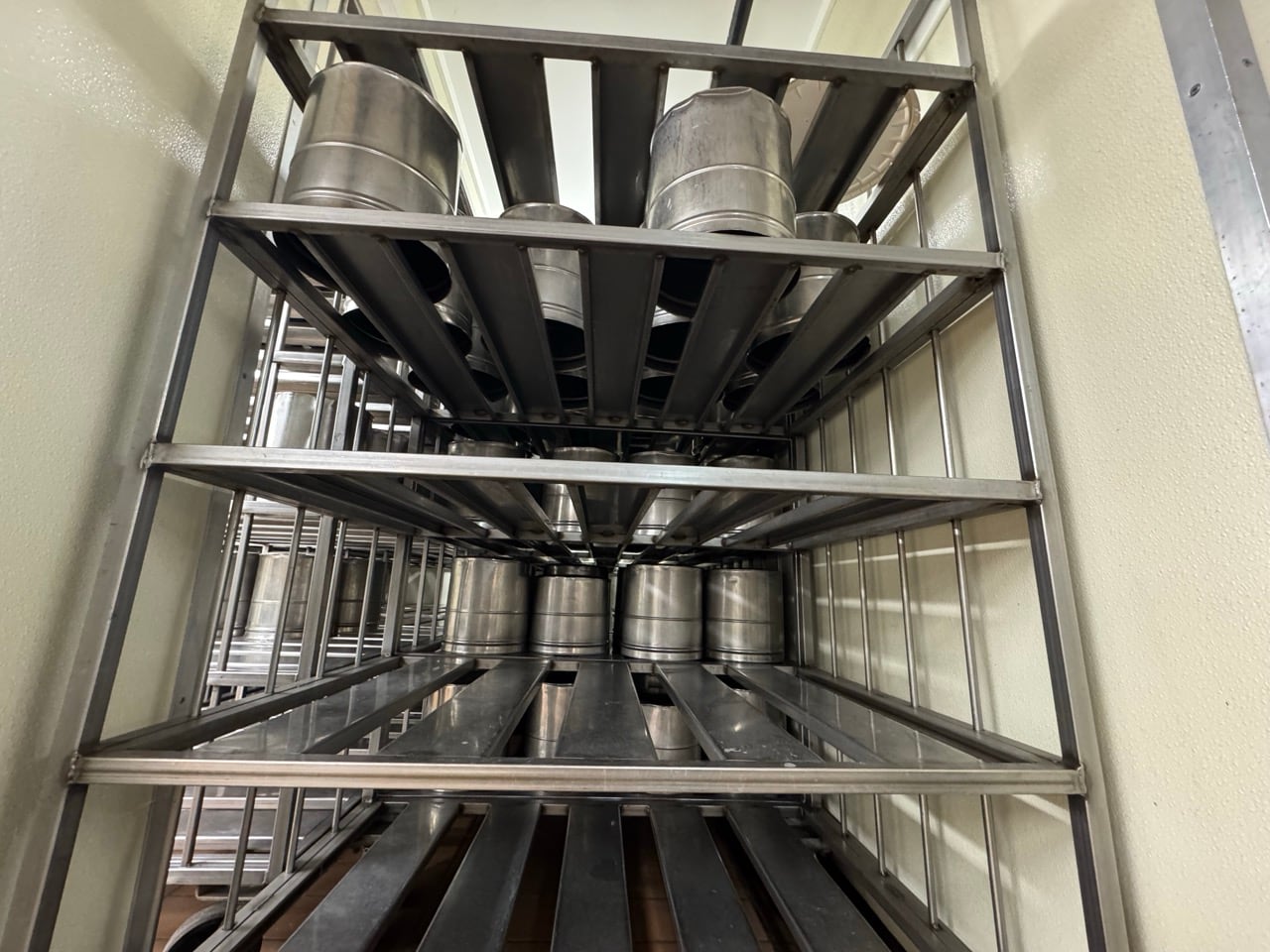
A rack holds metal ice cream containers at Kimball Farm in Westford, on April 2, 2025. (John Beattie/MassLive)
Curran learned about supply chain management, logistics, customer management and more as she worked with Michael and Peter to expand their operation and grow the business. She could see her forward progress in small ways every day. And it all built up to moments like Mother’s Day when she could see, in a big way, that the business they had been building created so much joy for so many people.
What gets us through the hard times?
This spring, I attended my daughter’s graduation at the University of Miami. I didn’t have high expectations for the commencement speaker named Irwin Raij, who is a private equity lawyer. I guess I was hoping for a comedian or someone who scaled Everest.
But about a quarter of the way through his speech, he mentioned that he almost backed out of the honor because his 8-year-old daughter had been given a dire medical diagnosis some weeks prior. Thankfully, after a battery of tests, it turned out that she would be okay.
The point of his speech was that it’s during the hard times that we find out what’s important in life. There was a lot more embedded in his short talk: The notion that grit and perseverance aren’t just overused adjectives, and that great things are achieved through difficult and even painful circumstances. These aren’t things that can be described: They must be lived.
Curran’s path wasn’t easy. There were high moments and low ones for sure. Along the way, others could judge her and maybe even be cruel. At any moment, she could have decided not to get out of bed or just say, “I would prefer not to.” But she didn’t.
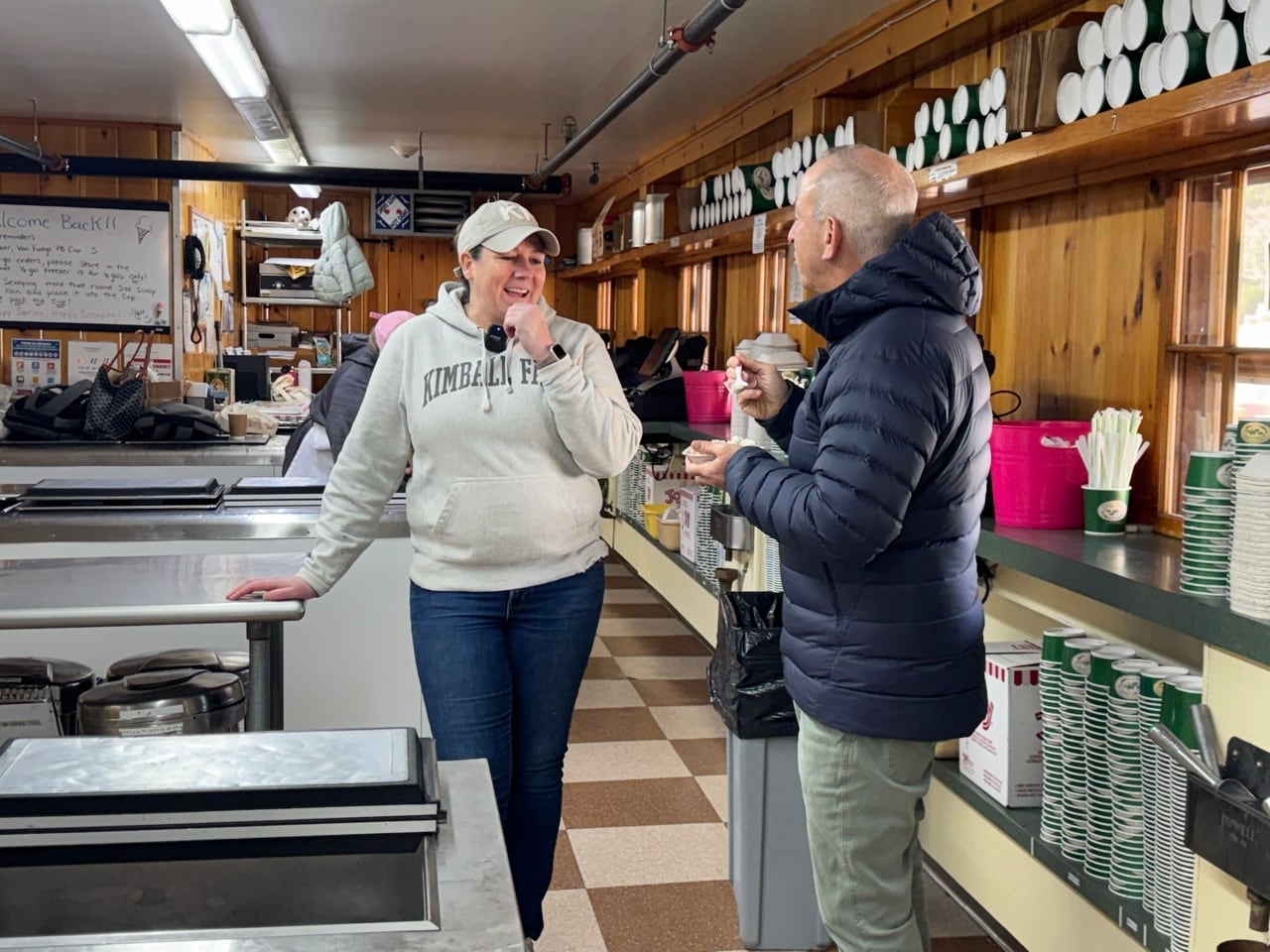
Jill Curran, Director of Ice Cream Operations at Kimball Farm in Westford, talks about the company with Josh Macht, president of MassLive, on April 2, 2025. (John Beattie/MassLive)
She has been driven by a desire to grow Kimball Farm and develop her skills at the same time. Every day is not pure pleasure, but she can mark her progress; she can see the joy that their operation brings to countless families as they come together around their many-flavored ice creams in the hot summer sun.
No doubt, Curran will find new challenges in the days, months and years ahead. Kimball Farm shows no signs of slowing. It continues to grow and expand one scoop at a time, and it will forever represent Curran’s legacy of hard work — and joy.
*Full disclosure: I was visiting Kimball Farm because they have become an advertiser for MassLive. I thought it would be fun to get a better understanding of how they make their ice cream and learn how the operation grew from an ice cream stand into a sprawling location with a general store and restaurant, mini golf and family amusements. Look here for video from our visit.