

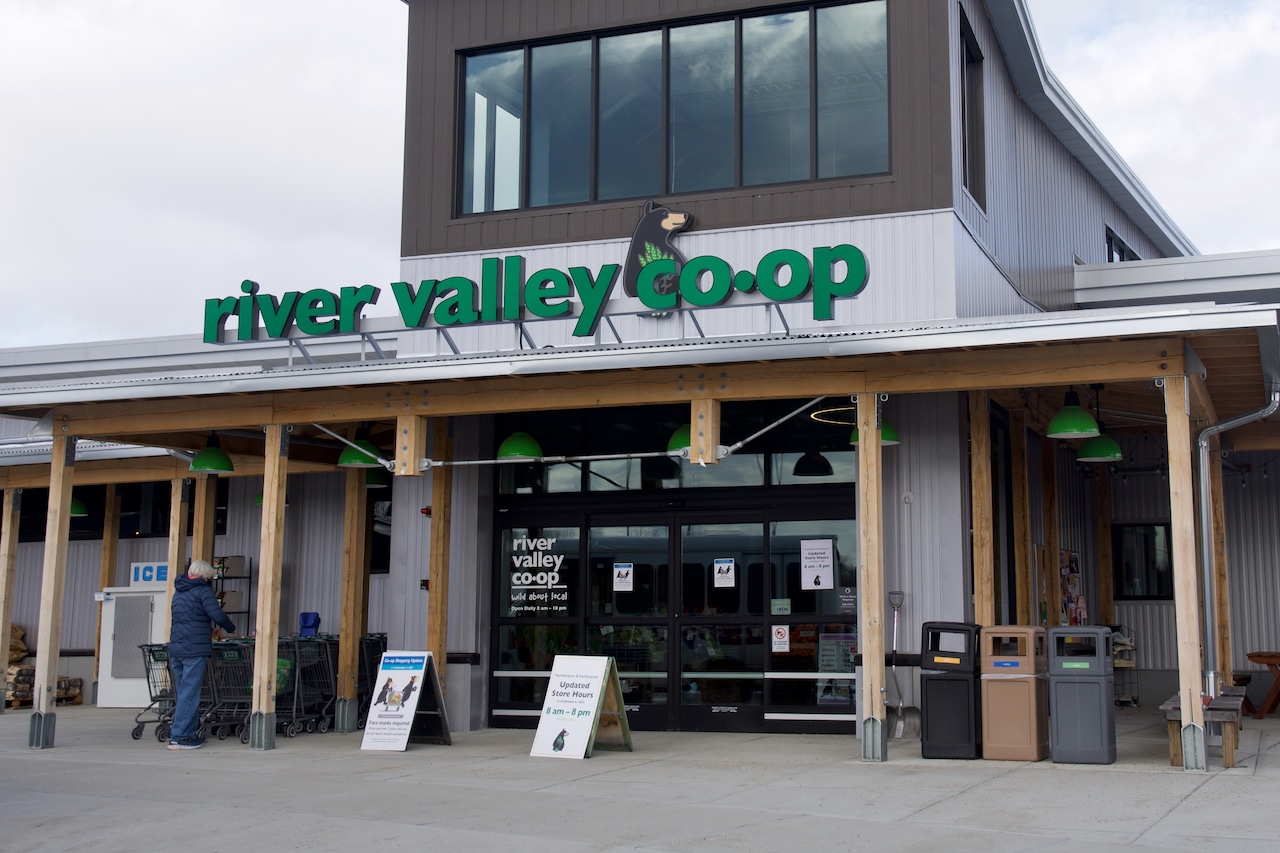
EASTHAMPTON — Employees of two member-owned food co-ops are sparring with managers over contract negotiations, leaving one side arguing that talks have been unproductive and the other filing a complaint with the National Labor Relations Board.
The United Food and Commercial Workers Local 1459, which represents about 175 employees who work at the River Valley Co-op stores in Easthampton and Northampton, have gone public with their complaints about the stalled negotiations, saying they have just a month before their contract expires June 19.
Meanwhile, managers of the co-op are arguing they are bargaining in good faith and have put proposals on the table that would increase wages across the board by 75 cents an hour and add step raises. The offer will guarantee salaries of $18.75 to $25.75 for employees in the first year, increasing salaries by 5.5% to 6.9%.
The union, however, is demanding an increase in the starting salary from the roughly $18 an hour workers receive now to $23 an hour, which is considered a living wage in the region, said Jeff Jones, union president.
“We want to bump them up,” he said. “We have existing employees who are on food stamps and can’t afford to shop there.”
One of the biggest complaints, which sparked a union walkout of the May 8 session and a complaint filed by co-op management, is over the people involved in the negotiations.
The co-op decided to use lawyers to lead the talks, Nicole Cowlin, director of human resources, said in a written statement.
But Jones said the problem has been the lawyers repeatedly telling the union that they cannot approve any proposals themselves and have to take them back to the management to discuss.
“At the end of the day, there is no one in the room who can make a decision,” Jones said. “I think we can get this contract done if we have a general manager in the room.”
He argued the general manager always has taken part of negotiations in the past.
On May 8, the union demanded the general manager attend the sessions. When she didn’t, they walked out in protest, he said.
But Cowlin argued the River Valley Co-op bargaining team is made up of a group of women who are the organization’s executives, including herself. All of them have the ability to make decisions.
After the May 8 walkout, the company then filed a complaint with the National Labor Relations Board, saying the union has no right to dictate who from management should sit at the table.
“The union’s false claim that we did not send decision-makers to the table is not only untrue, but it is also an illegal demand under federal labor law, which prohibits interference with the composition of the other party’s bargaining team. One side cannot legally tell the other side who can be on their negotiating team. We regrettably have filed a complaint with the National Labor Relations Board regarding this unlawful action taken by the union,” Cowlin said.
Both sides returned to the table Thursday for their ninth meeting, but the union did walk out after more than 2 hours of talks proved unfruitful. Others negotiations are scheduled for Thursday and May 29, Jones said.
The negotiations have been complicated further with problems like a 2024 controversy spurred by protesters who demanded that seven products from Israel be removed from the shelves in protest of the war in Gaza. At the end of October, member-owners voted against removing the products.
Jones said the issue has surfaced again in negotiations, especially regarding what type of buttons employees can wear while on the job.
Employees wear all types of buttons; many of them are just personal or nonpolitical, while others support a cause or issue. In a letter of understanding, the two sides decided on who could wear what type of button, how large the button could be and other issues.
The co-op always has prided itself on supporting the Black Lives Matter movement and the LGBTQ+ community, but had a lot of pushback from customers on any support of the Palestinian protests. The agreement allows employees to wear buttons showing the Palestine flag or other symbols, but they cannot have any text on them, he said.
“We came to an understanding on that issue,” Jones said.
He said he now hopes that will lead to a stronger focus on salaries and other economic issues in the contract.




