Does a Cambridge startup have a pill that can treat sleep apnea?
Last week, Apnimed, a little-known pharma startup founded in 2017, announced encouraging results from its clinical trial of a new drug for people who suffer from obstructive sleep apnea, a breathing interruption during sleep that can often lead to bigger health problems.
According to the company, this experimental pill reduced the number of breathing interruptions per hour during sleep by 46.8%. Those interruptions lower oxygen levels in the body and sometimes cause people to wake up or not get a restful night’s sleep.
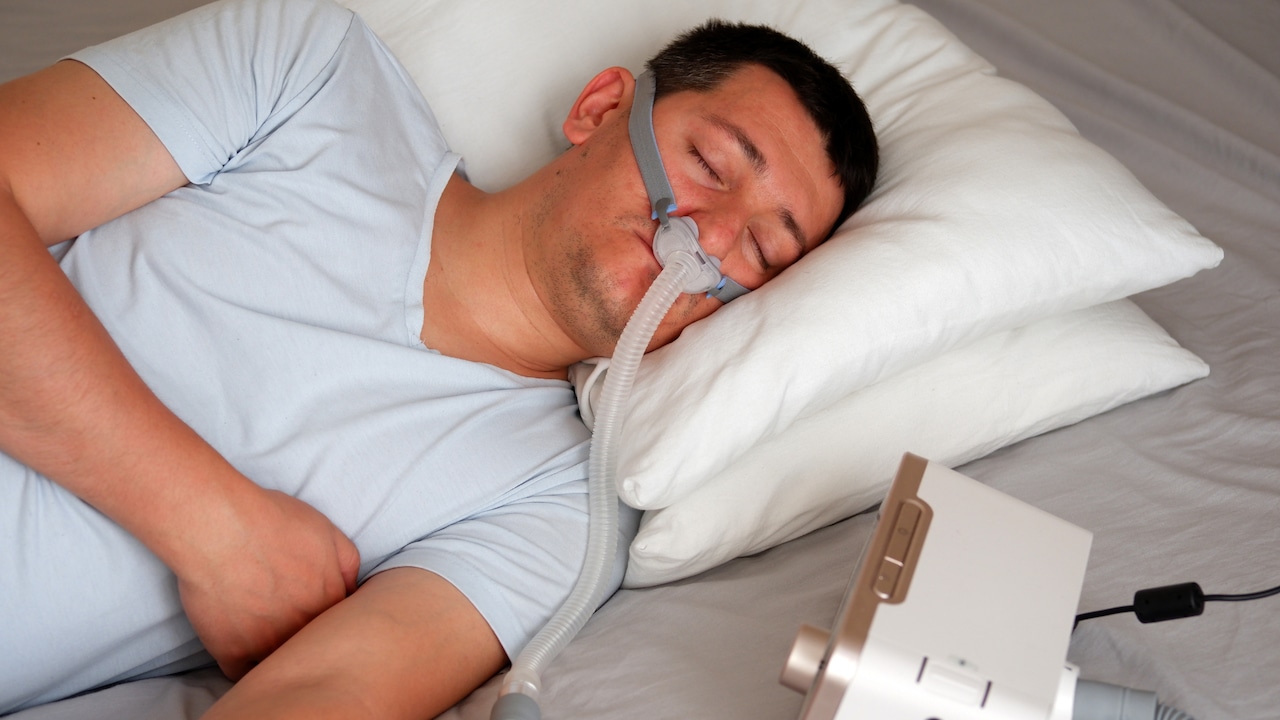
Today, many people with sleep apnea either use special mouthguards when they sleep, rely on a machine called a CPAP (continuous positive airway pressure) device to keep their airways open while they sleep, or don’t seek treatment at all.
About 30 million Americans have sleep apnea, according to the American Academy of Sleep Medicine, and many of them go undiagnosed or untreated. Apnimed cites a higher number — 80 million Americans, with 23 million filing some kind of insurance claim related to the condition over the past five years, according to Barry Wohl, Apnimed’s chief business officer.
Apnimed’s clinical trial focused on 1,300 people who had either never used a CPAP machine or tried one and stopped using it.
“The field is kind of crying out for an easy-to-use, easy-to-try therapy like an oral medication would be,” Wohl said. The company plans to submit its application for review to the Food and Drug Administration early next year.
Here are six things to know about the new drug and the company:
Reduced breathing interruptions
The company’s clinical trials involved what’s called a “combination drug,” which combines two active ingredients into a pill taken before bedtime. It works by increasing muscle tone in the throat overnight, which prevents the airway from collapsing and causing a breathing interruption.
The trials included patients with mild, moderate and severe sleep apnea, and found that the experimental medicine reduced the incidence of breathing interruptions by 46.8%, compared to a 6.8% reduction among patients who were taking a placebo.
First oral medication for sleep apnea
Apnimed’s drug candidate is the first oral medication for sleep apnea to complete two large Phase 3 trials, and it could be the first approved for sale.
However, the FDA approved the weight loss medicine Zepbound, made by Eli Lilly & Co., last year to treat the condition by helping obese patients lose weight. (Obesity is a significant cause of sleep apnea.) That drug is taken as an injection.
Wohl said that taking Zepbound is “a long-term solution,” while Apnimed’s drug “holds the potential to … treat that patient in the very near-term. It doesn’t require you to lose weight. It’s something that’s activating the muscles of the upper airway right away.”
Dry mouth and insomnia side effects
In the clinical trials, there were no serious adverse events linked to the drug, but dry mouth and insomnia were the most common side effects. Dr. Robert Thomas, Director of the Sleep Medicine Center at Beth Israel Deaconess Medical Center, raised an important caveat: while the drug may improve a patient’s oxygen levels, sleep quality and daytime functioning — the reasons most patients seek treatment — may not improve significantly. A pill for sleep apnea is “the holy grail, but truth is murkier than the (positive) press,” he said.
Thomas doesn’t expect any future pill to work for everyone, but he said it could be effective for some patients with mild or moderate sleep apnea who have “minimal comorbidities,” or other medical conditions such as high blood pressure or obesity that can complicate treatment.
Apnimed raised more than $280M
Apnimed was co-founded by scientists from Brigham and Women’s Hospital and is headquartered in Cambridge. It’s a largely virtual company, with about one-third of its 75 employees based in the Boston area and the rest working remotely across the U.S.
The company has raised more than $280 million to date, but hasn’t announced any plans for a public stock offering, according to Wohl.
Federal funding cuts threaten research
One of the company’s founders, Andrew Wellman, said approximately $500,000 in funding from the National Institutes of Health helped underwrite some of the early research at his lab at Brigham and Women’s Hospital, before Apnimed’s existence as a company.
He also raised money from a private philanthropist who suffers from sleep apnea. He said he worries about proposed cuts to NIH funding of roughly 40 percent.
“There’s a long payoff horizon” to promising scientific research, said Wellman, who is also a professor of sleep medicine at Harvard. Some of that research will vanish, he expects, if funding is reduced dramatically.
Insurance reimbursement not yet clear
Will insurance cover Apnimed’s new pill? We don’t know the answer to that yet. Wohl emphasized that Apnimed has been talking with major insurance payers to define how its medicine might be classified and reimbursed once it is approved for sale.
“We want to ensure that once we launch the drug, people are able to get access to it,” he said.
If you purchase a product or register for an account through a link on our site, we may receive compensation. By using this site, you consent to our User Agreement and agree that your clicks, interactions, and personal information may be collected, recorded, and/or stored by us and social media and other third-party partners in accordance with our Privacy Policy.