If you ever needed a reminder that money is the lifeblood of politics, you need look no further than the steps of city halls across Massachusetts.
City Council candidates in the state’s 17 largest cities raised $5.8 million and spent nearly as much — $5.5 million — in the run-up to last November’s municipal elections, newly released state data reveal.
That money was spread across the campaigns of 354 different candidates, according to the report by the state’s Office of Campaign and Political Finance.
All told, those candidates raised an average of $16,324 statewide, according to the report. In 2023, 368 council hopefuls spent $5.97 million on their respective campaigns, according to the new analysis.
This year’s tally represents only a portion of the money raised and spent during the off-year elections, a misnomer that downplays what often are hugely consequential contests.
That’s because only candidates who hail from communities with populations of 65,000 people or more are required to file with the watchdog agency.
Candidates for select boards in the hundreds of small towns that dot the Bay State, meanwhile, file their campaign finance reports with local election offices.
So what gives?
“Part of the answer is that the stakes are higher,” Jerold Duquette, a Central Connecticut State University political scientist who tracks Bay State politics, said. “And it’s a very candidate-centered operation, so it costs more.
And, he quipped, “Adjust for inflation, a million bucks is less than it used to be.”
Boston City Council race most expensive
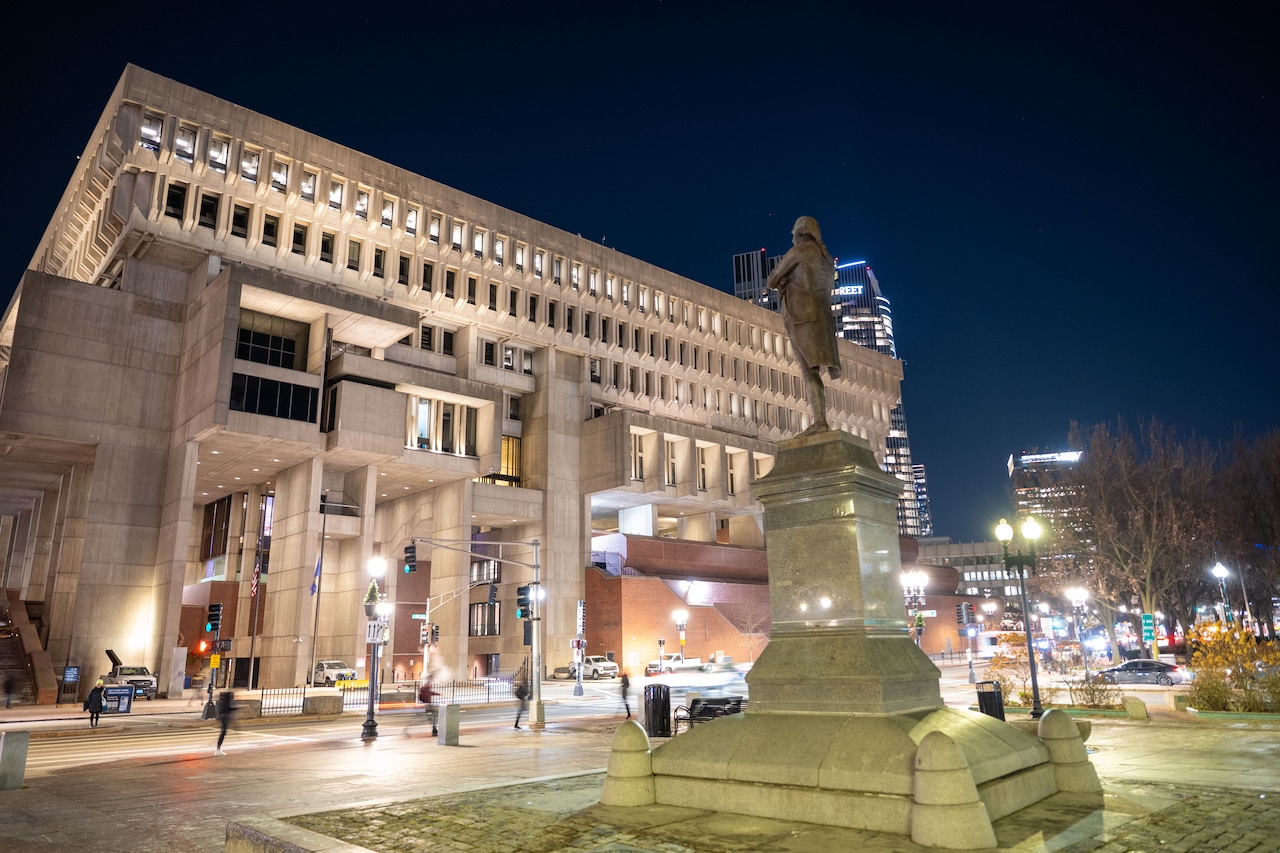
It should come as no surprise that this fall’s race for the Boston City Council was the year’s most expensive contest, with 37 hopefuls splashing out $2.2 million between Jan. 1 and Nov. 30, according to the report.
That’s an average of $59,257 each.
Incumbent Democratic Mayor Michelle Wu, who ran unopposed in November, put her political muscle behind candidates who could advance her second-term agenda. That layered additional importance on those races.
Outgoing Boston City Council President Ruthzee Louijeune, who will retain her council seat, led the pack, spending $308,531, the state data show.
Winning council members Julia Mejia ($163,860); Gabriela Coletta ($121,309) and Brian Worrell ($118,547) rounded out the high-spending pack of victorious candidates.
Dorchester resident Frank Baker, a former council member, spent $284,591 on his unsuccessful bid to return to City Hall, records showed.
Of the 10 highest spending candidates in the November canvass, eight came from Boston. The other two were from Cambridge and Worcester, according to the report.
Jesse Hunt, a Washington D.C.-based Republican consultant with Massachusetts roots, offered that the city might get a better return on investment in exchange for all that cash.
“You’d think that a city with problems would seek meaningful change,” he said. “After all that money spent, you’d end up with similar results.”
Greater Boston campaign spending
Elsewhere in Greater Boston, 22 candidates for the Somerville City Council spent a combined $248,454, or an average of $11,293 each.
The races for the Cambridge ($591,216) and Quincy ($369,086) were the region’s second and third-most expensive contests, according to the report.
The 19 candidates in Cambridge and 21 in Quincy spent an average of $31,116 and $17,575 each respectively, according to the report.
Fall River candidates spent the least
In stark contrast to Boston, candidates running for Fall River City Council spent the least in the 2025 cycle, with 14 hopefuls dropping an average of $2,546 each on their city hall bids, according to the report.
Voters in the South Coast city returned to office seven out of the nine incumbent councilors who sought reelection last month, according to the Herald News of Fall River.
Political newcomer Michael G. Canuel also won a spot on the legislative body. He’s joined by Christopher Michael Peckham, who did a tour on the council in 2019, the newspaper reported.
Shocking victory in New Bedford
Fall River also was dusted by neighboring New Bedford, where 21 council candidates spent a total of $99,074, or an average of $4,717 each, according to the report.
Top spenders there were Ian Abreu ($16,917), Naomi Carney ($12,276), James Roy ($11,076), Leo Choquette ($9,708) and Joseph Lopes ($8,771), all of whom won their respective races, according to the state’s analysis.
The New Bedford race was notable with the election of Scott Pemberton, whose victory was described as one of the biggest shocks in the city’s Nov. 4 election, according to the local New Bedford Light.
Pemberton’s victory was reaffirmed after a two-day recount, the outlet reported.
A recount in Worcester
Outside the I-495 corridor, the money, unlike the traffic, also continued to flow.
In Worcester, the state’s second-largest city, nearly two dozen council hopefuls spent a total of $547,352, or an average of $24,879 each.
Big spenders in Worcester included winning candidates Satua Mitra ($95,381), Morris Bergman ($51,668) and Khrystian King ($43,381), as well as Mero Carlson ($57,229) and Robert Pezella ($56,135), who lost their bids.
The analysis notably does not include spending by Worcester Mayor Joseph Petty, who is also an elected member of the City Council.
Bergman, meanwhile, hung onto his at-large seat after a two-day recount, MassLive previously reported.
Hot race for Springfield City Council
And in Springfield, 23 City Council candidates spent a total of $315,781, or an average of $13,729 each, according to the state’s analysis.
Springfield School Committee member Joesiah Gonzalez spent $44,950 on an unsuccessful fight to oust two-term incumbent Council member Maria Perez, his onetime co-worker, according to the report.
Perez, meanwhile, spent $29,442 to hang onto her seat, state data showed. Other Springfield big spenders included Justin Hurst ($28,138), Brian Santaniello ($27,682) and Victor Davila ($25,486), all of whom won their campaigns, records showed.