

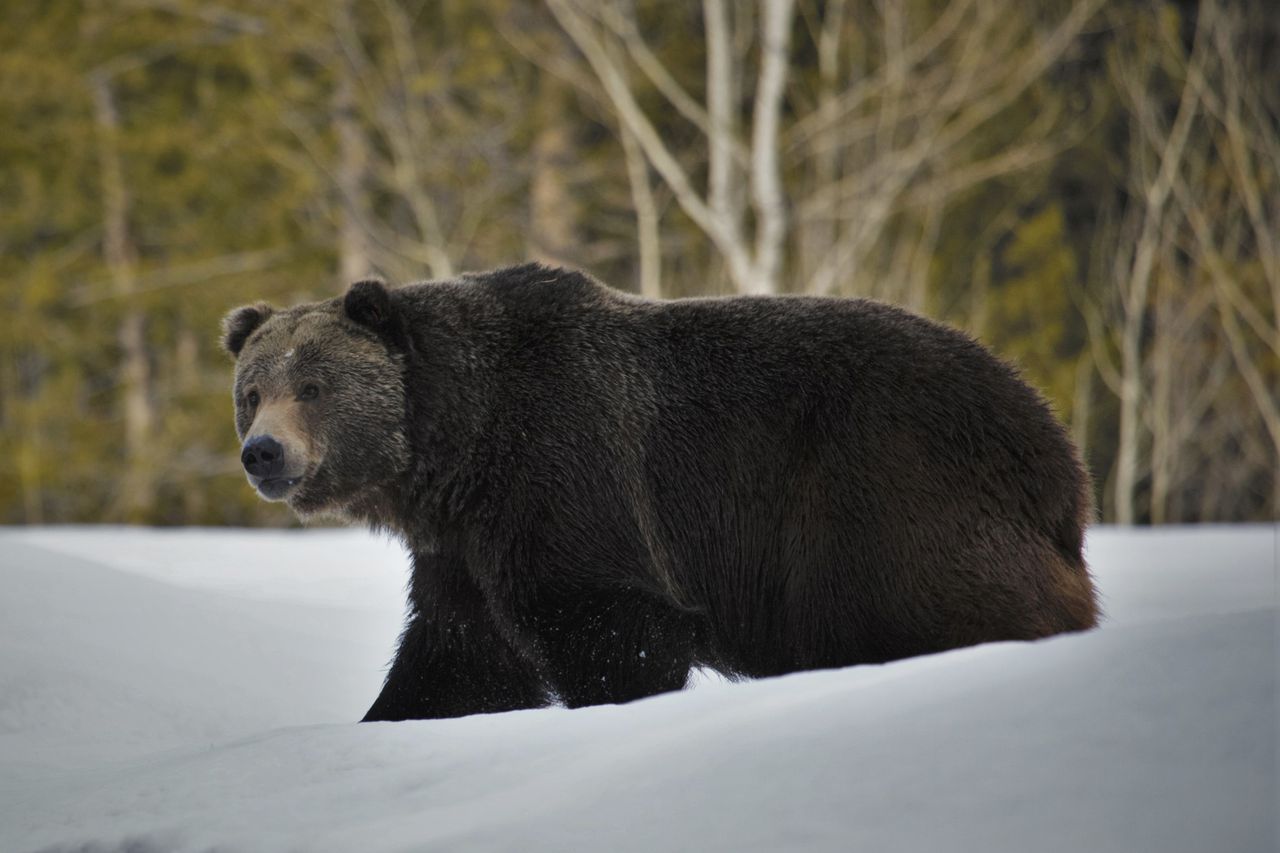
Massachusetts has seen an abundance of bears lately, but for how much longer as we creep through November and, soon enough, winter?
Bears are long known to go into hibernation when the temperature drops and when it gets too cold outside, indicators of the changing seasons and the lurch towards winter. Hibernation is a voluntary state that animals enter to conserve energy when food is scarce and minimize exposure to winter elements, according to the National Forest Foundation.
“During hibernation, an animal lowers its body temperature, slows its breathing rate, heart rate and metabolic rate — the rate its body uses energy,” the foundation said. “Hibernation can last days, weeks, or months depending upon the species.”
But bears are not true hibernators, according to the Massachusetts Division of Fisheries and Wildlife. They rouse easily and their body temperature won’t drop substantially, though they can remain in their dens without eating, drinking, or relieving themselves for almost six months.
So when does this period of hibernation happen and how long, as indicated above, does it last? When the winter season approaches, bears eventually go through the start of hibernation, typically between mid-November and mid-December, MassWildlife said on their website.
After that, Massachusetts bears will leave their dens — made from brush piles, rocks or rose thickets — sometime in between February and mid-April. Female bears that are pregnant typically enter their dens the earliest, as early as mid-October, and those with newborn cubs born in the winter den on average exit in early April, MassWildlife added.
This is typical for most bears across the country, according to Yosemite National Park, the Go Finger Lakes Project, the North Carolina Wildlife Resources Commission and Yellowstone National Park.
One problem impacting bear’s hibernation cycles could be connected to climate change.
“Bears that have access to more food, whether it be natural food or human food will postpone their hibernation and basically just keep eating,” Heather Johnson, an animal research biologist with the USGS Alaska Science Center, told KCRA in Northern California.
Food is affected when berries, nuts and insects become scarce due to changes in the weather as a result of climate change, she said. Bumps in the temperature, depending on latitude, elevation, weather conditions and the individual bear, can also shorten a bear’s hibernation schedule.
“What we do know is when we see these years where you have these warmer winters, warmer falls, we see a really different behavior of bears,” Johnson told the news station.
“Bears waking up weeks earlier than they should is yet another canary in the coal mine, a strong biological indicator of an extremely warm winter in various parts of the world, and long-term, a sign of how humans are becoming a force of nature, unintentionally manipulating nature’s natural cycles,” CBS News meteorologist and climate specialist Jeff Berardelli said in a news report from 2020.




