

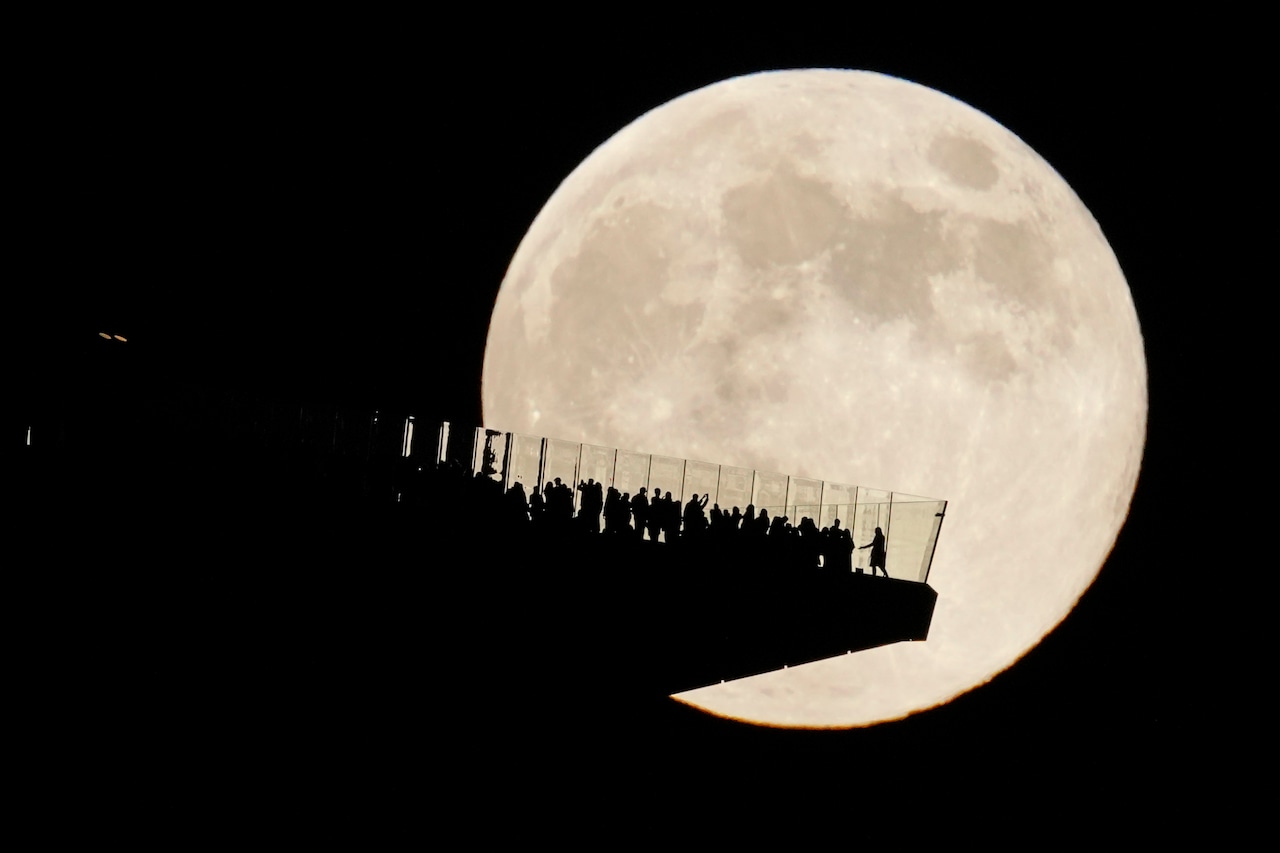
Even without clouds, the next supermoon is expected to reach its closest distance to Earth in 2025, yet people will likely not be able to see it.
Supermoons occur when the moon reaches its closest point, or perigee, along its elliptical orbit around Earth, according to NASA. When this happens, the moon appears brighter and larger in the sky.
April 27’s new supermoon is expected to be 221,917 miles away from Earth, in contrast to the average distance of 238,900 miles, EarthSky wrote.
But this upcoming supermoon also stands in contrast to other supermoons typically seen three or four times a year. While supermoons are typically seen in the night sky during the full moon phase, supermoons can also take place during a new moon, EarthSky reported.
Because of this, Sunday’s supermoon will be a new supermoon, the space website stated.
At this point in its cycle, the moon is orbiting between Earth and the sun. The dark side of the moon faces Earth when this happens, while the illuminated side that typically shines in the sky faces the sun.
April’s new supermoon is not expected to be the last of 2025, with EarthSky reporting that one new supermoon will “appear” on May 27 and June 25. Both are expected to have a greater distance between Earth and the moon, but still over 10,000 miles closer to Earth than the average distance.
Like any new moon, it is difficult to spot in the night sky, Space.com reported. Stargazers eager to spot Earth’s lone satellite should wait between 18 and 24 hours as it moves far enough away from facing the sun until a crescent moon appears.




