
CHICOPEE — Of the 24 seats on Chicopee’s City Council and School Committee, one is held by a person of color. In West Springfield, all elected officials are white.
That’s a stark contrast to what Springfield and Holyoke saw in the last municipal election. The majority of elected officials are either Black, Latino or both.
While those two Hampden County cities are showing the political might of traditionally underrepresented groups, what is holding back similar gains in the region’s other communities?
Women determined to embolden people of color and bring their voices to public decision-making say representation is important.
“I really think we need diversity in the council, because what I’m seeing here, everything is for the same people,” said Elisa Olivo, a Puerto Rican woman who ran for but didn’t win an at-large council seat in West Springfield this year.
Across the river, Tracye Whitfield, a Black at-large councilor in Springfield, said being on the council helps bring different perspectives to the table.
“It feels great to represent the community, and also for the community to see someone that looks like them in these roles make decisions on their behalf,” she said.
Seen in recent elections
A racial and ethnic disparity was evident in some of last month’s local municipal elections. It stems from a variety of factors, political experts say.
Historic electoral barriers — many of which have been overcome through lawsuits — made it challenging for Black and Latino candidates to gain a platform, and enabling voters to believe they have a voice.
Some people active in their communities find ways to serve without running for office. And of course the picture of diversity in elected office is affected by differences in racial and ethnic populations.
In Chicopee, the lack of diversity in office contrasts with the fact that Hispanic or Latino students make up almost half of the public school population.
A lack of racial diversity in municipal office is sometimes simply a missed opportunity, says Matt Szafranski, editor-in-chief of Western Massachusetts Politics and Insight, a political analysis blog. Other times, it stems from the demographic realities of a city or town, he said.
There are proportionately fewer people of color in Chicopee and West Springfield than in Springfield and Holyoke.

Douglas Hook
Springfield, a city of 155,929 people, is 46.7% Hispanic/Latino and nearly 21% Black, according to the U.S. Census. In Holyoke, a quarter of the size of Springfield, 51% of the population is is Hispanic/Latino and 4.3% Black.
In 1992, Latino residents in Holyoke mobilized and filed a federal lawsuit against the city alleging that pre-drawn election district lines, the ward system and the lack of Spanish accommodations at the polls made it difficult for Hispanics to win elective office in the city.
Five years later, a white University of Massachusetts Amherst student and former Springfield City Council candidate filed a similar federal lawsuit in that city. Bishop Talbert W. Swan II, president of the Greater Springfield Chapter of the NAACP, later became the lead plaintiff in the case.
Another lawsuit in the early 2000s, filed by Black and Latino leaders in Springfield, alleged the city’s district maps at the time hindered fair representation of Black and Latino voters and favored the “white bloc” of voters.
People of color in the four municipalities can be deeply engaged in their communities and not see a need to run for office, said Anthony L. Cignoli, political consultant.
“Brown and Black people participate on citizens’ councils, (and are) participating in philanthropy and volunteer efforts,” said Cignoli, president of Anthony L. Cignoli Associates, Inc. “That’s the work that’s attractive — not having to deal with politics.”
Community activists and business leaders who speak out are examples of that, he said.
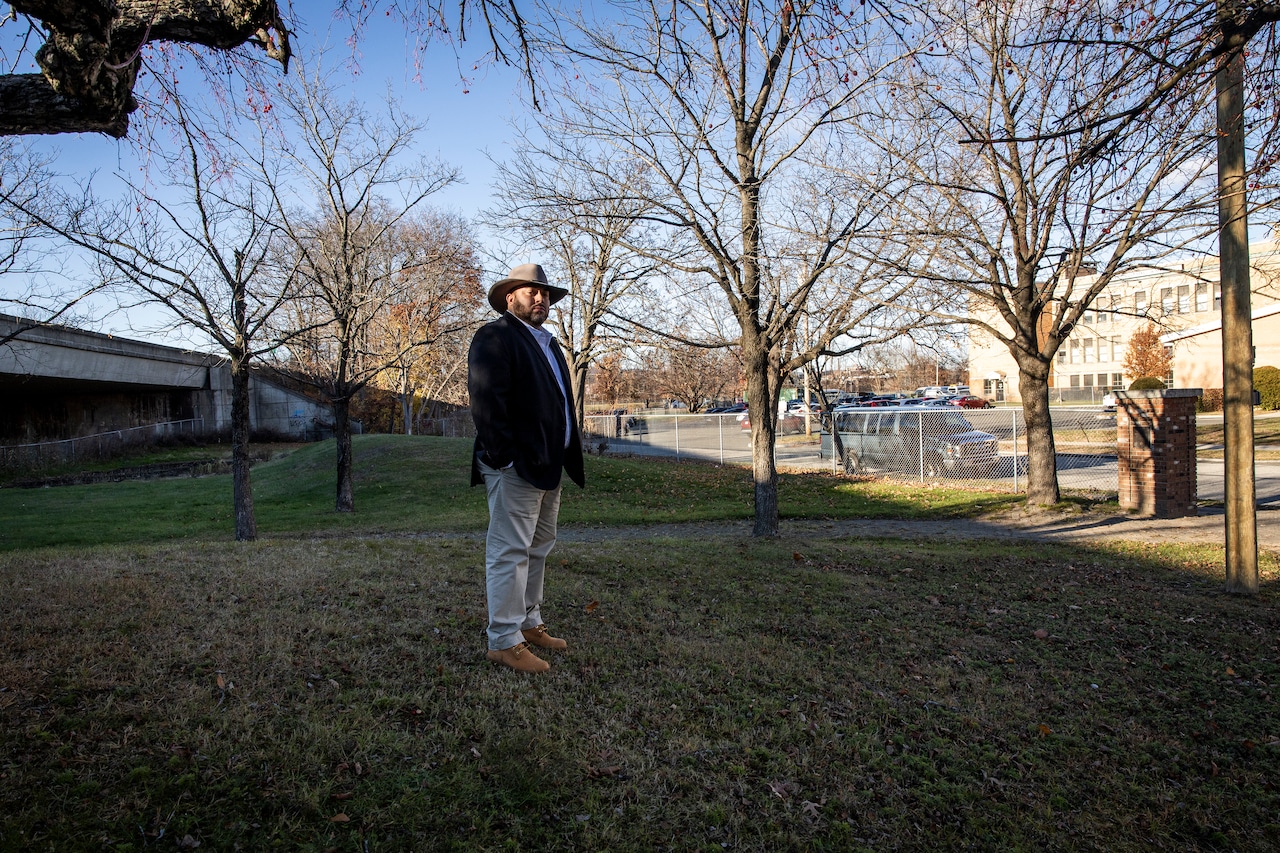
Ray Nazario, a Puerto Rican military veteran from Springfield, is the only elected person of color on the School Committee in Chicopee.
The committee has 12 members — nine ward representatives, one at-large member, the mayor and the superintendent of the school district. Superintendent Marcus Ware, who is Black, was chosen by his peers, not elected by the public.
According to data from the state Department of Elementary and Secondary Education, nearly half of the Chicopee Public Schools population is Hispanic or Latino.
Nazario will represent Ward 7, taking over for incumbent Donald J. Lamothe, who announced in March he would not seek re-election due to a conflict of interest involving his son, a school principal.
Before his run for office, Nazario was the former vice president of the Springfield Hispanic Democratic Political Action Committee, which helped interview and support Hispanic and Latino candidates.
But running in Chicopee this year wasn’t about racial equity, he said.
“I’m here because I want to bring accountability and transparency,” he said. “If you’re going to select someone, be it someone that’s going to benefit the community and the city as a whole.”
A tale of two campaigns
In Chicopee, women of color have managed to break the political glass ceiling, twice in the last five years.
Delmarina López and Shirley Arriaga were the first women of color to be elected to local and state-level positions.
López was the first person of color to be elected to the City Council in 2021, receiving 96% of the vote that November. She represented Ward 3 for one term. She then ran for mayor in 2023, losing to incumbent and current Mayor John L. Vieau.
“As the first person of color, we’ve only ever had all white men in these seats and a handful of women,” López said in 2021. “I think we’re catching up, there’s a long way to go.”
The council has nine ward representatives and four at-large members.
López and current Ward 9 councilor Mary Beth Pniak-Costello were the first women to sit on the council since 2005.
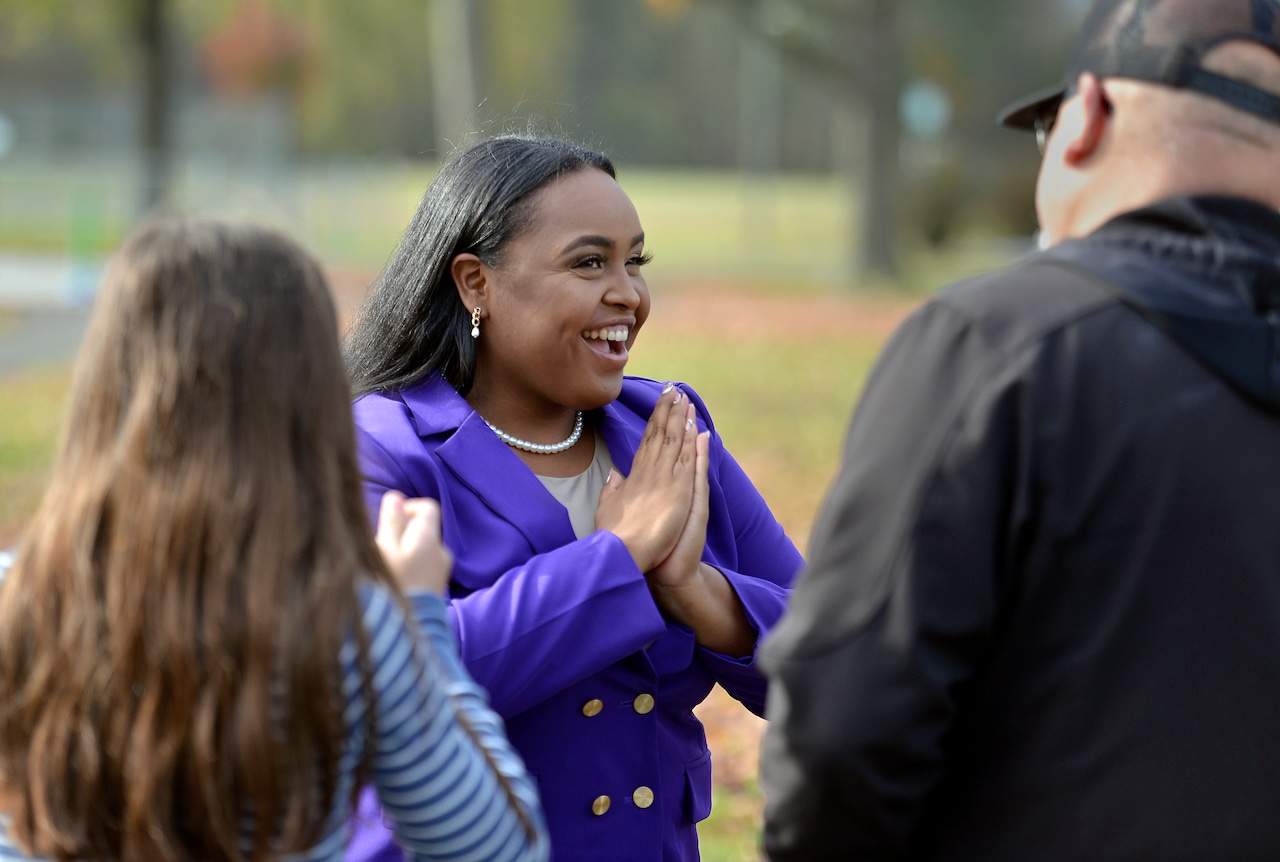
At the time, López questioned why the council didn’t reflect the city’s demographics. “Half of the city is women. Why don’t we have half of the council women? There should be diversity in all areas.”
The same year López won a ward seat on the council, Arriaga lost her bid for an at-large seat.
Arriaga told The Republican she ran that year because she was unhappy about local leadership through the COVID-19 pandemic.
In 2022, Arriaga ran successfully for state representative, becoming the first woman and first person of color to represent the city on Beacon Hill.
Arriaga, D-Chicopee, had a dream of being a politician since she was a child. But, she said, “I’m a big, firm believer in timing.”
“(COVID-19) highlighted a lot of the barriers that were going on in our community, and I didn’t see the leadership and the initiative that I was hopeful for,” said Arriaga, an attorney and U.S. Air Force veteran.

Arriaga, who was in her mid-30s, decided to jump into politics despite having thought she would make a play for office later in her life.
Growing up in Chicopee, she said, people in elected office were older white men. But people convinced her residents were ready for a younger leader — one who brought new perspectives.
“It was not only for my child, but for the other children who didn’t have those people at home, advocating for them,” she said of her campaign.
She said she felt like the underdog — as someone who looked different than the previous people who held office.
A need to build connections
Szafranski, of Western Massachusetts Politics and Insight, said Arriaga’s campaign was successful in part because she garnered support outside of Chicopee, receiving financial help and building connections that helped drive her success.
Often, people from under-represented groups may not be aware of resources available to them. They may not have been able to “develop the ties,” like financial support or endorsements, that are needed from outside the community to build a winning campaign, he said.
In Arriaga’s case, she won the district after longtime state Rep. Joseph F. Wagner, who served for more than three decades, said he would step down.
Her successful bid for the position — against recently elected at-large councilor Joel McAuliffe — surprised her, she said, but it also showed her the community was keen on diversity.
“They were ready for that change, and when I knocked on their doors, they were surprisingly very supportive of me, and that fueled my campaign,” said Arriaga, who says she visited 21,000 homes.
The city, made up of more than 55,000 people, is predominantly white, according to the 2020 decennial census. But Latinos make up the second largest population in the city, nearly a quarter, at 23.4%.
That’s almost twice as high as the state’s overall percentage of Latinos, which is 12.6%, according to a 2023 study by the University of Massachusetts Boston Mauricio Gastón Institute for Latino Community Development and Public Policy.
After white residents, the city’s remaining 10% of the population includes Black, Asian and other ethnic groups, the study said.
Today, neither the City Council nor the School Committee is reflective of its racial demographics. But Nazario, the only person of color in elective office in Chicopee, said good government depends on more than “color” diversity.
“My warrior side (says) fight for the people, and I also have my conservative side, where … hard work pays off, right?” he said. “You can play somebody in for representation, and they’re just not the right person for the job.”
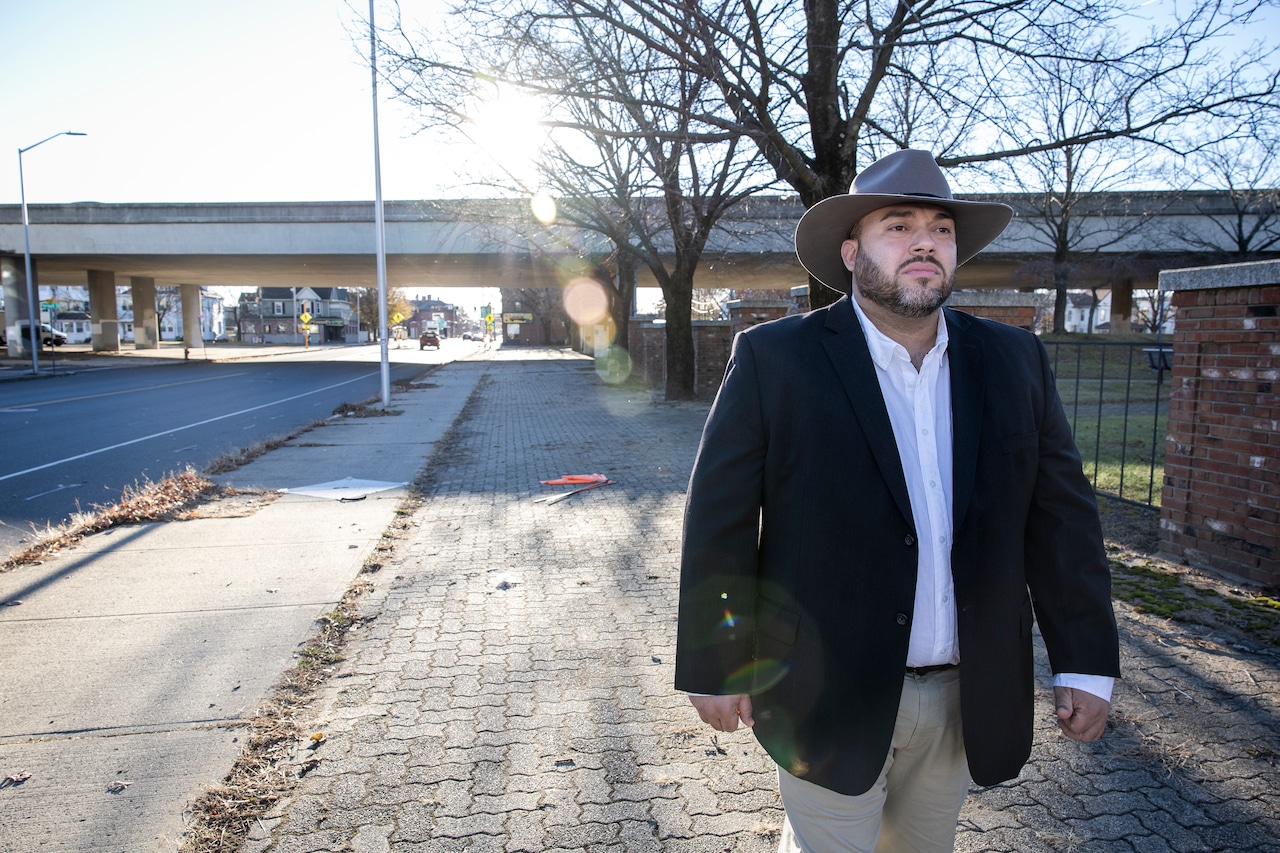
Nazario noted that the city sees ethnic diversity on the council through representation from historic French, Portuguese and Polish communities.
“There (are) pretty diverse pockets in the city, but when I say diverse, right, I’m looking at it from an ethnicity perspective and not necessarily a color perspective,” he said.
Cignoli, the political consultant, said he doesn’t think it’s a big concern that minorities in Chicopee and West Springfield don’t yet have significant play in local politics.
“Those groups know how to access power if they need it,” he said.
However, Whitfield, the at-large councilor in Springfield who has a background in finance, said a huge motivator to be elected was the power she gained to make community resources available.
“If I don’t know about (the resources), and the people that I talked to don’t know about them, maybe there’s a broader range of individuals that don’t know about these resources as well,” she said.
There was an overall consensus from her community to mobilize and diversify city politics, she said.
“We need(ed) new people,” she said.
Breaking through barriers
West Springfield, for the first time, has two women on its City Council at the same time — Jaime Smith and Diana Coyne.
However, all of its councilors are white.
Olivo, the Puerto Rican candidate who moved to Western Massachusetts as a single mother in 2017, attempted to blaze a political trail in West Springfield.
This year was the second time that Olivo ran, unsuccessfully, for an at-large council seat in West Springfield.
Her first year running for office in the West Side was in 2023.
“I was completely new in the town. I (didn’t) know anybody, but my inspiration is always my son, (who) is autistic,” Olivo said.
She wanted to fight for her son’s needs.
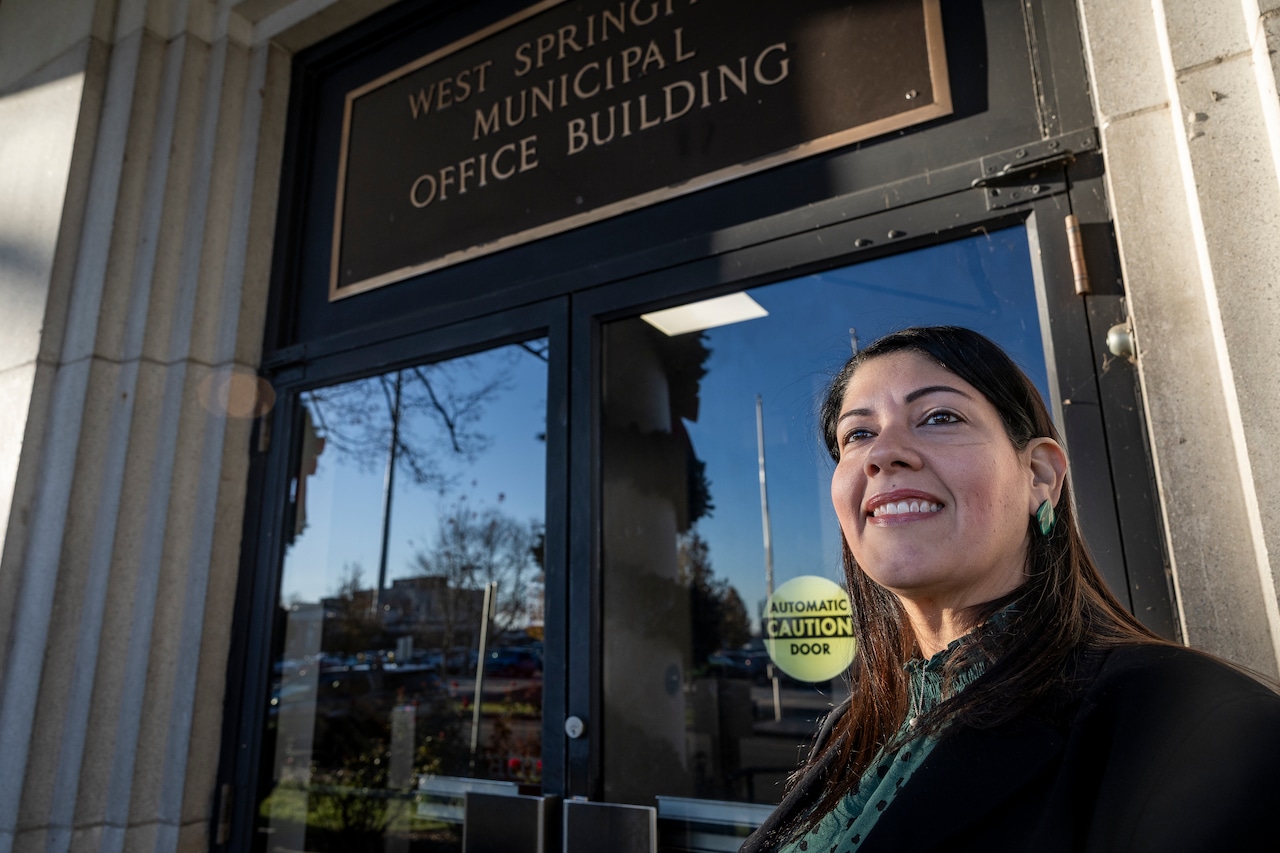
Both times she has run, Olivo managed her own campaign. This year, her campaign earned her 1,117 votes, just about 340 votes shy of winning an at-large seat.
“I really think people want a change. But, you know, we have incumbents from 10 years in the positions,” she said, and long-term members benefit from name recognition.
She thinks she’ll try again in 2027 for an at-large seat. If Olivo wins, she will be the first Latina to sit on the council.
In its history, West Springfield has only had one councilor of color — Vernon T. Coleman, an African American who served as an at-large councilor for one term in 2009. Coleman had previously run as the only non-incumbent for School Committee and lost.
Coleman died in 2015 of leukemia.
Olivo said she ran her campaign hoping to implement programs for immigrants to build generational wealth. That’s something she hopes to pursue, despite not being on the council.
The community itself is multicultural, housing Turkish, Ukrainian and other ethnic groups speaking more than 60 languages, said Daniel O’Brien, a former police officer who, most recently, was an at-large town councilor.
In the recent election, O’Brien made a bid for mayor, but did not win, against incumbent William Reichelt. O’Brien had endorsed Olivo.
O’Brien is part Irish and part Armenian and Syrian. While race was not a factor in his own campaign, he said his hometown has an air of having to be “in” with the right crowd.
“There’s an element of … you … have to know this group of people and that group of people, and it’s very exclusionary,” he said.
Szafranski notes that West Springfield has more at-large council representation than other local districts — the issue already fought in Springfield and Holyoke. A difference is that Chicopee and West Springfield remain largely white communities, he said.
There hasn’t been enough growth in the Black or Latino populations yet to effect electoral change on the scale of Springfield and Holyoke, he said.
“Even if they do have some areas that are minority-majority, it’s not necessarily at that critical mass that can bring a different kind of outcome,” Szafranski said.
Diversifying predominantly white spaces
West Springfield in 2021 took a stand against racism. Its council narrowly passed an executive order from the mayor that declared racism an “emergency and public health crisis.”
Soon after, the community hired Whitfield as its first diversity, equity and inclusion officer to build a program that would encourage conversations about diversity and race.
Whitfield said the position at first energized her. But she found it difficult to work in Town Hall.
“It wasn’t a really welcoming environment for me when I worked there,” she said. In her view, some members of the government were not open to hearing what she had to say.
By that point, Whitfield was already seated as an at-large councilor in Springfield, a post she won in 2018. Her goal on the council has been to ensure her neighbors feel they have a voice in the city — and to do her part to build sustainable economic growth.
“Diversity brings those different perspectives, and it’s easier to break down the socioeconomic barriers that exist,” she said.
Springfield’s City Council recently elected five Black members, four Latino members and four white members. Whitfield will serve another term.
The city’s School Committee has six members of color. Its seventh member, Mayor Domenic J. Sarno, chairperson of the committee, is the only white person.
There are also several state representatives and senators who are Black or Latino who represent the four Western Massachusetts counties.
Still, advocates say more must be done to awaken awareness about the value of diversity.
Some people in Black and brown communities believe their votes don’t matter. There can be a lack of trust in politicians, said Whitfield.
Arriaga, the state representative for Chicopee, said she’d love to see more people of color run for office.
“I know it’s scary, but it is needed. We need to take that leap. We need to be in these spaces. We need to have a seat at the table,” she said.