
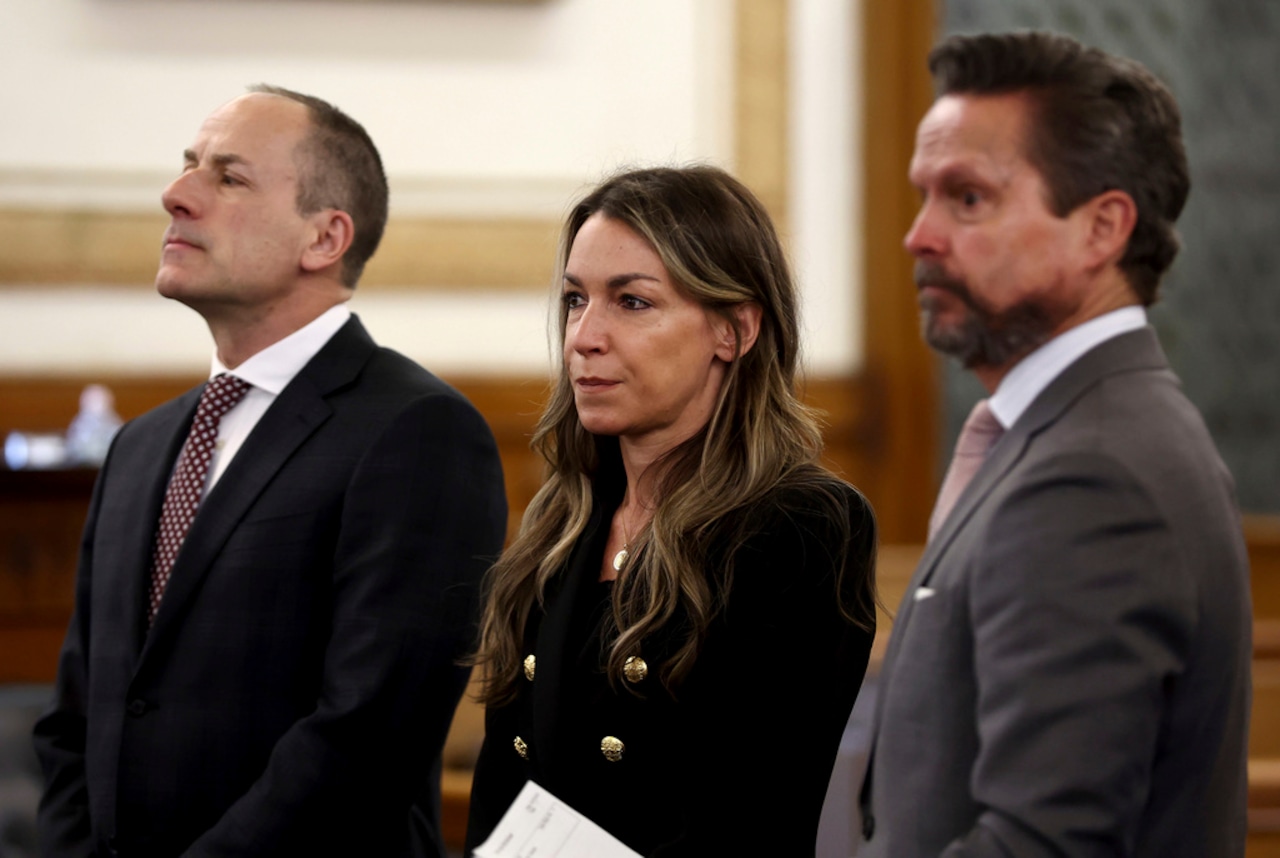
After months of contentious pre-trial hearings and a painstaking jury selection process that took 10 days, Karen Read’s second trial begins in earnest with opening statements Tuesday.
In criminal trials, the prosecution delivers its opening statement first, meaning special prosecutor Hank Brennan will get the first crack at shaping the jury’s view of the case.
Clues have emerged about the content of Brennan’s opening statement over the course of pre-trial proceedings: last week, Judge Beverly Cannone allowed a prosecution request to play a video clip from an interview given by Read.
Brennan has signaled that he intends to use Read’s media blitz, which has included magazine and television interviews, against her during the trial.
Much like Assistant District Attorney Adam Lally did in his opening statement during the first trial, Brennan will likely try to humanize John O’Keefe, Read’s boyfriend, who she is accused of killing, said Jack Lu, a retired Superior Court judge.
“The prosecutor, Mr. Brennan, should establish his personal warmth and relationship with the jurors, and include his co-counsels,” Lu wrote. “The best persona for a trial lawyer is that of Columbo, the fumbling detective. Make the jurors smile.”
Brennan is also likely to try and undermine the defense’s theory of the case: that Read is the victim of a conspiracy and that others are responsible for O’Keefe’s death, added Lu, an adjunct professor at Boston College Law.
Alan Jackson, who is delivering the opening for the defense, will likely hammer home the defense’s broad critiques of the police investigation into Read.
But to what extent the defense can lay out its theory of the case in its opening statement is still somewhat of a question. Cannone has said it can not accuse specific people of causing O’Keefe’s death in its opening statement, but that ruling does not preclude the defense from suggesting Read was framed.
- Read more: How to watch Karen Read’s second trial live
The defense intends to show the abrasions on O’Keefe’s arm during its opening statement, and prosecutors are trying to block it from suggesting those wounds were caused by anyone inside the Canton home where O’Keefe was found outside.
“They are going full blast that she was intentionally railroaded by a vast conspiracy,” said Lu. “[This] seems like a hard defense to me.”
The defense should aim to humanize Read, much in the same way that prosecutors are likely to try and humanize O’Keefe, Lu said. It’s not a difficult task, he said, but the abundance of publicity, much of it driven by Read herself, could turn jurors off.
“He has to worry that the defendant has overdone it,” he said. “Mr. Jackson should establish his client’s fundamental humility to counter the possible impression that she is just too slick.”
Following opening statements Tuesday, the prosecution will begin calling witnesses for its case in chief. The witness list for the second trial is made up of 150 names, but it is highly unlikely all 150 will be called.
The trial is expected to go six to eight weeks, not counting jury deliberations.
A panel of 18 jurors has been selected for Read’s second trial — nine men and nine women. Only 12 will deliberate the case after closing arguments, with the remainder randomly selected to serve as alternates on the final day of the trial.
Read, 45, is charged with second-degree murder, manslaughter while operating under the influence and leaving the scene of an accident causing injury or death in connection with O’Keefe’s death.
Separately, Read has appealed to the U.S. Supreme Court in a bid to get the charges of murder and leaving the scene dropped on double jeopardy grounds. The nation’s highest court will discuss whether to take up her petition at a conference on April 25.