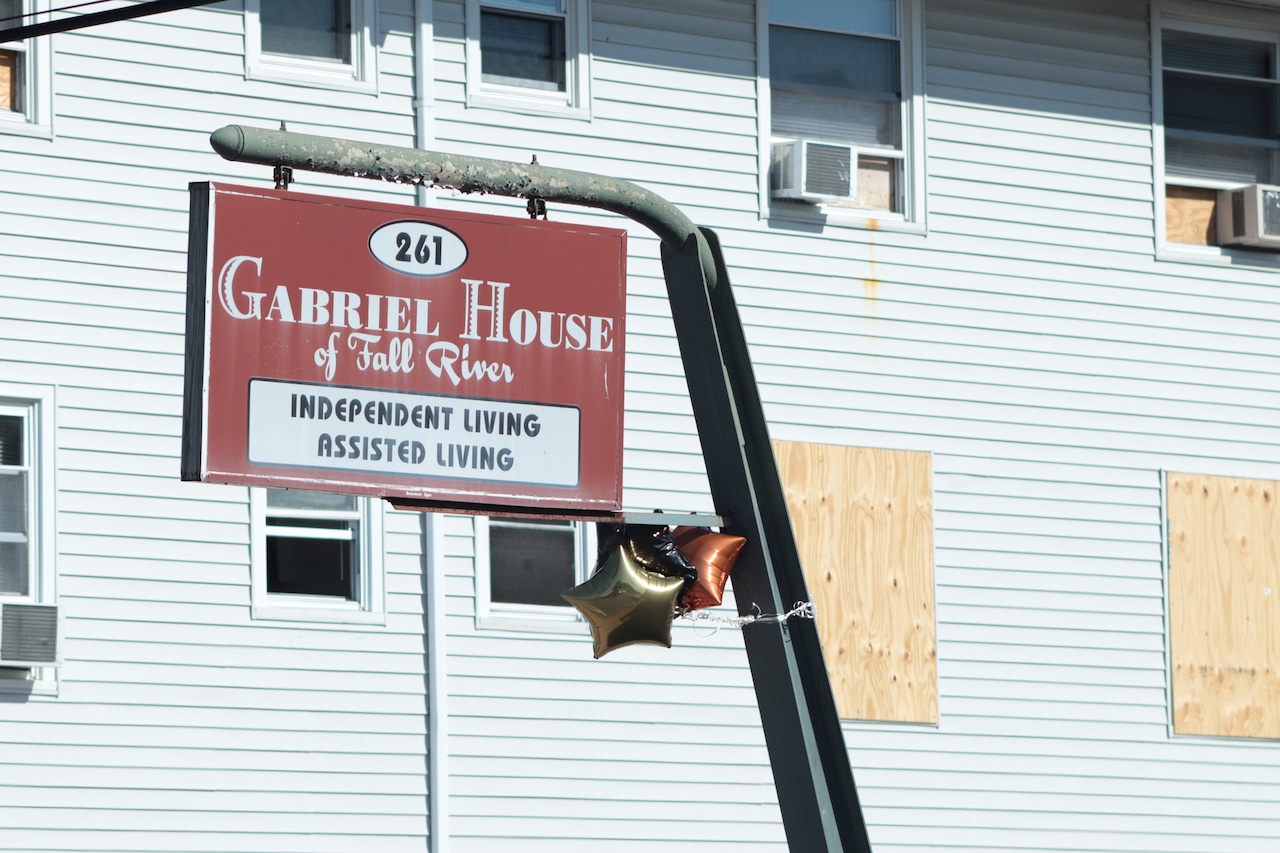
After 100% of the state’s assisted living facilities responded to a mandatory fire safety and emergency preparedness survey, elder affairs and public safety officials are launching a joint effort to narrow gaps in inspections and communication.
The survey, issued to the state’s 272 assisted living facilities after 10 people died in a fire at Fall River’s Gabriel House in July, was one of Gov. Maura Healey’s immediate actions following the tragedy that gained national attention.
All the facilities were required to submit site-specific disaster and emergency preparedness plans to the state within a certain timeframe.
Recently discussed by the state’s Assisted Living Residences Commission as a potential new regulation, state officials announced on Thursday that they will introduce a compliance verification form requiring facilities to obtain annual sign-offs from their municipal fire departments indicating they’re complying with the fire code.
“Local fire departments and building officials are on the front lines of ensuring compliance with Massachusetts’ life safety codes,” interim Public Safety and Security Secretary Susan Terrey said in a statement. “This coordinated approach makes sure municipalities have the information they need, and that older residences with reported concerns receive timely and thorough follow-up.”
The forms, tracked by the Office of Aging and Independence and Executive Office of Public Safety and Security, must be kept on file at each assisted living facility.
They’ll also be reviewed by state regulators during initial assisted living certification and recertification visits, “ensuring stronger coordination between municipalities and the state.”
The survey findings revealed that while most facilities reported strong preparedness measures, 13% (36 residences) indicated areas where they could strengthen fire drills, mutual aid plans or emergency coordination protocols.
Additionally, 69% (189 residences) identified at least one area where they could improve fire or building safety, such as by installing kitchen hood extinguishers, fire pumps or fire-rated walls.
“These opportunities for improvement do not indicate that buildings are currently unsafe or out of compliance with building codes but rather point to areas where municipalities and operators can work together to enhance resident protection,” the Office of Aging and Independence said in a statement.
State officials also emphasized that assisted living residences are classified as residential buildings, meaning they aren’t subject to the same building and fire codes as nursing homes or hospitals.
Overall, assisted living facilities in the U.S. are far less regulated than nursing homes. There are no federal regulations for assisted living, for example.
- Read more: Deadly Gabriel House fire exposes gaps in subsidized affordable assisted living business model
State officials plan to distribute the survey results to all local fire departments that are responsible for enforcing the state fire code and inspecting the buildings.
Those results will notify the departments of the 189 assisted living facilities that self-identified opportunities to enhance fire safety measures, officials said.
For the 36 facilities that self-reported gaps in preparedness, the Office of Aging and Independence will request that a “corrective action plan” be submitted within 45 days.
Those facilities will also undergo “a targeted review of their training logs, drill performance, and emergency preparedness protocols during compliance reviews to ensure corrective measures are in place and staff are adequately prepared.”
“The Gabriel House fire was a terrible tragedy,” Healey said in a statement. “It’s on all of us to do everything we can to enhance the safety of all residents and staff at assisted living residences across the state.”
In an interview with MassLive last month, Healey vowed that “necessary changes” would be made to improve public safety following the July 13 fire in Fall River.
Aging & Independence Secretary Robin Lipson said the 100% survey response rate from facilities “reflects the seriousness with which the assisted living operators are approaching this issue.”
- Read more: Read the report: Fall River Fire Department releases internal review of Gabriel House response
A recent MassLive investigation revealed weaknesses in fire safety oversight at assisted living facilities and beyond, particularly regarding sprinkler systems.
Fire safety codes and standards place the legal responsibility for sprinkler inspection and maintenance on building owners, who typically hire certified third-party contractors to complete the work.
Massachusetts fire officials told MassLive that when they conduct their annual routine inspections of high-occupancy buildings or congregate living facilities, for example, they are mostly following up to confirm documentation exists reflecting inspections have already been completed.
It’s a system that inherently paves the way for gaps in oversight, they said.
There is also no centralized tracking of fire code violations in the state, resulting in a scattershot approach to enforcement that can vary greatly depending on department resources or education.
Thursday’s actions by state officials will create a central tracking method — for the first time — for all safety inspections associated with assisted living facilities in Massachusetts.
If you purchase a product or register for an account through a link on our site, we may receive compensation. By using this site, you consent to our User Agreement and agree that your clicks, interactions, and personal information may be collected, recorded, and/or stored by us and social media and other third-party partners in accordance with our Privacy Policy.