
AMHERST — As a world record holder and a three time winner of the prestigious Massachusetts Angler of the Year award, Roy Leyva, of Leeds, has a soft spot for striped bass.
He remembers a time when there was a moratorium against angling for striped bass in the 1980s, due to overfishing. Now, years later, he worries that history may repeat itself, as their numbers have once again been in decline in recent years.
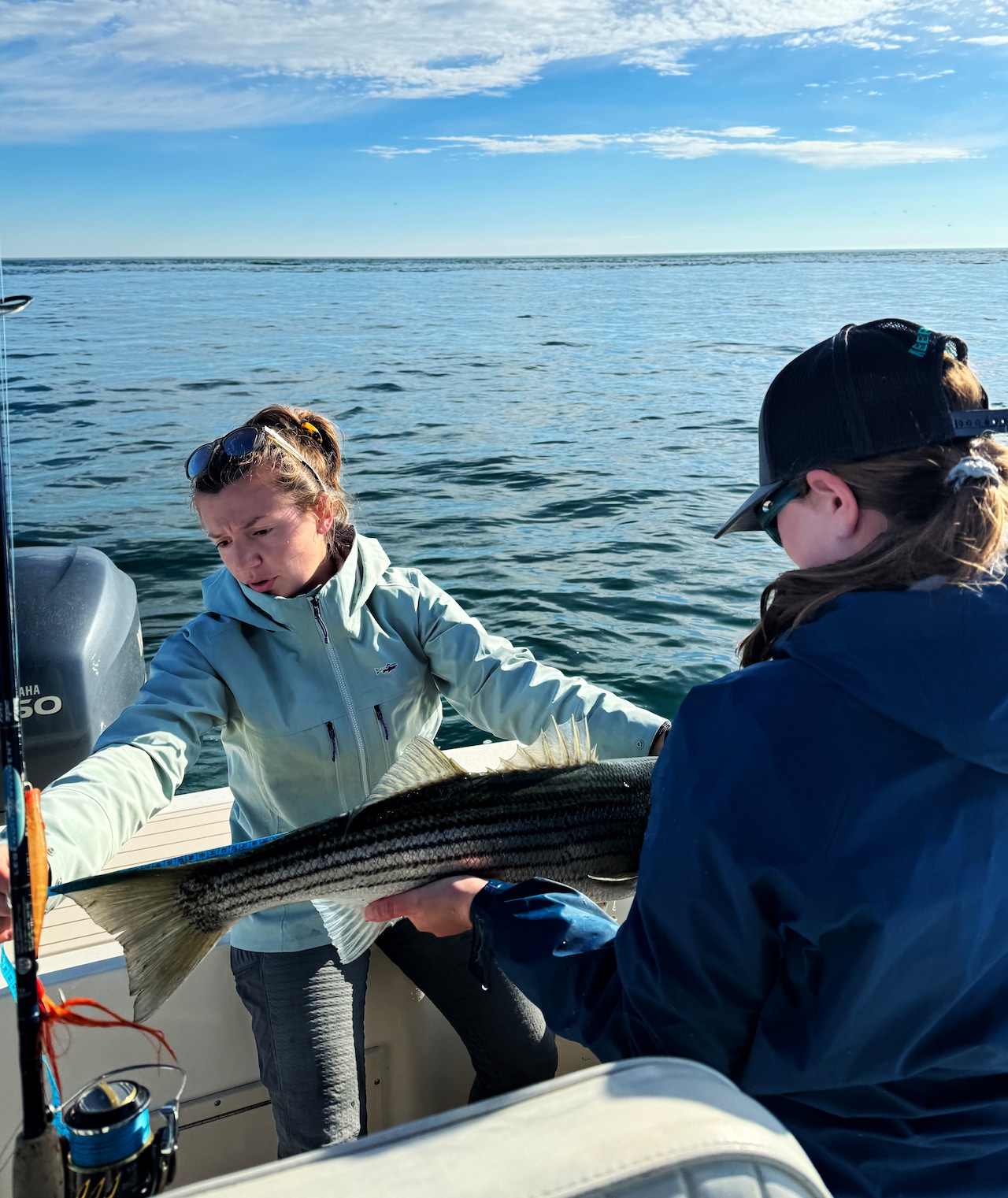
In a recent study at UMass Amherst, biologists looked at specific catch-and-release practices for striped bass, catching 521 striped bass and studying their physiological stress once back in the water. This information can be used to determine if the fish will be impaired when fighting off predators.
Researchers are hoping that the information can inform best practices among the fishing community, to preserve the numbers of striped bass and avoid another crash in the population’s numbers.
Every year, striped bass migrate from North Carolina to Nova Scotia and draw enthusiasts from all over to the East Coast. A quick search on social media will bring up endless pictures of proud catches by recreational fishermen.
A 2019 report by Southwick Associates estimates that recreational fishing of striped bass created $13 billion of economic activity and contributed $7.7 billion to the annual GDP of the states along the Atlantic.
Andy Danylchuk, professor of fish conservation at UMass Amherst, believes that conservation of striped bass is in the very hands of the anglers fishing them. A senior author on the study, he said that the anglers’ first-hand knowledge can play a vital role.
“The anglers’ voice and the way they advocate for the conservation of their lake or their stream or their ocean, without that voice and without them spending so much time on the water, having a good sense of how things are changing, we struggle,” he said.
Danylchuk regularly talks at angler clubs, believing in “informed advocacy,” where science can translate into real-world solutions on the water.
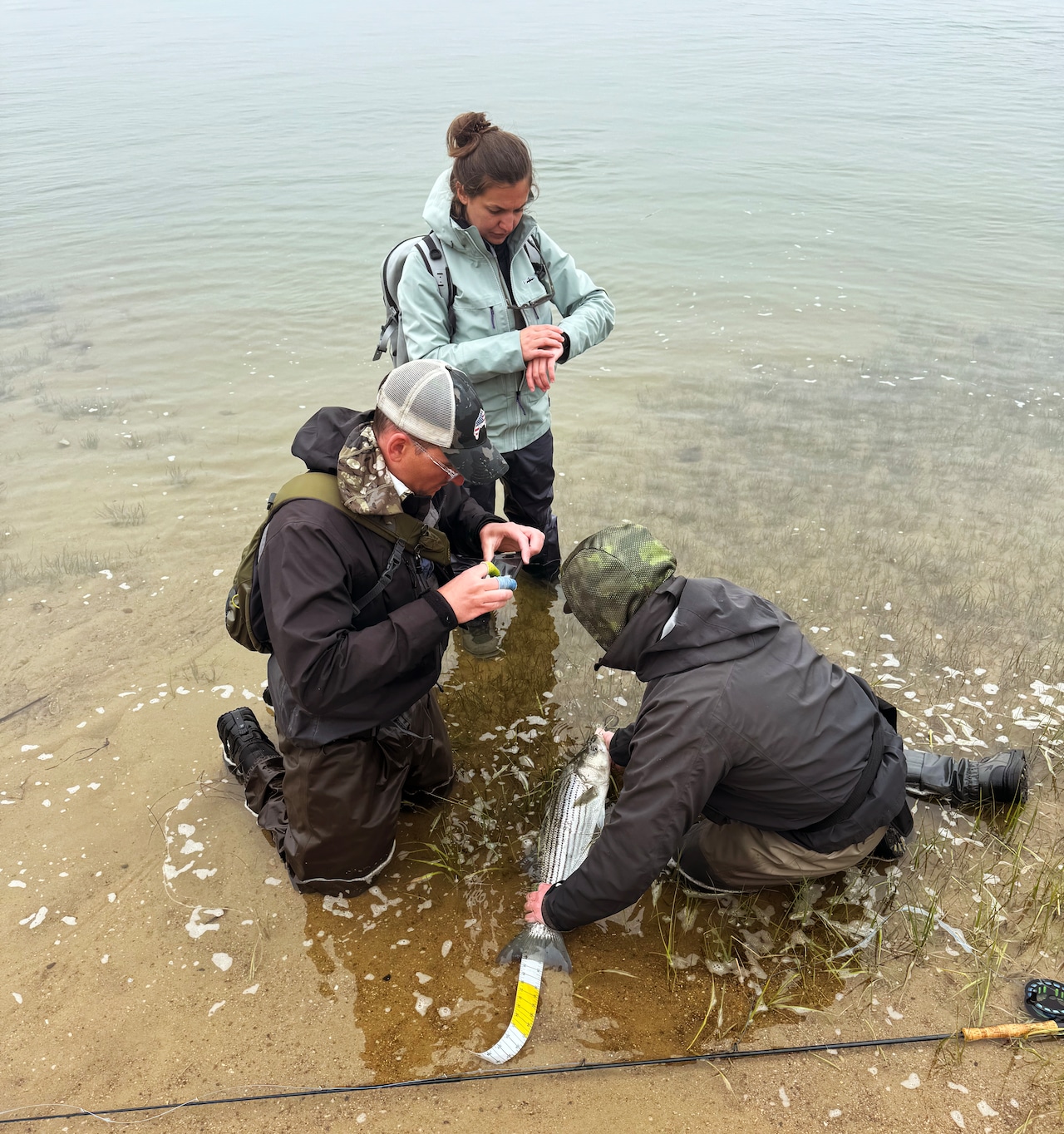
Grace Casselberry, one of the principal authors for the study, said the researchers focused on a series of reflex tests to evaluate the fish’s stress levels. They would grab the tail of a fish and watch its reaction or if it would try to swim away, for instance. The researchers also checked the movement of its gills.
For one of their last tests, they flipped the fish upside down to check its sense of equilibrium. If the fish could right itself within three seconds, they considered it unimpaired.
While the team looked at the effects of specific hooks, handling, and warming waters, they found one of the biggest influences on whether a fish made it post-release was the time they spent out of water. They examined the effects of zero seconds, 10 seconds, 30 seconds, 60 seconds, and 120 seconds, and then tracked the fishes’ post-release swim using a monitor that resembled a fitness tracker.
The researchers noticed that the fish exposed to air for longer had harder times recovering, which could determine whether they survived after being released.
Casselberry said anglers who pursue striped bass have a long history of being actively engaged. Her hope is that by sharing data that shows the detrimental effects of air-exposure to the longevity of striped bass, anglers would adopt handling practices that will help preserve the fish.
Leyva agrees that the future of striped bass is in the hands of the fishing community. “Really there’s two scenarios … either it stops completely, and it gets taken away, or we try to do whatever we can.”