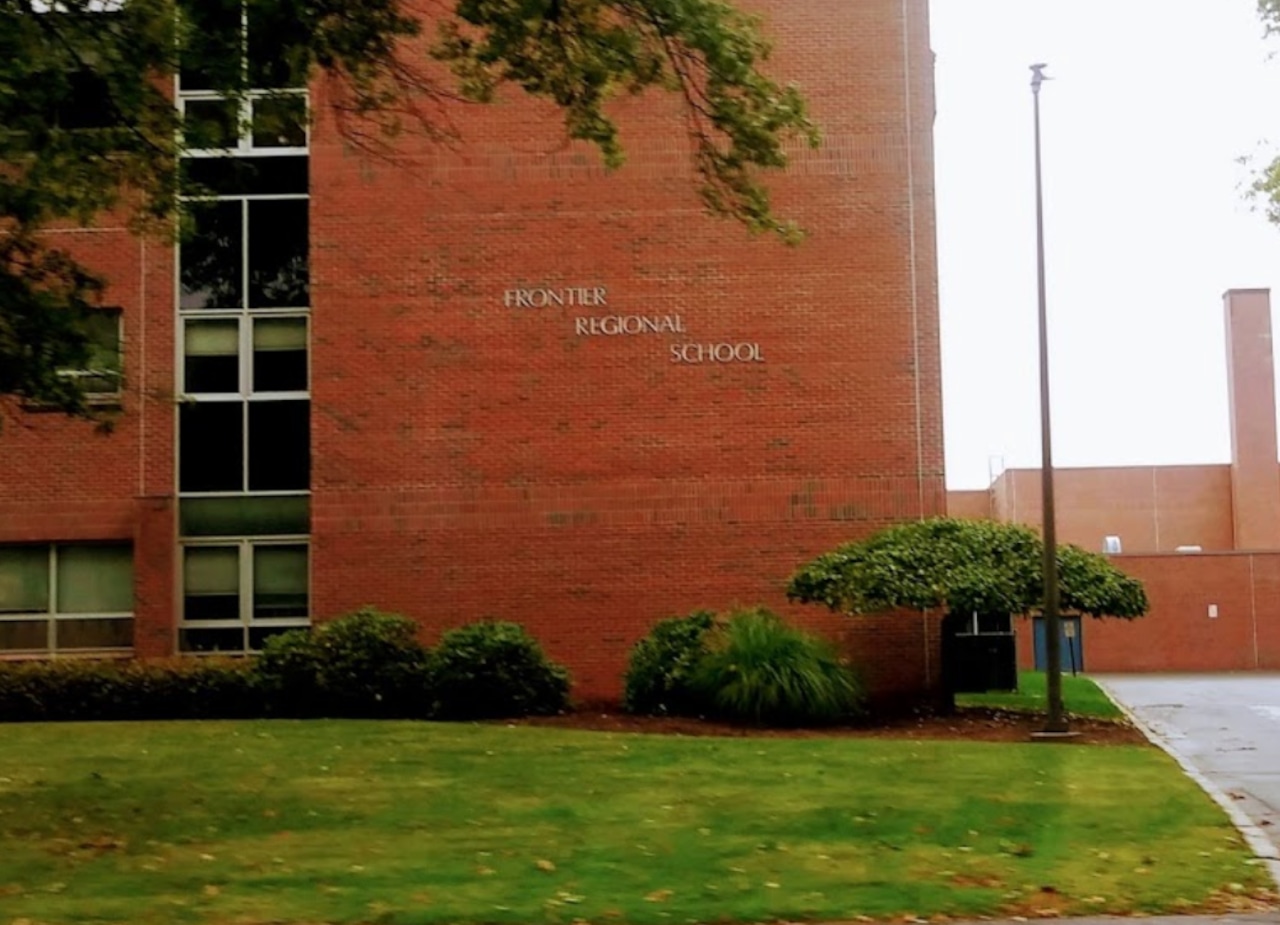
SOUTH DEERFIELD — Heading in the opposite direction from voters, the Frontier Regional School District is considering keeping the recently downgraded MCAS test as a must to earn a high school diploma.
“At this time, the administration is actively discussing potential changes to its proposal to keep taking MCAS as a graduation requirement,” said Darius Modestow, superintendent of Frontier Regional and Union 38 School Districts. The district of about 1,550 students serves Conway, Deerfield, Sunderland and Whately.
Administration is proposing that the committee consider affirming a measure that requires students to take, but not pass, the Massachusetts Comprehensive Assessment System test to graduate. It says that the test guides instruction and informs support for students, even though state voters only months ago decided to eliminate the test as a graduation requirement.
The School Committee is set to vote on the proposal to keep the test as a measure of competency at its Feb. 11 meeting. The idea was first introduced Jan. 7.
In the November election, Massachusetts voters did away with the MCAS as a graduation requirement. But the test did not go away.
“When Ballot Question #2 passed in Massachusetts, the state left it up to local schools to (decide on) competency determinations for graduation — at the same time they made it clear that the MCAS assessment is not being eliminated,” said Modestow.
The proposal is straightforward and meets state requirements, he said.
Conway parent Brittany Nickerson, who has an elementary-school-aged student, said she feels disrespected by the lack of communication and involvement in the decision-making process by the district’s administrative team.
“It’s pretty disrespectful the district would do this after (the majority of the) district voted to decouple the MCAS from our graduation requirements,” she said.
Nickerson is in favor of striking the requirement, because she said teaching to a test creates stress in the classroom for teachers and students.
“It’s not a fair outcome or assessment really of how they are learning and whether or not they’re ready for their next steps both in education and in the workforce,” she said.
Nickerson believes that the ideas suggested by Massachusetts Teachers’ Association would be more beneficial to the community.
“The (MTA) is talking about expanding access to reform education and support different standards for graduation,” she said.
Nickerson said she first learned about the new graduation requirement proposal in late January from a high school teacher. From her understanding, the measure was brought to the School Committee by the administration team without informing parents.
In the district’s defense, Modestow said there have been public discussions and the opportunity for emailed feedback from the community.
Nickerson said she has since begun a campaign working alongside neighbors, members of the MTA and the union, to inform community members of the administration’s proposal before the Feb. 11 meeting.
“At least if we were informed, we’d have the opportunity have our voices heard,” she said.
Modestow said in a statement Friday that the measure aims to maintain the district’s level of accountability during a time of uncertainty with statewide testing.
The MCAS test will continue to be administered, as federal law mandates school assessments, and it will still offer the same data.
However, Modestow noted that the value and importance of the MCAS “to many students is diminishing without the hook that the graduation requirement provided.”
If passed, the new student competency determinations in the district would include passing 10th-grade English, geometry, biology and U.S. history.
“These are the courses that students historically took just prior to taking the English, math and science MCAS exams, as well as one course in a series that prepares students for completion of the civics project,” another requirement, Modestow said.
Modestow said the district uses the MCAS in three ways: to measure curriculum alignment with Massachusetts frameworks, to identify additional support for students not passing the test and to help students determine post-secondary opportunities based on state scholarship awards.
The frameworks are state learning standards provided to teachers, students and families on what students should know upon the end of each year and graduation.
District administration isn’t trying to undermine the voters, he said. It’s aiming to maintain the test’s integrity as an achievement measure, given resource demands and its usefulness in evaluating curriculum and student progress, Modestow said.
The more the district discusses this topic, he said, the more he realizes how crucial these conversations are about assessment, the meaning of a diploma and the role of standardized testing.
“Many educators and the public may lack a clear understanding of what accountability looks like without MCAS — it’s essentially a high-wire act without a safety net. It can be done, but for the past 20 or so years, all of our procedures and practices have been built around this requirement,” he said.
“Additionally, I don’t expect the state to remain on the sidelines for long. Whatever we put in place will likely change in the next year,” he said, expecting eventual guidance from the state.
Sarah Mitchell, the district’s director of secondary education, said at the Jan. 7 committee meeting that students always have had to meet both the competency determination and graduation requirements to graduate.
Competency determination shows how well students understand the state frameworks, while graduation requirements are the courses and experiences the district requires for a diploma, she said.
The new proposal will require all students take the MCAS once but provide alternative paths for students who do not pass the first time, she said.
Mitchell said the new proposal will reduce the testing burden for students who don’t pass the MCAS on their first try and maintain the assessment’s integrity for curriculum adjustments.
The district’s current assessment practices include the MCAS and PSAT for grades eight through 10.
“In any given year, 93% to 97% of the student population who are on a four-year diploma path successfully pass MCAS in ELA, math and science on their first attempt,” she said. “This percentage is higher for students who attend school in our district prior to middle school.”
“We need this population to take the exam seriously in order to gain value from the data,” she said.