For a while after Maxwell “Macky” Baker died from a heroin overdose at the age of 23 on Dec. 28, 2016, his father James Baker couldn’t bring himself to enter his son’s bedroom.
When he eventually did, he found a trove of essays and other writing that gave him a look into Macky’s state of mind during his struggle with addiction. Reading them, along with letters and emails he had saved from his son, helped him confront his own stigma about addiction.
And he felt a responsibility to help others do the same.
Now, Baker, a palliative care doctor and president of the Massachusetts Society of Addiction Medicine, hopes his son’s story can help others support loved ones with addiction.
In his new book, “This Monstrous Obsession: Hard Lessons Learned About Addiction,” out May 7, the Holden resident combines his own memories of that time with Macky’s writing to give an honest and heartbreaking look at his family’s experience with the opioid epidemic.
“There were times I wanted to give up, but I thought, what if I had a book like that? If a parent sat down and pulled themselves together enough … to share these messages, and then I could learn from them?” Baker said. “I might still have Macky. But that book didn’t exist.”
Macky began using heroin in his teens and dropped out of high school. At age 21, he began taking buprenorphine, also known as Suboxone, a prescription drug used to treat addiction by stopping opioid withdrawal symptoms, and things began to turn around.
He got his GED certificate and associate’s degree, found a job and a serious girlfriend, and enrolled at University of Massachusetts Lowell, with the hope of one day becoming a doctor.
However, after a serious car accident in November 2016, Macky was given a small dose of opioids for pain treatment following a surgery. Just a few weeks later, he overdosed.
“Sometimes I would go to bed and then dream that he was still alive, thinking we were conversing,” Baker said of the time he spent going through his son’s writings. “I’d wake up really happy thinking, ‘Oh, that was just off an awful nightmare I had,’ and then have to realize all over again.”
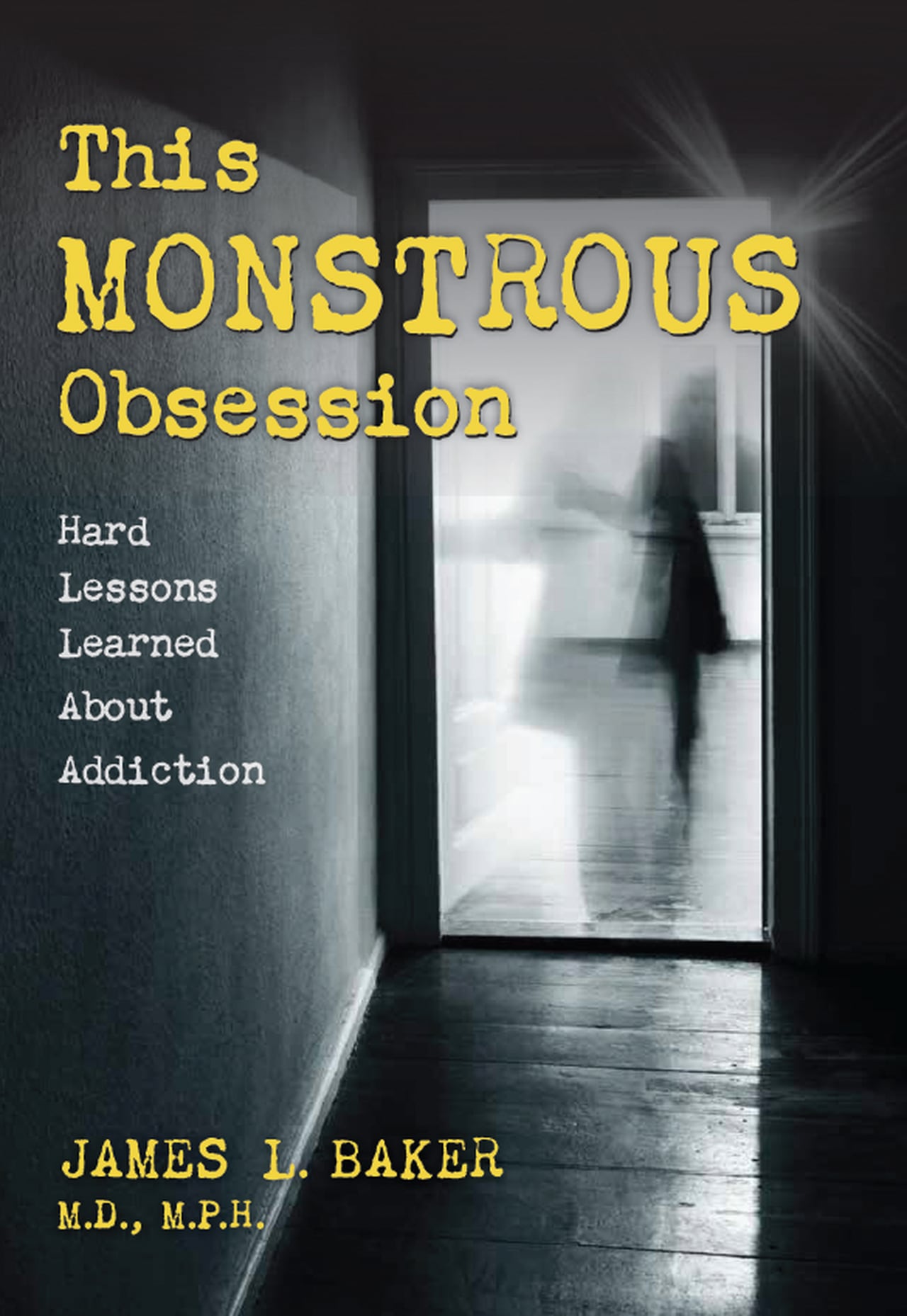
The cover of “This Monstrous Obsession: Hard Lessons Learned About Addiction” by James Baker. (Courtesy)Prometheus Books
According to the Massachusetts Department of Public Health, there were 2,323 opioid-related overdose deaths between Oct. 1, 2022 and Sept. 30, 2023. And more than 25,000 people have died in the state since 2000.
Nationwide, opioids were involved in 80,411 overdose deaths in 2021, or 45 every day, accounting for 75.4% of all drug overdose deaths, according to the U.S. Centers for Disease Control and Prevention. The number of overdose deaths involving prescription opioids that year was almost five times that of 1999.
Baker said that for a long time, overprescribing of opioids has been blamed as the main driver of the opioid epidemic, but it’s no longer the biggest issue.
“In fact, underprescribing is now an issue,” he said. “People develop painful conditions, severely painful conditions, and they’re refused opioids, they’re refused treatment. So they turn to the street, and what they find on the street is far deadlier than any prescription drug.”
The primary barrier to addressing the epidemic, though, is that many physicians don’t want to treat addiction, he said, due to stigma, a lack of incentive to do so or simply not knowing how to do it.
In “This Monstrous Obsession,” Baker acknowledges his own misconceptions about the disorder when he worked as an emergency room doctor earlier in his career, during his son’s addiction, and all the way up to Macky’s death.
He explained that like he once did, many people believe substance use disorder is a choice and people struggling with addiction are bringing it upon themselves.
“Among physicians, I think it’s even worse,” he said. “We are busy taking care of the things we’ve been trained to take care of in the emergency room, a heart attack or a gunshot, and we know how to do that. Then someone comes in with an acute issue related to substance use, and there’s a feeling that they’re getting in the way or they’re interfering with what we really should be doing.”
Compounding the issue is the fact that, until recently, most doctors, Baker included, had never undergone training on how to care for patients with addiction. And even if they had, there is little financial reason for them to do so.
Addiction is incredibly complex to treat, he explained, and doctors get reimbursed very little for the frequent check-ins required.
Even receiving a prescription for addiction medications is next to impossible: until last year, physicians could be arrested and charged for prescribing buprenorphine for addiction without a waiver from the federal Drug Enforcement Administration. Once a patient receives a prescription, they still have to find a pharmacy willing to fill it, because many won’t, Baker said.
Methadone, another medication used to treat opioid addiction, can still only be prescribed for that purpose through a federally-approved opioid treatment program. In contrast, Baker said, he or any medical professional with a DEA license could prescribe methadone every single day for pain treatment.
When trying to find help for Macky, Baker and his son tried countless doctors and treatment programs only to be turned away or sent on to somewhere else.
Baker said that if a patient goes to their doctor for help with addiction, the doctor’s answer should be, “Yes.”
“I shouldn’t offer you a phone number and say, ‘Here, call these people,’” he said.
In 2019, Baker began speaking with U.S. Rep. Lori Trahan, D-3rd District, about legislation requiring DEA-registered prescribers to undergo training on addiction treatment. Trahan sponsored the Medication Access and Training Expansion Act, which was signed into law in December 2022, and went into effect in July.
Baker continues to advocate for change in how addiction is treated, but for the average person, he hopes his book will help anyone worried about a loved one with substance use disorder.
“The most important thing you can do is to be kind, to be understanding and to be ready,” he said. “The response of anger or cruelty or punishing you is going to drive you further underground and hide your use. But if I’m kind to you and understand that you have a problem that you can’t control … I (can) be your loving family member who guides you to treatment when you’re ready.”
“This Monstrous Obsession: Hard Lessons Learned About Addiction” is out May 7 from Prometheus Books. It is available now for preorder.