“Wonky,” “chaotic,” “brutal,” and “weird” are just a few of the descriptions being tossed around to describe the Massachusetts job market in mid-2025.
Universities like MIT and the UMass Chan Medical School have instituted hiring freezes because of expected cuts in federal research funding. Companies are looking to artificial intelligence tools and offshore contracting as ways to get work done without bringing on new full-time employees. And both employees and employers worried about being scammed by job postings — and job applicants — that may not really exist.
“I always use the word wonky, because it’s not the worst it’s ever been, but it’s very funky,” says Dave Strickler, a technology exec who is taking on consulting projects while hunting for his next full-time role. “People are getting hired,” but Strickler says his experience over the past two years has more often been applying for jobs and hearing nothing. “It’s rough out there,” he says.
Not all the data is gloomy, though. The Massachusetts unemployment rate stands at 4.4% as of March. The outplacement firm Challenger, Gray, and Christmas reports that announced layoffs and job cuts have dropped by 33% in the first four months of 2025, as compared to 2024. And state data highlights job growth in fields such as education, health services and government this year. According to the federal Bureau of Labor Statistics, Massachusetts also has a higher-than-average number of job openings, as of February, compared to other states.
But the on-again-off-again tariffs, as well as uncertainty about how things like new drug approvals will be handled, are causing some companies to simply hit “pause” on hiring to see how things shake out over the coming months.
“Markets hate volatility, and the current insanity is slowing investment and new projects,” says Jon Finegold, who is just entering the job market in May after more than eight years serving as the chief marketing officer of Signiant, a Lexington-based cloud computing firm.
Based on more than a dozen conversations with Massachusetts recruiters and job seekers over the last week, here are seven dynamics they’re seeing in the job market — many of them connected to AI.
The specter of ‘ghost postings’
An increasing number of job seekers in Massachusetts are encountering “ghost postings” — job listings that companies don’t actually intend to fill in the near term. A 2024 analysis by Greenhouse, a hiring platform, revealed that in any given quarter, between 18% and 22% of job postings on its site were ghost jobs. These postings may be collecting resumes for future opportunities or trying to create the perception of a company that is healthy and growing. Strickler says that if companies are uncertain about the current economic environment, it may be a way to gauge what quality of candidates they could attract for a future hire — but he says it’s “really annoying” for people who need a job in the present.
Is this candidate for real?
Recruiters also tell me they’re starting to find job profiles and applicants who look a little less-than-authentic, with degrees from the same schools and experience at the same companies. Sejal Segar of Catalyst Talent in Framingham says these fake job seekers may be trying to land remote U.S. jobs that pay a much higher salary than they could earn in their own country. Or they may be trying to steal company data and secrets.
“Nobody knows why they exist,” Segar says.
The research firm Gartner predicts that up to 25% of résumés online could be fakes by 2028. And trying to identify these synthetic candidates is already slowing down the hiring cycle, Segar says.
AI vs AI
Artificial intelligence is playing a dual role in the job market. Employers use AI-driven applicant tracking systems to filter resumes, prompting candidates to employ AI tools like ChatGPT to tailor their applications accordingly. Nat Arlander, a life sciences exec who was part of a layoff last year at Takeda Pharmaceuticals in Cambridge, says, “Today, with the AI [filtering tools], it seems that if you don’t know somebody, you’re not getting seen. There’s like a 2% chance of getting an interview if you’re a cold applicant.”
This reliance on AI for applicant screening makes job seekers feel they need to use ChatGPT or another AI tool to customize their résumés and cover letters for each individual job they apply for. Recruiter Keith Cline of the recruiting site VentureFizz calls it “AI vs. AI,” and says that he doesn’t think that “the best people are getting hired because they were able to game the system with a better AI tool.”
Employers are getting less flexible
After years of remote work flexibility, many Massachusetts employers are now dictating which specific days employees need to show up at the office.
“I am seeing real definition around, ‘We come on-site two days a week, and the days are Tuesday and Thursday. If that does not work for you, we won’t move forward,’” Deborah Kurtz, founder of the Southborough recruiting firm Magenta Search, explained.
In the current environment, companies also demand hyper-specific skill sets, experience with particular software programs or technologies and local candidates.
“If your résumé doesn’t say the city on it, and there’s an on-site requirement, they will automatically disqualify you,” Kurtz added.
Computer science is a ‘dead career,’ but the trades are thriving
Massachusetts, traditionally known for its white-collar industries like health care and software, is seeing pockets of strong demand for tradespeople. Recruiter Kate Morgan of the firm Boston Human Capital Partners observed: “The last thing you should send your kids to study in college is computer science — computer science is a dead career now,” in part because AI tools like GitHub can now generate pretty good software code.
Companies in the trades — doing work such as plumbing, heating, mechanical repairs and finish carpentry — are the ones she hears from in 2025 that are most eager to find new hires, Morgan says.
“How are you with a hammer?” she asked.
Offshoring and AI usage may be slowing local hiring
Morgan says she’s seeing small businesses control costs by offshoring some of the work they do — such as administrative support and software development — to firms in less expensive countries. One entrepreneur she knows mentioned that he was sending work to Colombia or the Philippines “because the teams there are more eager and willing to work.” And often, work can get done at a fraction of the cost as in the U.S.
And companies are exploring the use of AI tools to potentially reduce their need for new employees. A recent memo from the chief executive of Shopify, an e-commerce services firm based in Ottawa, suggested that “before asking for more headcount and resources, teams must demonstrate why they cannot get done what they want using AI.”
Morgan, who runs a nine-person recruiting firm, said she is acutely aware of the cost of adding more employees.
“I told my team to use AI … at least 30% of the time … I can’t afford to hire another body, because it’s going to eat into my profits,” she said.
Many jobs never get posted, which highlights the importance of networking
Some roles never get posted to websites like Indeed or LinkedIn, for a number of reasons. One may be that companies don’t want to get swamped with hundreds of applications. Another possibility is that they are trying to “trade up” and replace an employee or executive who currently works at the company with someone more accomplished, and they want to keep that under wraps.
“Companies are quietly upgrading talent through unposted roles, often sourcing candidates through internal networks rather than public listings,” explains David Chang, a general manager at Hunt Club, a recruiting company.
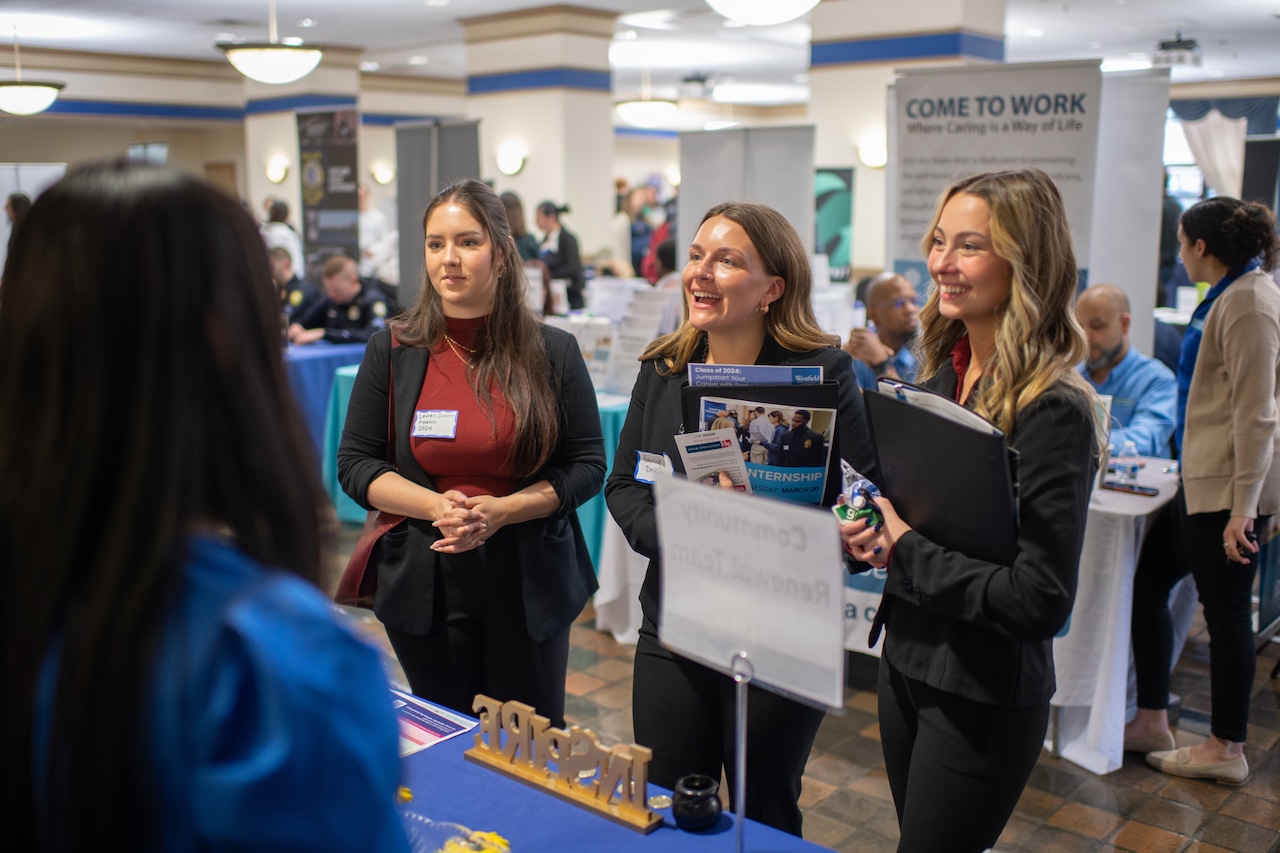
That kind of “stealth” hiring, says Cline, highlights the importance of having a strong personal network, especially when it comes to finding out about openings that haven’t been posted — or standing out when an opening has received hundreds of applications.
Many people let their networks wither during the COVID pandemic, when it was tougher to go to conferences or meetups, or to set up a casual coffee meeting, Cline said.
But for candidates that hope to land their next gig, “you need to be visible, and get that networking skillset dusted off. Nurture your existing network and make new connections,” he said. “Your network is your gold.”