
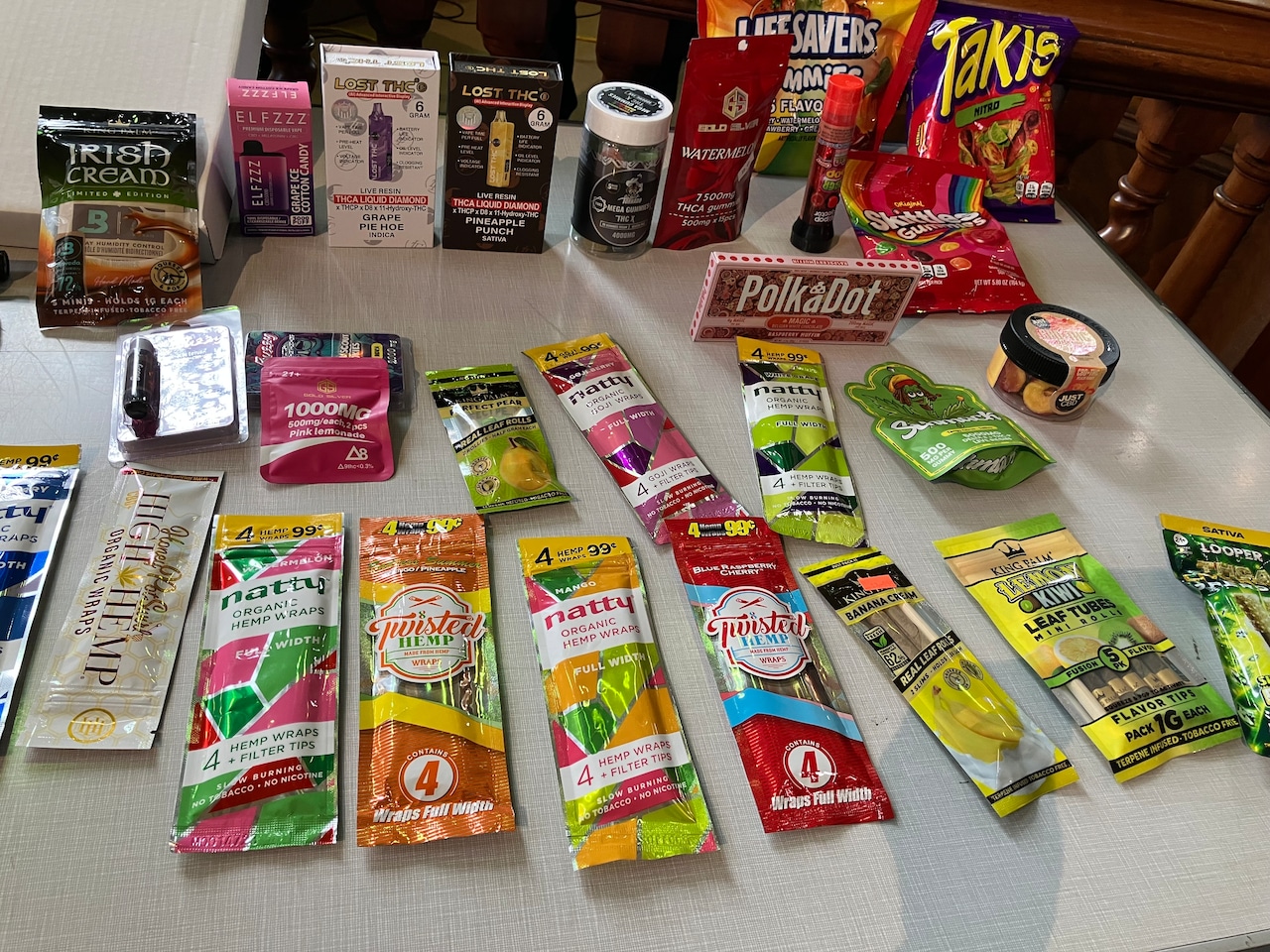
SPRINGFIELD — Concerned about “gas station weed” being sold unregulated in convenience stores and other locations, the city will become the first in the state to try to crack down on the drug by slapping a substantial fine on anyone selling the products.
While the sale of marijuana has been heavily regulated since it was legalized in Massachusetts in 2016, there are some manufacturers and store owners who get around the law by selling a hemp product infused with synthetic substances that gives people a similar high, said Helen Caulton-Harris, commissioner of health and human services.
“We have a list of 12 to 13 places in the city that are selling these illegal products and we have identified them and so we know where they are and what products are being sold there,” Caulton-Harris said. She did not release the names or locations of the stores.
Although the products are unlawful, there are no regulations to stop their sales and police cannot seize the items. Store owners can also sell them to people under 21 which is the lawful age to purchase legal cannabis, said Xavier Williams, the city’s cannabis control coordinator.
The “gas station weed” is created in a lab using unknown components and solvents. Unlike legal cannabis, it is not tested and not labeled so people don’t know the potency. Some products are contaminated with mold, bacteria, pesticides and heavy metals, Williams said.
Mayor Domenic J. Sarno said his administration is spearheading the proposed regulation in part because of his concern the products often are marketed with labels that make them look like candy, are sold next to chips, cookies and other snacks and could easily and accidentally be purchased by children.
“We want to protect individuals, especially young people,” he said. “The first thing on my mind is kids, kids, kids.”
Caulton-Harris called it a “gateway drug.”
Deputy Police Chief Steven Kent said he has similar concerns. At first, he didn’t see the urgency about the issue until Williams told him about shop keepers giving free samples to potential customers.
“That’s classic drug-dealer behavior,” Kent said.
The ordinance, which will be the first in the state to aggressively crack down on the unregulated cannabis, calls for the city to set a $300 fine per any item infused with synthetic marijuana found in any store. That is the maximum fine the city is allowed to issue, said Stephen Buoniconti, the city solicitor.
“Once this matter goes into effect, as law we are already crafting a plan with the police department, with health and human services and the law department and others to go into stores, confiscate that product and get it off the shelves,” he said.
The state legislature is also taking up the subject now, but Buoniconti said city officials are not confident a law will come to fruition quickly and be strong enough.
“We think they are dancing around the subject,” he said. “We are going right after it … this is the most aggressive legislation in the commonwealth.”
The goal is to protect people by removing the products from all stores. While the fine initially does not seem that heavy, most stores sell multiple products so the totals will add up quickly. For example, if 10 products are found in a store, the owner would pay $3,000, Sarno said.
“How do you get people’s attention? Hit them in their pocketbook or their wallet,” he said.
The ordinance goes farther by calling for landlords to be notified if a storeowner is fined.
The ordinance will now go to the City Council for debate and approval. Councilors Malo Brown and Maria Perez attended the announcement and pledged to help shepherd it through all the steps to get it passed.
Perez thanked Sarno for bringing awareness of the issue to the city, saying for her there was a “wow factor” of realizing how harmful the product can be to someone, especially a child, if they accidentally ingest it.
“I’m going to be steadfast on this,” she said.
While the ordinance is designed to protect people, it is also designed to create a system of fairness with the owners of legal marijuana stores who are paying taxes and following all state regulations, Sarno said.
Already many owners are struggling with a saturated market and the synthetic marijuana sold in gas stations and bodegas are taking away potential customers and creating unfair competition, said Lamont Clemons, owner of Primus Cannabis on State Street.