
The days have been slowly shortening since the Summer Solstice in June, but the change becomes more apparent here in southern New England around now, as it does every August. Another sign that summer is lightening its grip is the rising chorus of high-pitched insect sounds filling the evening air in many locations. The chirps of tree frogs often punctuate the drone.
Be sure to give a good listen. The ambience of these earlier evenings can be wondrous for those lucky enough to be in the right places. Of course, your exact location, the weather and other factors like interference from traffic noise will influence what you hear.
But even as the subtle changes become increasingly hard to ignore, it is worth reminding ourselves that we are just 47 days into this summer — just halfway through … at least according to our calendars. Nowadays, I’m identifying more with the so-called meteorological seasons … especially meteorological summer which refers to the three statistically warmest months, June, July and August.
By this reckoning, the end of summer comes sooner, but that seems reasonable to me. Even though summer officially extends well into September, that month has always evoked a sense of fall in my mind’s eye.
In either case, we still have to get through August, and this summer has felt warmer than most I can remember here in Western Massachusetts. Globally, 2024 has emerged as the warmest on record, so it doesn’t help that this year is in the running to be the only the second or third warmest.
It is worth reminding yourself that relief can come with cooling air after dark. The sun sets before 7:30 p.m. by the end of this month, in Springfield and the surroundings area. If the youngsters around you feel the lure of the earlier evenings, find whatever reasons you can to get yourself and the kids out there, and if possible, far away from city lights.
Many children today are missing the night experience that I so loved as a kid, and it’s a shame. I worry that while missing one of life’s greatest joys, many could unnecessarily develop an unhealthy fear of the dark.
Currently, a waxing gibbous moon diminishes the number of stars visible, but if skies are clear, look up and imagine what amazing sounds might be filling the nights of other worlds out there. NASA’s count of exoplanets (planets orbiting stars other than our sun) is approaching 6,000, although so far, very few seem likely to have life — at least life as we know it.
Our planet is almost literally covered in life, a thriving ecosystem extending from well beneath the surface high into the atmosphere. Outside of Earth, nothing living has been found that did not hitch a ride on one of our spacecraft or probes, not a single microbe. And it’s not as though we haven’t been looking.
On August 6, 2012 — 13 years ago today, NASA’s Curiosity rover landed in Gale Crater on Mars, continuing the exploration of the Red Planet started in the 1960’s.
Curiosity joined NASA’s solar-powered Opportunity Mars rover, which was still functioning after nearly eight years of brutal Martian conditions. The Odyssey orbiter, which arrived there in 2001, was the oldest working spacecraft then at Mars.
This month, we also mark two significant launch anniversaries involving Mars exploration. First and most notably is the blast-off from Cape Canaveral in Florida of NASA’s Viking 1 mission to Mars 50 years ago on August 20, 1975.
Viking 2 followed a month later, on September 9, 1975.
After their year-long journeys, each Viking deployed an orbiter, and the landers set down on that alien world. Viking 1 touched down on July 20, 1976 — exactly seven years after the historic Apollo 11 landing put the first humans on the moon.
The Vikings carried no people, but much of what we know about Mars today can be traced back to those wildly successful missions that forever raised the bar for planetary exploration. Along with the cameras and numerous other experiments, both landers tested surface samples for signs of life.
They were the first ever to do so, and notably, the last. The reasons there have been no new life-detection experiments are complex, and may have to do with the controversy surrounding the Viking results. The scientific consensus is that they did not find any life, but questions remain.
The second anniversary I wish to mention is the more recent launch of NASA’s Mars Reconnaissance Orbiter, 20 years ago, on Aug. 12, 2005. Less well-known than the Vikings, the MRO is a workhorse still busily photographing the surface of Mars from orbit today and serving a critical supporting role in the ongoing exploration of Mars.
Since entering orbit around Mars in 2006, the MRO has been collecting volumes of detailed surface imagery using its telescopic HiRise camera, providing mission planners with something resembling a Mars version of Google Earth. It also serves as a relay to receive and re-transmit data from other probes, including those on the surface.
Aside from the incredible volume of surface imagery, the MRO has achieved some remarkable feats of photographic targeting, such as capturing a picture of the Curiosity rover parachuting its way to the surface.
As different as the Vikings and the Mars Reconnaissance Orbiter missions are, they represent two of the most significant Mars missions ever flown.
Before the Vikings, NASA’s Mariner 4 became the first craft to reach Mars in July of 1965 after one previous attempt by the United States and five by the Soviet Union. When my Dad showed me Mariner 4’s first flyby pictures in the pages of Aviation Week and Space Technology magazine, I had to look from across the room to discern the faint crater outlines through the image noise.
Despite their poor quality, those first pictures revealed a surface that looked more like the moon than Earth, and in a cultural instant, the dreams of a thriving Mars civilization once promoted by astronomer Percival Lowell were dashed.
Now MRO’s High Resolution Imaging Science Experiment (HiRISE) camera routinely delivers images from more than 230 miles above the surface with a resolution of better than 1.5 meters per pixel. Mars Reconnaissance Orbiter has completed 60,000 orbits, returning 361 terabits of total science data to Earth — more than all other past and present interplanetary missions combined.
Including MRO, seven orbiters and two rovers are currently operating at Mars.
Throughout history, Mars has fascinated humans due to its reddish color and dramatic shifts in brightness. Now we have the benefit of knowing that its color in the sky is a literal reflection of the color of the rust-colored rocks and soil on its surface, and that its brightness changes with distance.
Mars is the fourth planet from the sun, the next planet out from Earth. Around opposition, when Mars is in line with the Earth and sun, and thus closest to Earth, it is one of the brightest of all celestial objects. Only the sun, moon and Venus regularly outshine it. It is farthest and dimmest as it swings around the sun’s far side. On its way, it gets lost from view in the sun’s glare, as is happening now. For casual observers, it is already too dim and deep in the glow of sunset to find.
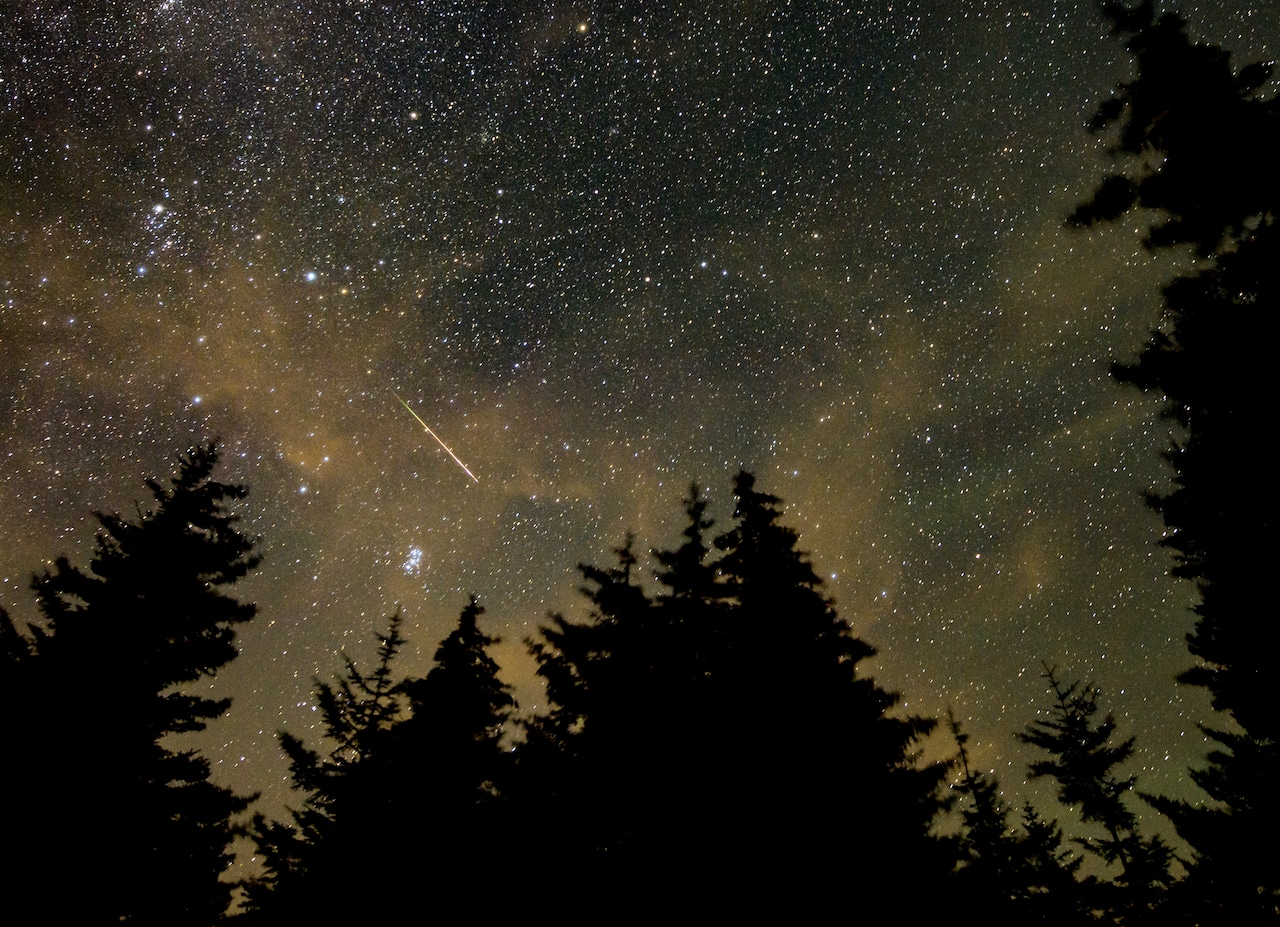
In just a couple of days, around the nights of Aug. 11 and 12, the annual Perseid meteor shower will reach its peak. A waning gibbous moon will interfere, but you might catch a decent display after dusk on Aug. 12 before the moon rises.
Find rise and set times for the sun and moon, and follow ever-changing celestial highlights in the Skywatch section of the Weather Almanac in The Republican and Sunday Republican.
Patrick Rowan has written Skywatch for The Republican since 1987 and has been a Weather Almanac contributor since the mid 1990s. A native of Long Island, Rowan graduated from Northampton High School, studied astronomy at the University of Massachusetts-Amherst in the 1970s and was a research assistant for the Five College Radio Astronomy Observatory. From 1981 to 1994, Rowan worked at the Springfield Science Museum’s Seymour Planetarium, most of that time as planetarium manager. Rowan lives in the Florence section of Northampton with his wife, Clara, and their cats, Eli and Milo.
If you purchase a product or register for an account through a link on our site, we may receive compensation. By using this site, you consent to our User Agreement and agree that your clicks, interactions, and personal information may be collected, recorded, and/or stored by us and social media and other third-party partners in accordance with our Privacy Policy.