
In a letter this week to Gov. Maura Healey and her public safety secretary, a state senator described a “potential homicide” at a Boston jail as part of a larger troubling trend of deaths occurring inside the state’s correctional facilities.
Sen. Liz Miranda, D-5th Suffolk, wrote with concern about the Dec. 8 chaotic death of 32-year-old Shacoby “Coby” Kenny, who was incarcerated at the Suffolk County House of Correction at 20 Bradston St. in Boston, often referred to as South Bay.
Kenny’s death, Miranda said, and a rash of deaths within the state prison system between September and November, underscore “the urgent need for correctional oversight,” specifically outside overnight. In Massachusetts, prisons are overseen by the Department of Correction, while jails are under the control of county sheriffs. They largely govern themselves.
“For too long, the lack of independent oversight of Massachusetts jails and prisons has contributed to systemic dysfunction and lackluster responses to reports of mistreatment of incarcerated people,“ Miranda said in her letter.
- Read more: Answers demanded after rash of ‘unexpected’ deaths in Mass. prisons; DOC initiates review
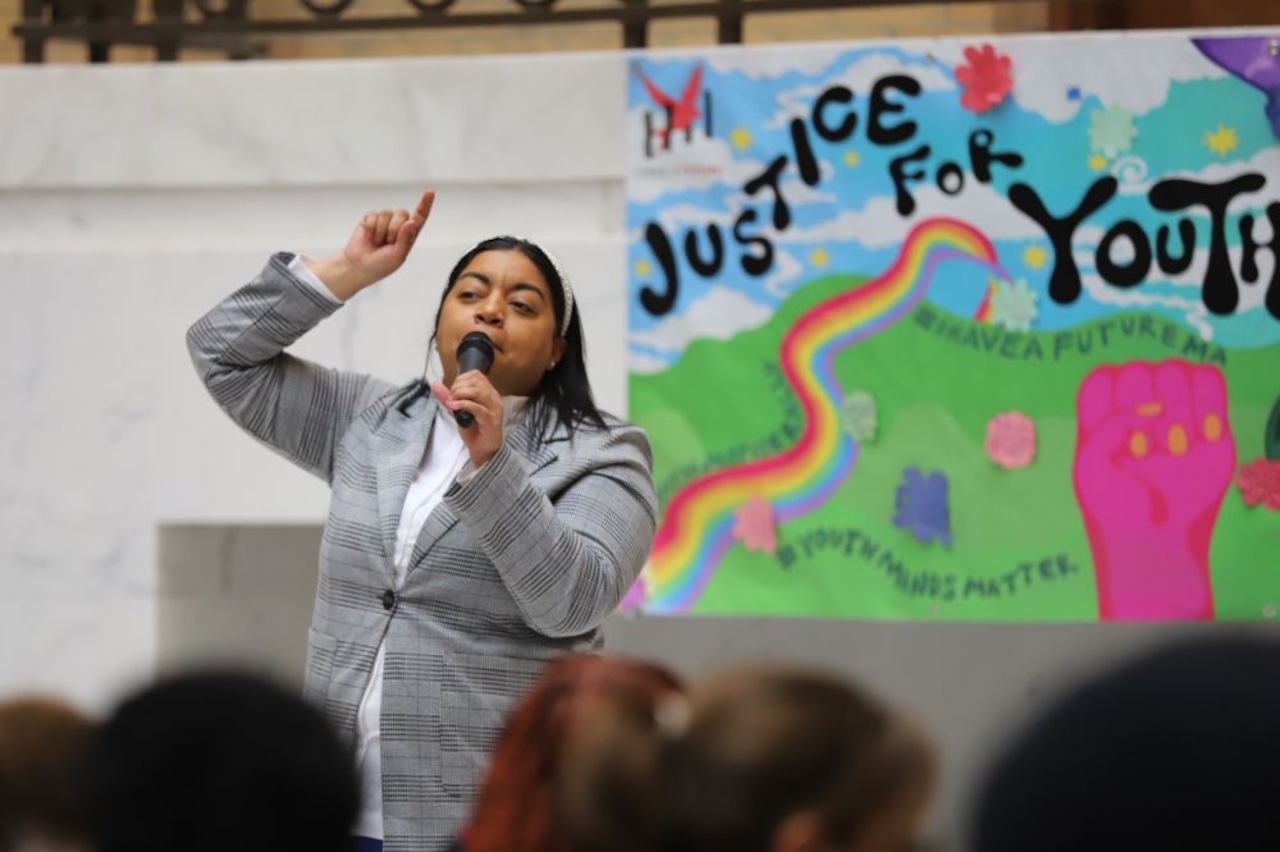
The senator asked for Healey and Secretary of Public Safety and Security Gina Kwon to support the creation of a correctional oversight commission and an inspector general for the state’s prisons and county jails. She highlighted three pieces of pending legislation on Beacon Hill — S. 1723, S. 1724 and S. 1725.
A spokesperson for Healey’s office said the governor is reviewing the letter.
What happened to Shacoby Kenny?
According to the Suffolk County Sheriff’s Office, Kenny, who had a history of mental health issues, “began exhibiting erratic behavior and physically attacked” staff on the night of Dec. 7. After being brought under control, the sheriff’s office said, he became unresponsive. He was pronounced dead at a hospital the next morning.
Recent reporting by The Boston Globe has painted a more detailed picture of what happened that night. Internal video obtained by the Globe shows Kenny running around a cafeteria fleeing a group of officers after he appeared to square up with one of them.
While the video is grainy, it shows a scrum forming between several correctional officers and Kenny by a stairwell, with at least one officer throwing punches.
Witnesses to the incident told the Globe that officers knelt on Kenny’s neck when he was on the ground and responded with excessive force, considering his mental health challenges were known throughout the unit.
“Whatever the situation was, he didn’t have to die like that,” one witness told the Globe.
All in-custody deaths in Massachusetts are referred to the Office of the Chief Medical Examiner. Kenny’s official cause and manner of death is not yet known.
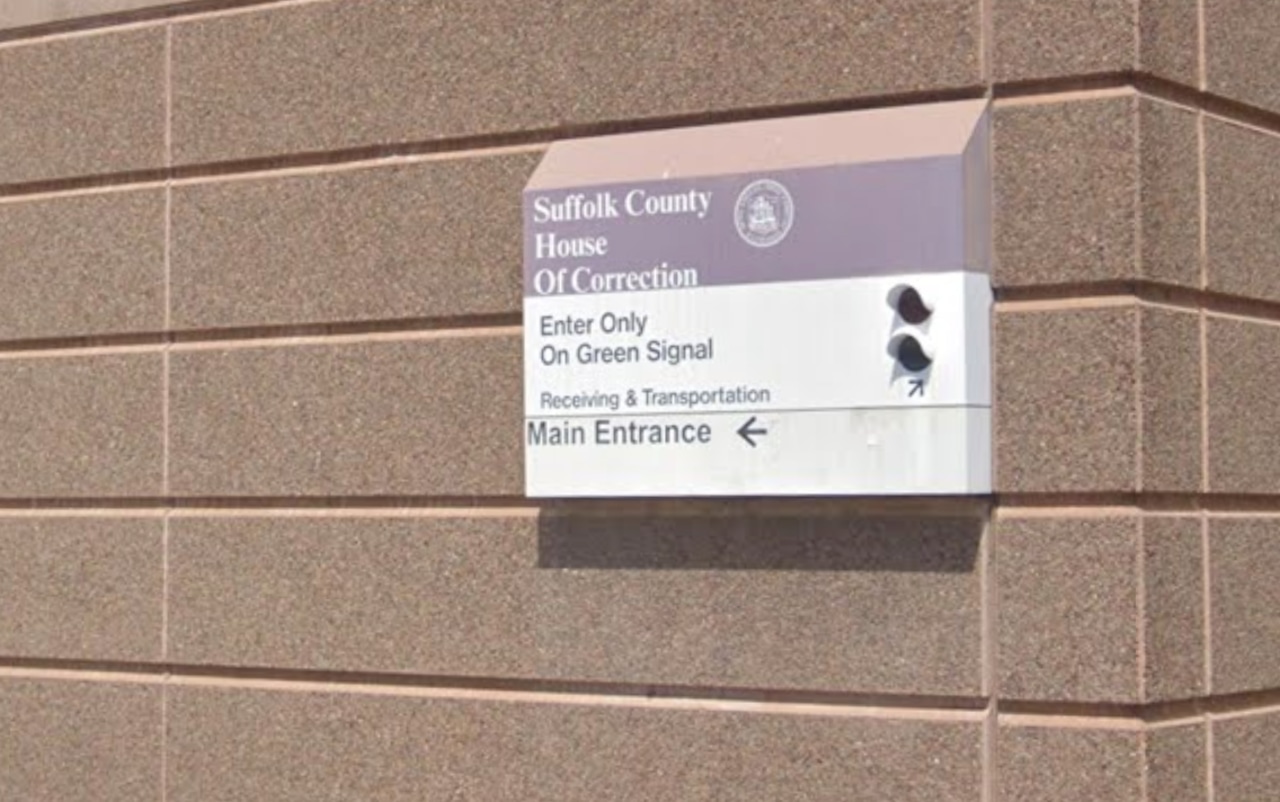
Both the Suffolk County sheriff and district attorney, as well as Boston police, say they are investigating the circumstances surrounding Kenny’s death, which has merited outcry from advocates for the incarcerated. On Dec. 15, dozens of people, organized by the Massachusetts Bail Fund, gathered outside of South Bay to protest.
Kenny’s obituary described him as “full of life, curiosity, and energy.” He grew up in Springfield, and church played a central role in his life.
“Coby faced challenges throughout his life, including mental health struggles that began in early childhood,” the obituary reads. “Despite these challenges, he remained intelligent, expressive, and hopeful. He wanted more out of life, a job, a family, stability, and purpose. He longed to build a future and to be understood for who he truly was.”
Kenny played football for Springfield Central High School about 15 years ago, according to clips on file at The Republican. A speedy defender at middle and outside linebacker, he ran back an Agawam fumble 91 yards for a touchdown on the way to a 41-12 Central victory in October of 2011. That was in his junior season.
A GoFundMe campaign set up by Steven R. Williams, senior pastor of Revival Time Evangelistic Center in Springfield, to assist Kenny’s mother, Druesilla Brown, with funeral expenses has raised more than $6,000 toward its $7,000 goal.
Visiting hours are 10 a.m. to 11 a.m. on Jan. 8 at St. John’s Congregational Church, 45 Hancock St in Springfield with a service following at 11.
Prisoners’ Legal Services, a Boston-based nonprofit, has said its brutality team is investigating Kenny’s death.
“Shacoby Kenny’s death at the Suffolk County House of Correction is another tragic indicator of the urgent need for increased transparency and accountability of Massachusetts’s prisons and jails,” the organization posted on social media this month.
The Suffolk County Sheriff’s Office could not be reached for comment for this story.
Sheriff Steven Tompkins is currently facing federal extortion charges, in what prosecutors have described as a scheme to extort an executive at a cannabis company opening in Boston, where he used his influence as sheriff to enrich himself.
He stepped away from his duties as sheriff while the criminal case is pending and has denied the allegations. In October, he sought to have the charges dismissed.
In Tompkins’ absence, Mark Lawhorne is serving as interim sheriff.
A lawsuit is currently pending in Suffolk County Superior Court related to another death at South Bay that occurred in July 2021. The lawsuit alleges 35-year-old Ayesha Johnson, a mother of two civilly committed for alcohol abuse treatment, spent more than an hour lying unresponsive on the floor of her cell, before she was found by multiple officers who waited five minutes to perform life-saving measures.
Johnson was one of five deaths reported within six months at the facility in 2021, according to death data from the Suffolk County Sheriff’s Office.
Miranda: ‘An impetus for systemic change’
In her letter to Healey and Kwon, Miranda questions the fact that the Suffolk County Sheriff’s Office is investigating what she calls a “potential homicide” that occurred while under restraint by its own correctional officers.
She argues an independent agency, akin to the state’s POST Commission for police officers, would fill the gap in oversight at jails and prisons. Examples highlighting the need, she cited, are reported rapes, sexual misconduct and drug smuggling by correctional officers, and a 2020 series of use-of-force incidents at Souza-Baranowski Correctional Center that state officials recently agreed to settle for $6.75 million.
Miranda also noted an alarming cluster of deaths that occurred within the Department of Corrections this fall — six unexpected deaths at MCI-Norfolk and Souza-Baranowski, four of which were apparent suicides.

“People shouldn’t die while being restrained and while in the custody of Massachusetts,” Miranda wrote. “I look forward to partnering with you to ensure that Shacoby’s death is not another in a never-ending pattern of systemic dysfunction but rather an impetus for systemic change.”
The DOC announced last month it is taking “system-wide clinical and safety actions,” including an independent review process led by a forensic mental health expert. The review is scheduled to be completed by the end of January.
The department also introduced a new wellness hotline for incarcerated individuals to call when a mental health crisis arises, but advocates scrutinized what they saw as a reactive measure, rather than actions to prevent someone from reaching a mental health crisis.
Multiple incarcerated men who spoke to MassLive also questioned how they would be treated if they ultimately called the hotline and expressed a need for help — claiming that punitive measures are often taken versus treatment and rehabilitation.
- Read more: Mass. prison system to debut wellness hotline for incarcerated in light of recent suicides
In a statement to MassLive this week, the DOC said, “The Department remains deeply committed to ensuring incarcerated individuals have access to comprehensive mental health and substance use services and to maintaining the highest standards of prevention, safety and clinical care in our facilities.”
In mid-December, the DOC also announced heightened efforts to address contraband — specifically K2 (synthetic marijuana) — entering the prisons. The agency touted 26 criminal cases opened between September and December related to contraband smuggling, as well as $9 million in K2 seized.
Prisoners’ Legal Services contends the DOC does not have a treatment plan for people with K2 use disorders and rather “responds to K2 addiction through punishment and isolation, which is countertherapeutic and counterproductive.”
During an interview with MassLive earlier this month, DOC Commissioner Shawn Jenkins acknowledged there is no settled, evidence-based K2 treatment model yet, as it is largely a prison-only drug. The DOC is adapting with help from the state’s Department of Public Health, he said.
Read Miranda’s full letter to Healey and Kwon here: