
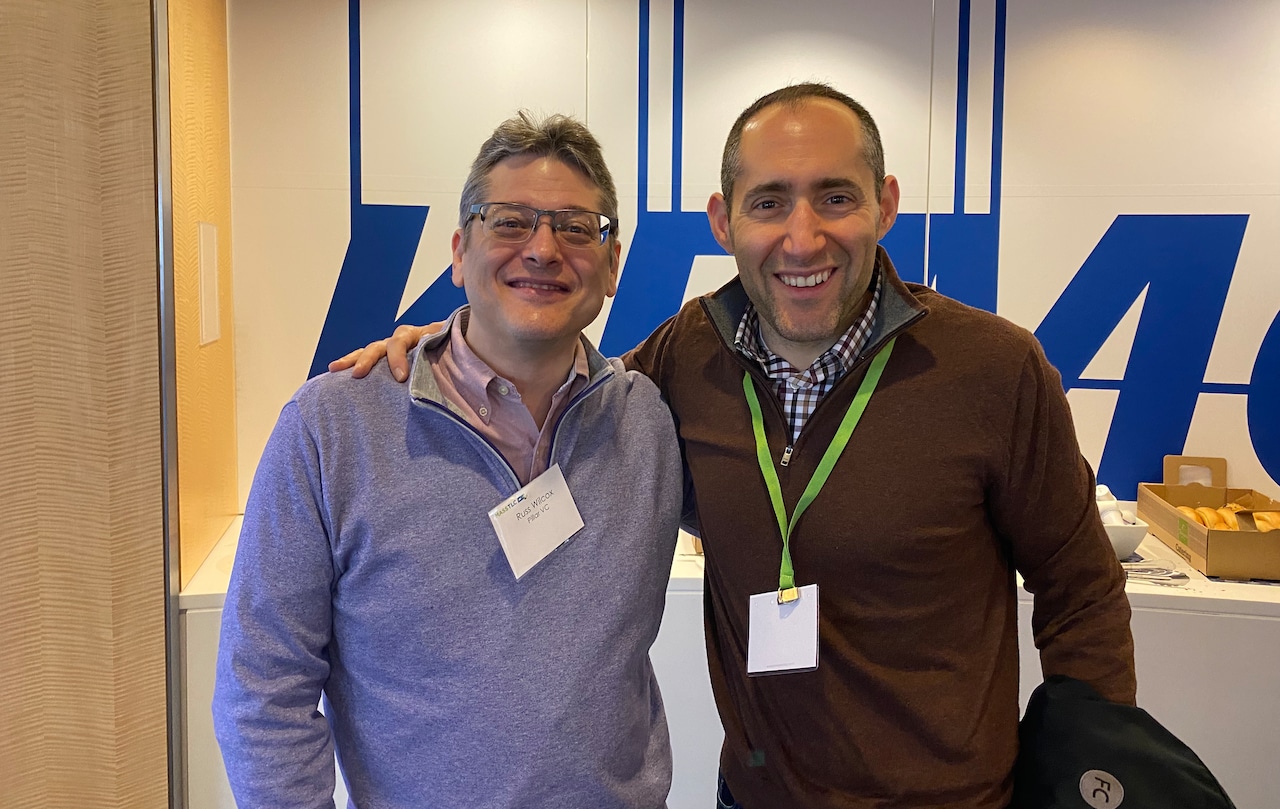
Gov. Maura Healey appointed Eric Paley, venture capitalist and former entrepreneur, as the new Massachusetts economic development chief on Tuesday
Paley is best known for co-founding the Cambridge investment firm Founder Collective, which put money into startups such as Uber, the fitness tracker Whoop and ticket sales site SeatGeek.
Founder Collective also backed PillPack, a prescription drug delivery service that was acquired by Amazon in 2018. By investing in that company, Paley got to know Yvonne Hao, his predecessor as secretary of economic development, who served as a top executive at PillPack.
Paley and I spoke on Tuesday afternoon, not long after he was named to the new role — and hours after my column was published suggesting Healey’s next economic development chief focus on increasing manufacturing activity in the state.
Scott Kirsner: My guess is that you’re going to probably make less money in this job than you would have if you stayed at Founder Collective. So why was this job interesting to you?
Eric Paley: Putting aside even just economics, which are dramatically different, I’m leaving a partnership that is nearly a perfect professional situation. I work with my closest friends in the world. I have an amazing team. We’ve got incredible founders we get to back. I get to be in their journeys in the most enjoyable possible way. So that’s pretty much the reason I said no when the governor’s office originally reached out …
But I couldn’t sleep that night, because for many years, I’ve been trying to figure out ways to be of greater service. I have found some. For example, my work [on the board of] the YMCA of Greater Boston has been very satisfying, but I have never quite felt like I’ve found something that really allowed me to do that at the level I wanted to. And it occurred to me that this might be the very best opportunity I will ever have to be of service in a really meaningful way, affecting many people’s lives. And I love Massachusetts. So it just became impossible for me not to step into this role and step up to the challenge.
Kirsner: How would you frame the challenges that Massachusetts faces? You’ve got universities under lots of financial pressure, life sciences is under lots of pressure. You’ve got the unknown impact of tariffs on companies that produce stuff here.
Paley: I think there are real headwinds. … Those things might make some people feel that this would be a terrible time to take a job like this. For me, it felt like that was even more the reason to step up. … We have the resourcefulness and the resources to really move this economy forward, regardless of what’s happening in Washington. … I just feel very lucky to be in a place where there’s so much innovation going on and such thoughtfulness around how the state is managed. … I think getting everyone rowing in the same direction now, more than ever, will be critical.
Kirsner: We’ve seen boom times in Massachusetts, where it’s impossible to hire programmers and it’s impossible to find lab space for biotechs. We’re not in that kind of time right now. The unemployment rate has been rising for most of the year. We’re higher than the national average. Are there some tea leaves that you would read … as you analyze where we’re at and what you might want to focus on?
Paley: … I think we’ve got challenges around AI … taking away certain types of jobs, and I think it will create many new types of opportunities as well, but it’s going to create a lot of…transition and some displacement. I think the new [Massachusetts] AI Hub is part of the state really trying to engage that and trying to make sure we are as competitive as we can possibly be … But this wouldn’t be the right time for me to be reading tea leaves. The key point is, we’ve got this meaningful economic development bill that passed [the Mass Leads Act of 2024], and my job is to go execute it.
Kirsner: Have you spent much time outside of Route 495, in the last five, six, seven years? If I think about the startups that Founder Collective has backed, I definitely can’t think of any in that part of the state.
Paley: Some of the things I’m actually most looking forward to is traveling around the state and trying to understand, across all the small towns and gateway cities, what are the key interventions that they believe can move their economies forward, and trying to figure out how to drive a lot of the innovation that’s happening inside of 495 to promote manufacturing opportunities across the entire state, and other types of workforce development opportunities across the state.
Kirsner: You mentioned manufacturing. I wrote a piece just before your announcement, saying the governor should pick somebody with exposure to and experience in manufacturing. You’ve had startups that have done some manufacturing in the U.S., and others, like Whoop and Formlabs, that do most of their manufacturing in China. Do you think manufacturing can grow here? Is it going to be a bigger part of the state’s future than it is today?
Paley: I really do think so. I think we have a number of initiatives in the Mass Leads bill that drive towards promoting manufacturing around the state … We won this federal CHIPS funding that is focused on microelectronics production and manufacturing in Massachusetts. And I thought your article was very good … I think part of what you talk about that I completely agree with — we’ve talked about this topic in other forums before — we need to tell the story of all the manufacturing success stories inside the state, so that companies are aware of what’s possible here …
Kirsner: You touched on this when you mentioned the CHIPS & Science Act, but is your assumption that you know these next [few] years that you’re in this role [that there will be] close to zero new federal funding for research and for economic development coming out of D.C.?
Paley: We’re going to compete for whatever it is that Massachusetts has the opportunity to compete for. I can’t make a guess right now about what the federal government’s choices are going to be. I think we’re going to have to tell our story and compete for private investment with other states nationally…
Kirsner: Have you thought about the kind of impact you want to have on some of these quasi-state agencies, like the Massachusetts Tech Collaborative, which runs the AI Hub and a lot of manufacturing-related initiatives, or the Massachusetts Life Sciences Center? I know they get a lot of state funding. I’m not sure that it’s easy to quantify [the outcomes they produce.]
Paley: I actually believe those organizations, the quasis, are doing important work. But I also have lots of views about how we can be even more directly engaged with the innovation community … [and] just making it easier to interface with government, which I think is one of the things you actually touched on in your article. I agree with the premise of your article — that if people don’t understand what programs are out there, and how to access them, and what could be empowering to their businesses, they’re not going to take advantage of them, and we’re not going to succeed …
Kirsner: You don’t strike me as somebody who just wants to be 100% about executing the Mass Leads Act. My sense is you want to bring some fresh ideas to this job.
Paley: I haven’t started yet. I start in September. I’ve had the opportunity to sit down with the governor and lieutenant governor and talk through numerous things that are top-of-mind, in terms of priorities for me. … [But] there are numerous constituencies across the state that I have limited exposure to at this point. … I’m going to, for now, keep to myself the thoughts I have on where we can go from here. Where we are going is already very strong. There are some things I am very excited about augmenting that with.