
As a toddler, William Shipps, Jr. was often brought along by his uncle during break-ins, exposing him to a life of crime before he could understand it.
By 16, Shipps had shot and killed two people. Now, more than 40 years later, the Massachusetts man is hoping for a second chance through parole.
Ships was one of two teens who planned and executed an armed robbery on July 24, 1982. He brought the loaded gun but said he never intended to use it. The robbery, however, didn’t go according to plan, Shipps said, and a brother and sister, John J. Lucey and Esther L. King, were murdered in their home in Stoughton.
Lucey was killed during a fight between him and the other teen. Shipps, however, admitted to pinning King to her bed, putting a pillow over her head and shooting her. After both people were shot, Shipps admitted to “destroying” the house and stealing their items, which he later sold, the parole board wrote.
Shipps was found guilty of two counts of first-degree murder, two counts of armed robbery, and two counts of armed assault in a dwelling. He was sentenced to life in prison without the possibility of parole for the murder of King, a consecutive life sentence without the possibility of parole for the murder of Lucey, and four additional life sentences for the armed robbery and armed assault convictions, which were ordered to be served concurrently with the life sentence he received for the murder of King.
However, due to his age the Massachusetts Supreme Judicial Court decided in 2013 that he could not be sentenced to life without the possibility of parole as it was considered “cruel or unusual punishment.” Shipps first went in front of the parole board in 2021 but was denied.
“Despite years of program participation, Mr. Shipps minimizes his overall criminal history. He attempted to normalize his delinquent and prior criminal behavior by suggesting it is common adolescent behavior,” the parole board wrote in their 2022 decision.
Years later, Shipps continues to insist this type of criminal behavior was normal — at least in his family.
Another uncle, Shipps recalled, would come over to his house “with truckloads and carloads full of stolen merchandise.”
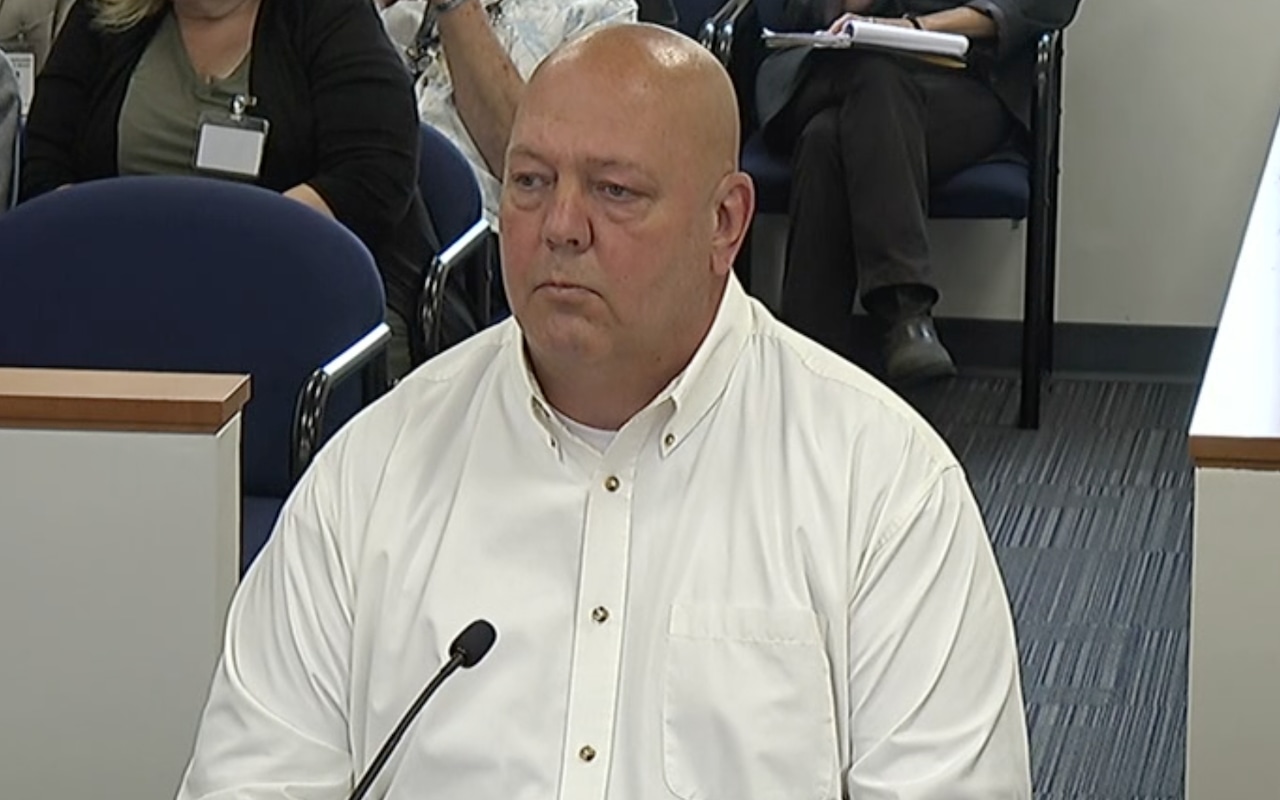
“And we all knew it was stolen and nobody thought anything about it,” he said during his parole board hearing on May 20. “So criminal behavior became normalized.”
When he was a teenager, his brother-in-law, who was a mechanic, would take him out to steal car parts or cars with him. His father would also drive drunk, he said.
“So, I became accustomed to criminality and criminal behavior,” he said.
This type of thinking continued to be reinforced as he started making money from the things he stole and sold, he said.
“And here I am, a kid stealing things and selling them to adults,” he said. “And it’s given it the adult approval of ‘this is OK.’”
But one of the board members pushed back on this idea.
“… the criminality of your conduct at that age, it was shocking,” the board member said. “Some of the firearms you were stealing, the amount of drugs you were stealing, at least in that one incident that your uncle, who had some organized crime ties, had to untangle for you. To me, you were in a different league of juvenile offenses.”
The parole board also took issue with his years of attempting to get a new trial and appealing the original ruling and in 2019 coming forward claiming the other teenager involved was the one who shot Lucey.
“I had never spoken about the night Esther King and John Lucy murdered,” Shipps said. “I had never talked to my attorneys about it. I had never provided the details of what happened that night to anyone. Not to my attorneys, not to my family members or anyone.”
“Why not,” a board member questioned. “Because if you’re pursuing motions for a new trial and appeals, wouldn’t that be the time to say this should be considered?”
Shipps recalled that he tried to get officials to look at the other teen in 1988 but that a judge denied the request.
One board member continued to question Shipps. She feared the timing of the new information.
The Supreme Court Case that allows for Shipps to get parole asks the board to consider if there were peer influences. If so, they are more likely to be considered for parole.
“I question again, the timing, is he introducing this juvenile into this, these murders because now he’s a Diatchenko case, and this kind of looks better for me,” she asked.
The grandson of King also has a hard time believing Shipps’ story.
The grandson noted during testimony at the May hearing that Shipps said he had planned to punch the two people inside the home if they had any issues, not shoot them.
“And yet he brought a gun and used it. I find the fact that he struggled with my grandmother, who was about 110 pounds, with a heart condition and wasn’t able to overpower her in about two seconds, extremely hard to believe,” he said.
Still, Shipps remains apologetic for his actions and the pain he’s caused.
“I apologize to Esther King, and I apologize to John Lucy … I robbed you of the joy of being with your family. I robbed your family of the joy and grace of your presence. I failed to appreciate you and value the way every person deserves to be appreciated and valued. I’m truly sorry. I will carry the guilt, the shame, and the remorse for my crimes against you till the end of my days,” he said.
If you purchase a product or register for an account through a link on our site, we may receive compensation. By using this site, you consent to our User Agreement and agree that your clicks, interactions, and personal information may be collected, recorded, and/or stored by us and social media and other third-party partners in accordance with our Privacy Policy.