

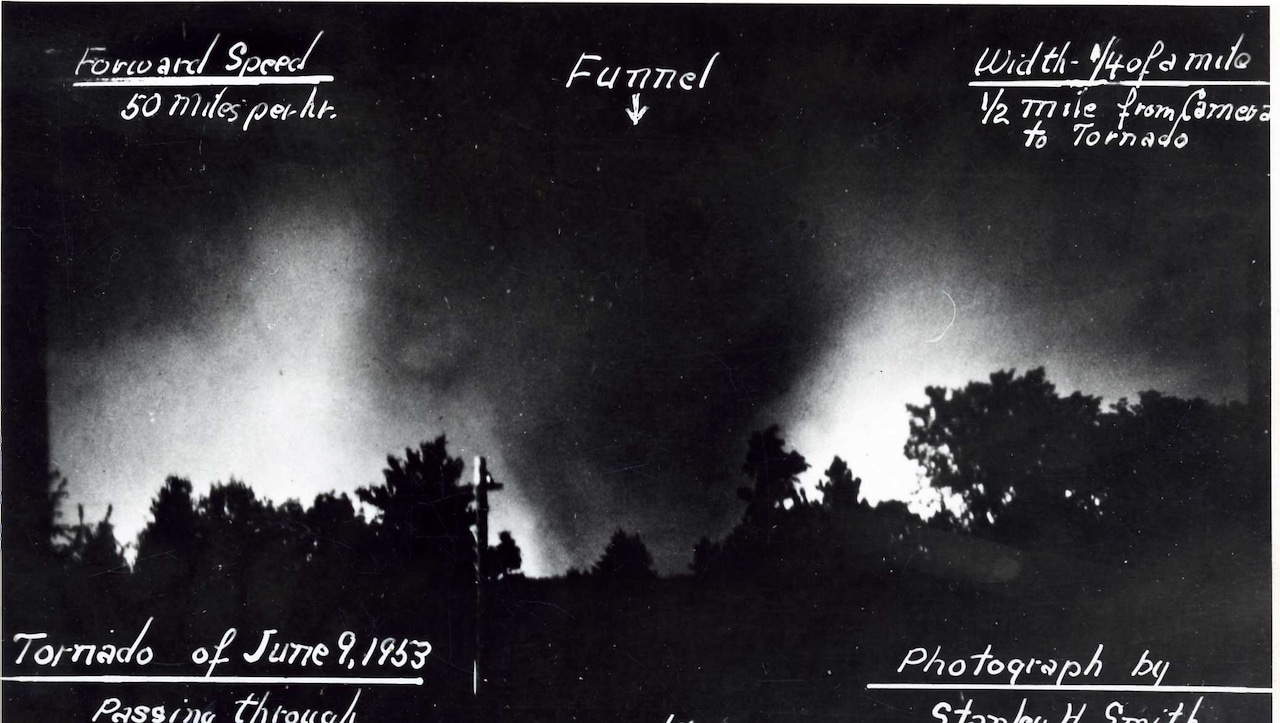
New Englanders have likely noticed that there have not been any tornadoes this year, unlike in previous years.
But as much as that’s something to bask in during a summer of thunderstorms and heat waves, the lack of tornadoes in 2025 does not mean people should let their guard down and not be ready if one hits, AccuWeather’s senior meteorologist Chad Merrill told MassLive.
During this year’s tornado season (June through August), four tornadoes were reported in the Northeast, mainly in New York.
The Northeast typically sees twisters develop across central New York and extend into Western and Central Massachusetts, Connecticut, southern Vermont and southern New Hampshire, “basically following the Interstate 95 corridor,” Merrill added.
“When we look at the weather pattern as a whole, especially compared to last spring through the middle part of summer in New England, what I see here is there’s been a persistent upper-level ridge or warming temperatures across the Northeast,” he continued. “And that tends to limit a little bit of instability. That offsets instability, helps to fuel thunderstorms and you need some spin or change of wind direction with height to initiate a tornado.”
Upper-level ridges develop in the middle levels of the atmosphere where sinking air and warmer temperatures exist, Merrill explained. When low atmospheric pressure approaches this ridge, it causes instability and increases the chances for tornadoes to develop.
“But the atmosphere has been a little bit more stable than normal, and that’s why we haven’t had many of the tornadoes that we’ve seen in years past,” Merrill noted.
The main reason for the absence of tornadoes this year, Merrill said, is ‘this persistent upper-level ridge, which has been centered just off the New England coast,” leaving the region with more stability than normal. The ridge has also controlled backdoor cold fronts to move west and south toward the coast rather than moving west to east.
“But we just haven’t had enough instability and enough spin in the atmosphere to create many tornadoes across New England compared to previous years, essentially with this pattern that we’ve been in through the end of July into the early part of August,” the meteorologist said.
The last recorded tornado to hit New England was in Rehoboth on July 26, 2024. This twister was categorized as an EF-1 tornado on the Enhanced Fujita Scale, which classifies tornadoes into six different levels based on wind speed. Rehoboth’s tornado reached 90 mph and traveled half a mile in the span of a minute.
Peak season for tornadoes in New England
July is the peak time for tornadoes to materialize, but the chances for tornadoes to develop drop to 0.2% to 0.4% by mid-August, Merrill said.
As August continues and tornado chances become nil, New England has benefited from the series of rain and thunderstorms this summer, which has left the soil wet ahead of the fall, Merrill said. This leaves the risk of wildfires similar to the drought-fueled ones from last fall unlikely, as the current “drought-rate risk is very marginal” despite chances for some dry spells in September and October, he said.
From August through October, the National Weather Service estimated that New England has an equal chance of seeing above and below average rainfall in its three-month outlook.
One factor that could bump New England’s chances of seeing some extra precipitation during the early fall is if a tropical storm develops in the south and if what’s left of that storm passes north, Merrill said. Between the start of September and the end of November, New England typically sees between 12 and 14 inches of precipitation, with higher amounts in areas with higher elevation.
Always be prepared for a natural disaster
So while the forecast looks calm in the coming months, Merrill urges that people not let their guard down. Like in any part of the country where preparing for a natural disaster is a part of daily life, New Englanders should still be ready in case a tornado hits in the future.
“Because the longer you go without practicing your plan or knowing what your plan is, when one eventually does happen, whether it’s sometime in early August or waits until next spring or summer, you just want to make sure that everyone knows what to do so everyone can seek shelter as quickly as possible and follow through with it,” Merrill said.
The Massachusetts Emergency Management Agency (MEMA) advises that people identify safe locations to take shelter, including basements or storm cellars. Should no underground location exist, find an interior room or hallway on the lowest floor to keep as many walls between you and the outside as possible. Make an emergency kit and store personal items, such as photos and videos, in a safe place.
MEMA and Merrill both also advise following weather forecasts, watches and warnings ahead of a potential funnel cloud forming. Merrill also suggested people use a National Oceanic and Atmospheric Administration (NOAA) radio that provides updates from the National Weather Service on a special frequency.
“If the cellphone service is not available, then you won’t have any way of receiving it,” he said. “You just have to rely on your instinct around you based on what you see with the weather going on. Whereas if you have a NOAA weather radio, you would still get service on that, so you would know what’s going on and when it’s safe to come out of your shelter.”
Having a plan is key, but he advised rehearsing that plan once or twice while the region is in a lull period “just so it doesn’t become too stale.”
“Don’t let your guard down,” Merrill said, “and make sure you know what your tornado drill plan is.”
If you purchase a product or register for an account through a link on our site, we may receive compensation. By using this site, you consent to our User Agreement and agree that your clicks, interactions, and personal information may be collected, recorded, and/or stored by us and social media and other third-party partners in accordance with our Privacy Policy.




