
A work stoppage by court-appointed lawyers in Massachusetts since Memorial Day has left nearly 1,400 indigent defendants without legal representation at court appearances.
These court-appointed lawyers stopped taking cases in May due to decades of low pay, especially compared to neighboring states. This has resulted in hundreds of criminal defendants not receiving legal counsel in a timely manner — and in some instances, not at all — a violation of constitutional rights.
Any person who can’t afford an attorney must rely on court-appointed bar advocates who are paid by the state.
Out of those nearly 1,400 defendants without attorneys, there’ve been 100 people held in jail without legal representation and 32 held past seven days in violation of state law, according to the state’s public defender agency known as Committee for Public Counsel Services (CPCS).
And while an emergency hearing held Thursday may trigger a rare judicial intervention to ensure defendants’ rights to counsel, that intervention could also result in dangerous public safety consequences.
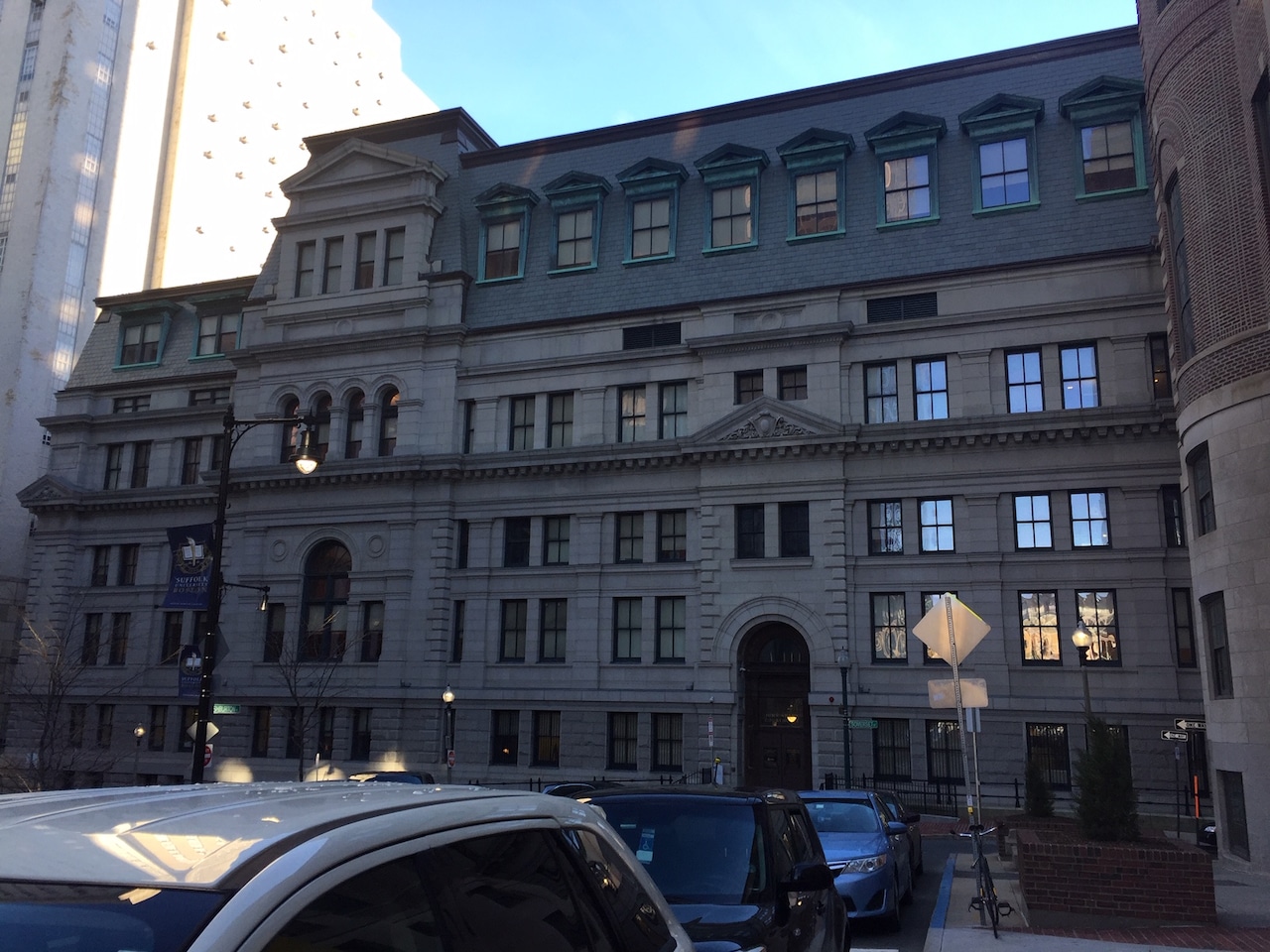
At 2 p.m. on Thursday in the John Adams Courthouse in Boston, members from the state’s public defender agency at CPCS and the offices of the Suffolk County District Attorney’s Office and Attorney General gathered in a second-floor courtroom.
They appeared before Supreme Judicial Court (SJC) associate Justice Dalila Wendlandt for a hearing on an emergency petition to implement what’s known as the Lavallee protocol from the 2004 case known as Lavallee v. Justices in Hampden Superior Court. In the Lavallee case, the court ruled that defendants held for more than seven days without a lawyer must be released, and their charges could be dismissed without prejudice — meaning they could be refiled later.
The Lavallee protocol is described as a “strong medicine” to protect the rights of indigent defendants amid the work stoppage by hundreds of bar advocates, according to the emergency petition.
Bar advocates represent about 80% of cases for people who cannot afford an attorney.
The rest of the cases for indigent defendants are handled by full-time lawyers from CPCS, which also represents bar advocates’ interests as an organization.
Bar advocates arguing for higher pay
At a rate of $65 an hour for district court cases, $85 an hour in superior court and $120 an hour when defendants are charged with murder, attorneys in Suffolk, Essex and Middlesex counties say the wages aren’t livable, make the career unattractive to young attorneys and therefore affect the quality of bar advocacy service.
In court on Thursday, the criminal justice system representatives spelled out the snowballing crisis at hand to Justice Wendlandt.
As of 1 p.m. on June 26, there have been 1,387 people who appeared in courtrooms across Massachusetts — including two in superior courts — who were not provided with legal counsel since the work stoppage began, said CPCS lawyer Holly Smith.
A hundred of those people without lawyers have also been held in jail, Smith said, with 32 of them being held past the seven days the state can hold a person in custody without a lawyer’s representation under state law.
When the Lavallee decision was made two decades ago, there were just 58 defendants without counsel.
“We are continually filing motions for release on each of those individuals in their local court, [but] it’s going to come to a point that we don’t have the capacity to do that either,” Smith said.
An additional 180 people who are not in custody will have been without legal representation for 45 days in mid-July — the threshold for their charges to be dismissed by the courts.
Judge weighs in on Lavellee
Wendlandt said on Thursday that there were seven factors to be considered when implementing the Lavallee protocol. This included the number of unrepresented indigent defendants and the length of time people have been without lawyers.
She will also consider the capacity of bar advocates, CPCS and its defense attorneys, whether there’s a shortage of available counsel and what the “good faith efforts” have been to address the lack of counsel. Additionally, Wendlandt will review how long the crisis is likely to continue and prospects for remedying the problem.
For these considerations to happen, Wendlandt scheduled an evidentiary hearing on July 2. She asked Elizabeth Martino from the Suffolk District Attorney’s Office, Assistant Attorney General Marina Pullerits and Smith to collaboratively prepare to give a clear picture of the situation.
Wendlandt asked for precise data on unrepresented defendants and a jointly-created list of all “undisputed and disputed facts.” The parties also must submit detailed affidavits that explain the causes and potential solutions for the lack of counsel.
While the decision to implement the Lavallee protocol is yet to come in future hearings, Wendtlandt said “this is an emergency” when scheduling the next court date.
Since the work stoppage began, some defendants across the state who face serious charges, like armed assaults and other felonies, have also been released on personal recognizance. When the expected Lavallee protocol goes into effect, attorneys in Massachusetts fear for public safety.
“I think floodgates are going to open … potentially dangerous criminals are going to get released, and that’s a huge concern for the public,” said Suffolk County defense attorney Elyse Hershon.
But, the lawyers said, the fight for fair pay is a cause they must undertake — one they’ve been battling for decades.
“We see so many injustices. That’s what drives us to take these cases, not the $65 or the $100 per hour,” another attorney in Essex County, Adela Apardu, said.
“We’ve been doing this for 21 years without a significant raise, and now it’s just become ridiculous because we haven’t advocated for ourselves. We’re too busy advocating for everybody else,” said Jennifer O’Brien, an attorney in Middlesex County courts.
To change this, there needs to be changes in legislation. Though Rep. Christopher Markey has offered a petition to increase district and superior court rates by $8 and $20, respectively — and homicide up to $150 an hour — Markey said it’s “difficult to say” whether the legislation will be passed, given significant federal government cuts and other budget concerns.
That legislation is now before the Judiciary Committee, and he expects it to go to a hearing in July.
For now, the attorneys say their bar advocacy work has become “impossible” until fair rates are signed into law.