
SPRINGFIELD — The state’s highest court heard arguments Wednesday focused on a 2024 drunken driving arrest that has raised questions about the use of body-worn cameras at sobriety checkpoints.
Supreme Judicial Court justices plucked the case for its own review before the matter was heard by the state Court of Appeals — a relatively uncommon occurrence.
The case has drifted into an area of the law that is relatively untested, lawyers said.
“The one thing the justices are really going to clarify is how the wiretap statute applies to body-worn camera footage,” Kyle J. DeSousa, an appellate lawyer for the driver involved said.
The case focuses on the arrest of Scott M. Grimaldi, after he was ensnared in a sobriety checkpoint on Page Boulevard in Springfield around 11:30 p.m. on March 14, 2024.
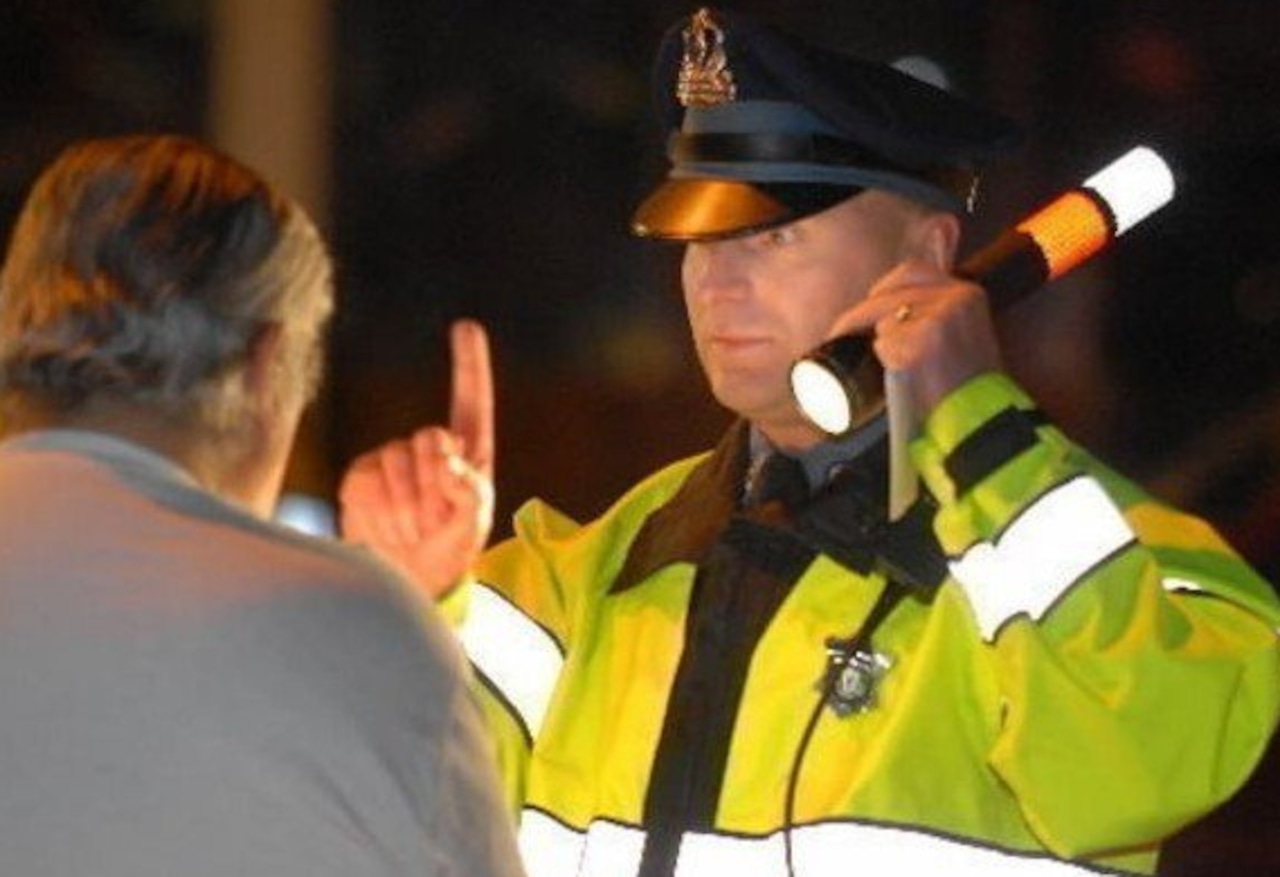
A Massachusetts State Police “greeter” directed Grimaldi to the “OUI pit” after observing that Grimaldi had glassy eyes and smelled like alcohol, according to court records.
Grimaldi’s interactions with troopers also was captured on body-worn camera footage. However, a trial attorney for the defendant moved to suppress the video, arguing Grimaldi was unaware he was was being recorded.
Springfield District Court Judge Robert Santaniello on Feb. 10, 2025, ruled that the practice ran afoul of the state’s wiretapping laws and threw out the evidence. The judge said he regarded the footage as “secret recordings.”
Santaniello noted Grimaldi and others arrested at the checkpoint were met by glaring floodlights, a loud nearby truck about about a dozen troopers.
“As perceived by a reasonable person in the defendant’s position, the scene was intense and intimidating,” Santaniello wrote in his ruling, adding that he believed Grimaldi was unaware he was being recorded.
Prosecutors countered that there were obvious signs people diverted to the “pit” were being recorded, and appealed Santaniello’s ruling.
Enter the SJC, the court that decides matters of law for statewide application.
DeSousa said the key issue for the court is to clarify how body-worn camera footage intercepts with the state’s wiretapping laws, which prohibit one-party “secret” recordings.
“If a person is unaware they’re being recorded, it’s a secret recording,” he said after arguments concluded in Boston.
He also pointed out to the panel that body-worn cameras are new and evolving technology, which may be replaced with even more sophisticated policing tools in the future.
An attorney for the commonwealth argued there were clear indications there were video recordings at play at the the Springfield checkpoint — including signs and red lights emanating from cameras in the hands of the troopers.
“How would he know the camera was audio recording?” one justice asked prosecutor Curtis B. Frick.
“It’s a reasonable inference,” Frick responded.
In terms of the sign alerting citizens to cameras, there is a question as to whether Grimaldi was able to see the sign or whether it was obscured by a large tractor-trailer onsite.
Joseph Bernard, a prominent OUI defense attorney from Western Massachusetts who does not represent Grimaldi, said the relevance of body-worn cameras are particularly relevant in drunken driving prosecutions.
“In those cases, they’re gathering evidence they know they’re going to use at trial. It changes the whole dynamic,” Bernard said.
The high court is not expected to issue a ruling for at least two months.