
Though the late May layoff announcement from one of Massachusetts’ major biopharma companies dominated recent business headlines, experts point elsewhere for a true snapshot of what’s happening in the industry.
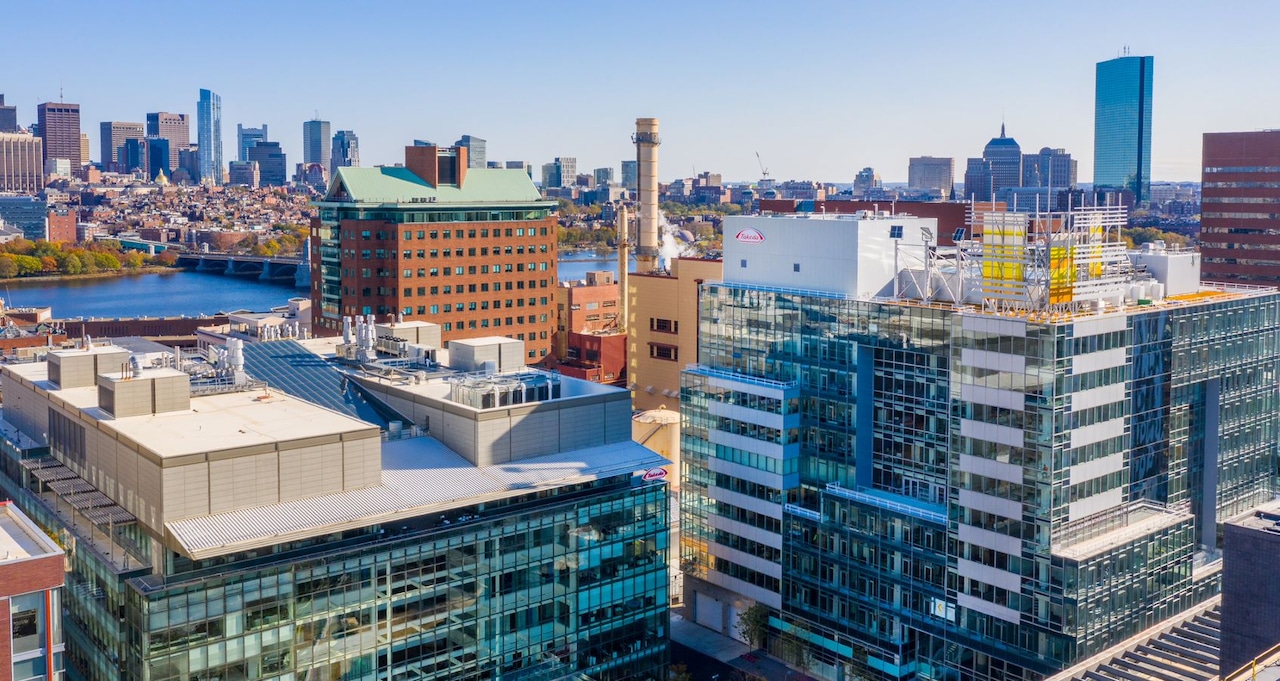
Takeda Pharmaceuticals USA Inc. plans to lay off about 10% of its Massachusetts-based workforce — 641 employees in total — next month. The company cited a reallocation of its resources to “promising” late-stage projects as a deciding factor.
It’s one of several large companies with employees in Massachusetts to call attention to the financial headwinds facing the industry in the past several months.
But smaller private companies, which do not have to make layoffs public, have been quietly downsizing as investment capital declined post pandemic.
Despite it all, analysts are looking ahead to a major upswing for biopharma — especially in Massachusetts.
Smaller private companies downsizing
Big pharma represents a small portion of businesses in an industry where 97% of companies employ less than 100 people, Dan Gold, president of Fairway Consulting Group, a life sciences recruitment agency, told MassLive.
He described biotech as a “barbell industry,” meaning investors split investments between startup companies on one side and established companies on the other.
And it’s a “hard industry” to start off in, said Ben Bradford, the Massachusetts Biotechnology Council’s Head of External Affairs. Getting a drug to market takes 10 to 15 years with no revenue while trying to bring in upwards of $2 billion — and 90% of the drugs end up failing.
Looking at last year in Massachusetts and nationally, there were “a lot of announced layoffs,” said Jeffrey Quillen, partner with Boston law firm Foley Hoag, who works with new biotech companies until they get to the initial public offering (IPO) stage.
Massachusetts, alongside California, “emerged as epicenters of biopharma layoffs in the U.S.” early in 2024, with large companies in Boston and Cambridge laying off hundreds to over 1,000 workers, according to the biopharma layoff tracker by Drug Discovery & Development.
Still, it’s not the whole picture.
“The bigger layoffs were announced, but private companies that are doing smaller layoffs don’t have to announce them,” Quillen said. “It’s different from Takeda … the amount of layoff activity is greater than you know.”
“Most of the downsizing is happening at private companies and smaller biotechs that are running out of cash,” he said.
According to an employment outlook from the Massachusetts Biotechnology Education Foundation (MassBioEd), this trend has continued into the first quarter of this year.
Large companies commonly lay people off for future-focused reasons, Quillen said, such as a pivot in product type and resulting need for different scientists, experts and other people. This makes Takeda’s layoffs — while harmful to those affected — not a red flag concern for the industry.
But smaller biopharma, which makes up most of the industry, is laying off right now just to survive. And one company’s layoff can have a domino-effect across the field, Gold said.
“There’s a trickle-down that happens with small companies, where one company closes and the venture capital, or whoever invested in that company, then they pull back a little bit,” Gold said. “They’re slower about their next investment, so the next company is maybe not funded as quickly.”
Fear is contagious as word of competitors’ layoffs hit managers’ radars.
“People sort of move into this panic scenario, maybe before the reality is there,” and try to get ahead by downsizing their own employees, Gold said.
Biopharma employees are staying put
Current economic conditions have created a “Great Stay” mentality among currently employed biopharma workers, Gold said.
“Usually, in March, you see a lot of turnover in biotech because people get their bonuses and they move on to their next growth opportunity. The numbers are typically like 8% to 14% turnover,” the consulting group president said.
“When we scan the market this year, it’s like one person at a company left, so people are very reluctant to move to another organization unless they have to because they don’t have a job [to go to],” he said.
Numbers from MassBioEd’s outlook report show job postings decreased by 33% from 2022 to 2023. Recent job growth has slowed to an increase of 2.5%, from a previous average of 7.8% between 2020 and 2022.
Bradford said part of the hiring slowdown included struggling companies and some that were re-prioritizing which pipelines they wanted to conserve and capitalize on. It’s also part of why unemployed workers can’t find jobs, as their roles are outsourced in times of turmoil, Gold said.
In addition, not many new positions are being created at biotech companies; rather, it’s “swapping seats” and “top grading,” Gold said, meaning only experienced and highly skilled workers are being hired as companies pivot.
Waiting for return of capital markets
With the economy still going through a pandemic-induced slow-down and conservative, corrective period, Quillen said “no one knows when” the capital markets will open back up — but when it happens, he has eyes on a major upswing.
“When things turn around for the biotech industry, they could turn around in a big way pretty quickly this time,” he said.
He compared the lack of investment capital over the past couple of years to the Great Recession of 2008 and 2009, where there were a lot of companies doing layoffs and going out of business. When the economy turned and businesses began doing better, the private investors had no money, and it took time for businesses to raise funds from their limited partners.
But this time around, “lots of venture capitalists have money and they’re just waiting to put it to work,” Quillen said.
“Hopefully, if there’s an interest rate cut or two, some financing will happen and then we’ll see this ‘fear of missing out’ where there’ll be a lot of financing activity,” Quillen said.
He said the small uptick in financing during the fourth quarter of 2023 is thought to be correlated to the Federal Reserve’s freezing interest rate hikes and hinting at possible cuts.
On June 12, the Fed announced interest rates would be left unchanged at 5.3%, a 23-year high, according to The Associated Press. But, to Quillen’s point, there’s a strong chance a rate cut or two could come in the fall.
“People are hopeful if rate cuts do happen, then financings and licensing deals will happen. So they’re trying to figure out, ‘How do we keep as many employees as we can to last that long?’” Quillen said.
‘Mass. is well-prepared’ to survive slow times
Bradford is hopeful more private companies will go public and is “confident” more IPOs would lead to more venture capital funding and “start this process of growing the ecosystem at a faster pace.”
“Massachusetts is well-prepared to get through the slow times and really well-prepared to capitalize on the good times,” he said.
“I think we are hopefully going to be picking things back up as macroeconomic trends change as well. We can’t take our eye off the ball in making sure we continue to have enough of an employee pipeline, because this won’t last forever. Companies will pick up the pace of their hiring,” Bradford said.
In addition, MassBioEd, in its outlook report, identified the need for stronger student-to-workforce on-ramps in the Bay State to strengthen the industry.
Despite the high concentration of life science graduates the state produces, 80% of life sciences and chemistry degree holders choose occupations other than life sciences.
Efforts will include more training programs, especially in underserved communities, and a further emphasis on STEM education at the K-12 level.
Worker retainment will also be a focus, as demographic data suggests a high rate of people leaving the industry among “life sciences degree holders as they age, with biotech layoffs driving the potential for further exits,” the outlook read.
As for budding biopharma entrepreneurs?
“In times of disruption, that’s when the greatest opportunities exist,” Gold said.
“It’s actually a great time to start a company. If you’ve got an idea that can get funding, you’ve probably got something really extraordinary right now versus 18 months ago. I don’t think there was as much discipline to what got funded,” he said.
“The best ideas are really going to be good right now because they’re going to be harder to find, they’re going to be more scrutinized. Work on an idea, make it really solid. A low-hanging fruit idea is not going to work right now,” Gold said.