
With more than 100 children facing criminal charges without legal representation in Massachusetts juvenile courts, a single Supreme Judicial Court justice is weighing whether to extend a rare protocol already in place for unrepresented adult cases.
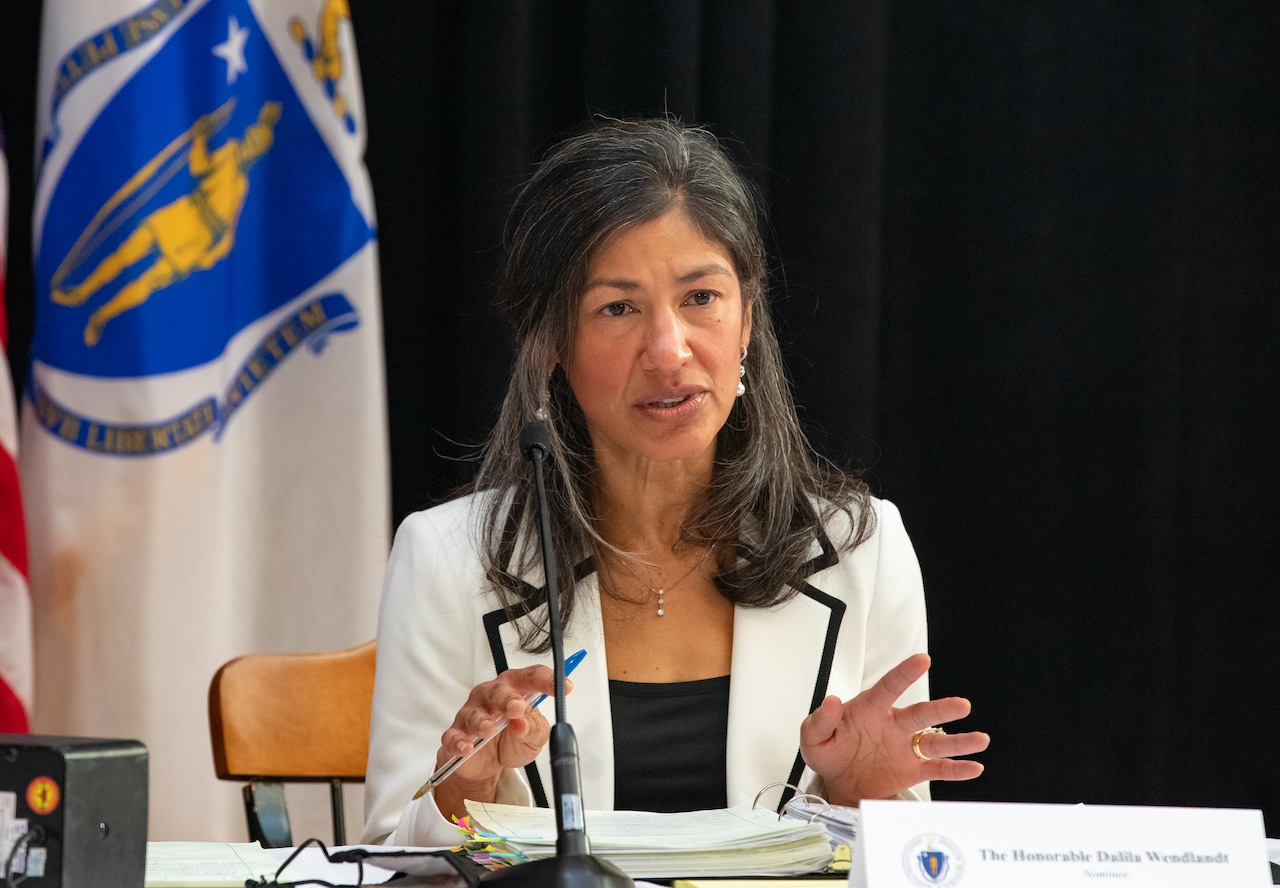
The choice came before (SJC) associate Justice Dalila Wendlandt on Monday, as representatives from the Committee for Public Counsel Services, or CPCS, and the state Attorney General’s Office after CPCS submitted a brief requesting the expansion into Norfolk, Middlesex and Suffolk counties on Friday.
The protocol — called Lavallee and in place since the beginning of July — essentially requires judges to release defendants held for longer than seven days without a lawyer and to dismiss charges against defendants whose cases have been pending for more than 45 days.
CPCS is not only asking for the implementation of that protocol for juvenile cases, but for a modification of its rules given the unique nature of that system.
On Monday, the court grappled with the question of when a child’s lack of a lawyer violates their rights and requires emergency action.
While more than 100 children across the state were cited in the brief to have pending juvenile court cases without lawyer representation, there are “zero” children who are in custody or have been arraigned without an attorney, associate Attorney General Marina Pullerits told Wendlandt.
“We agree juveniles should be treated differently than adult defendants … that is one of the reasons flexibility is so critical in the juvenile courts,” Pullerits said.
She emphasized the “flexibility” of juvenile courts several times throughout the hearing — in those courts, she said, there’s much more “pre-arraignment work” than adult courts, such as diversion programming.
The juvenile courts’ position is, Pullerits said, that because no children have yet been arraigned or are being held without lawyers, the implementation of the Lavallee protocol or any similar decision isn’t necessary at this time.
However, the exact number of children who’ve gone to their first appearance in court without counsel is unknown, said CPCS representative Afton Templen — and she said that without legal counsel, the children charged with crimes won’t even be able to access the services Pullerits mentioned.
Templen argued that there are juvenile defendants whose cases have been lingering for more than two months since the work stoppage, with repeated continued court dates.
And if the Lavallee protocol were to go into effect for juvenile defendants, Templen said “the clock” for how long until their case is dismissed “should be set” for 15 days instead of 45. She said that 45 days is “a lifetime for a child” and especially unfair to those waiting since May.
“That’s unfair … burden is not supposed to fall on the children and families impacted by the shortages,” Templen said.
Templen also argued that if the Lavallee protocol were in effect, some juvenile charges should be dismissed with prejudice, meaning they cannot be filed again — the opposite of the current Lavallee protocol in place for adult court systems.
This should be the case for cases where a child would have had a clear motion to dismiss or a clear first-offense argument if they had a lawyer initially, Templen said, which would prevent the case from repeatedly continuing without resolution.
In response to Pullerits’ argument that the courts should handle cases on an individual basis, rather than with the Lavallee protocol, Wendlandt gave a hypothetical situation of a 15-year-old child charged with a crime this July.
The child would continue to have court dates because they don’t have a lawyer, as is happening now, Wendlandt said — and by the time a lawyer would be available, that child could already be a junior in high school, with a case from years ago still over their head.
Wendlandt ordered the representatives to file a joint statement by Aug. 4 that includes the number of children who have appeared for their first appearance in the state without counsel, and how many times those children’s appearances have been continued.
She also asked for clarification on the circumstances of dismissals of cases with or without prejudice, and to resolve any discrepancies in the filed affidavit about current CPCS staff attorney caseloads.
The next hearing was scheduled for Aug. 6.
If you purchase a product or register for an account through a link on our site, we may receive compensation. By using this site, you consent to our User Agreement and agree that your clicks, interactions, and personal information may be collected, recorded, and/or stored by us and social media and other third-party partners in accordance with our Privacy Policy.