
“Achoo!” might be the best way to describe the upcoming months as allergy season is near.
Pollen allergies – or seasonal rhinitis – is the most common type of allergy in the spring. The usual suspects behind the annual “hay fever” are trees, grasses and weeds trying to spread their pollen as a way to reproduce, according to Dr. Timmothy Lax, an allergist at Central Mass Allergy and Asthma Care in Worcester.
Although allergy season occurs every year, in recent decades global warming has caused it to grow longer, Dr. Mary Margaret Johnson, an environmental health scientist at Harvard University’s School of Public Health, told MassLive.
“I hope that we’re able to curb what’s going on,” Johnson said about climate change. “I think [with] this change in the pollen – it’s only going to get worse, unfortunately.”
Allergy season commonly starts in March in the Commonwealth. But the “heaviest” waves of pollen come around late April to mid-June, Lax told MassLive.
But, rising temperatures mean that allergy season arrives sooner in the spring and lasts longer in the fall, according to a 2023 study from Climate Central, an organization comprised of scientists and communicators researching climate change.
“Unfortunately in New England, we’ve been seeing the winter be much shorter and more mild,” Lax said. “We’re actually seeing particularly the trees pollinating at an earlier time period.”
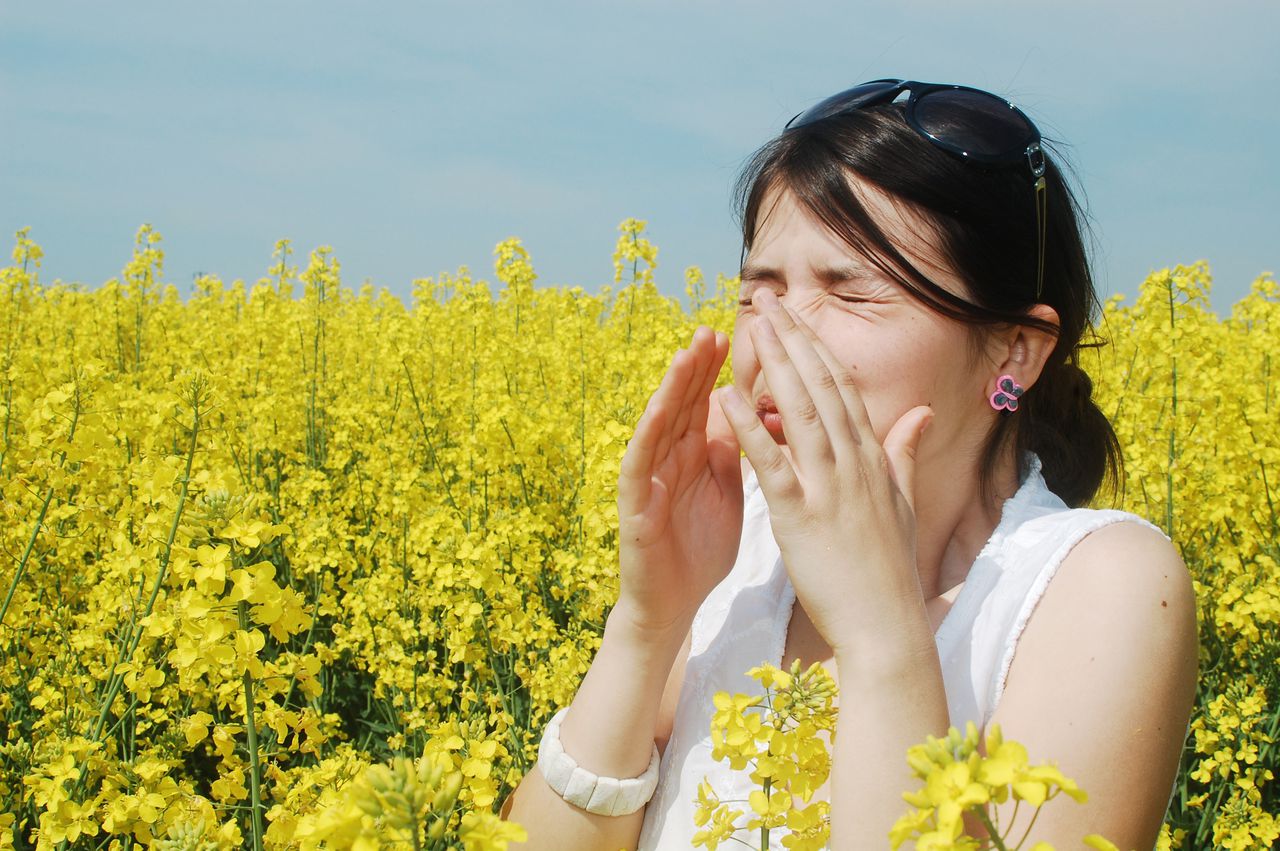
Pollen allergy, girl sneezing in a field of flowers – Allergy sneeze ShutterstockShutterstock
Climate change has caused allergy season to be longer than decades ago, according to Climate Central.
On average, allergy season is 15 days longer in the U.S. than it was in the 1970s, Climate Central reported in its study, which analyzed temperature data from over 200 cities. In that same period, Boston’s allergy season was 13 days longer.
“With that earlier pollination season, we’re definitely seeing people having symptoms over a longer period of time,” Lax said.
Climate change also increases “extreme events” including flooding, Johnson said. Changes in rainfall can increase pollen production as rain contains nitrates, a chemical that helps plants grow and pollinate.
Massachusetts got 18-25 inches of rain from July to September 2023. That’s well above average, according to the Boston Globe.
“So, all those factors kind of combined make it [the] worst allergy season for anyone that has to deal with allergies,” Johnson said.
Allergies occur when the human body reacts to a harmless substance by producing antibodies. These antibodies attack the foreign allergen, mistaking it for a threat, according to an article from the Mayo Clinic.
The human body then produces antibodies that “remain on the alert” for that allergen, according to the Mayo Clinic. When you encounter the allergen again the antibodies release a chemical called histamine, which can lead to symptoms such as itchy eyes, sneezing, coughing and congestion.
“That’s sort of the immunologic response that occurs,” Lax said.

Allergy medication sits on a shelf.Alvin Buyinza
Lax suggested several things people can do to protect themselves from allergies this spring. That includes keeping the window closed, taking showers when you come in from the outdoors, and using air conditioners.
Lax also recommended that people start using their allergy medication earlier in the year, and continue to use them throughout the season.
“Obviously, I think seeing an allergist and getting allergy testing to find out what you’re sensitive can be helpful as well,” he said.