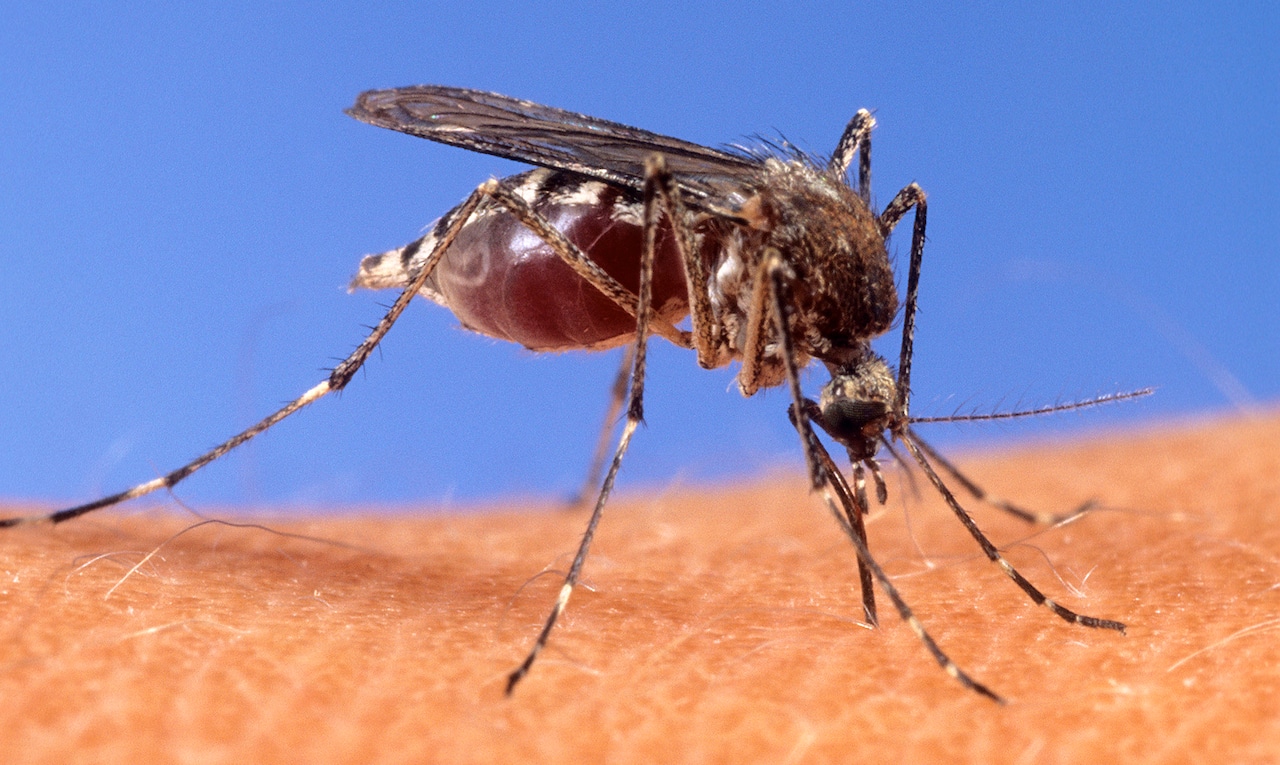
Summer is inching closer, but mosquitoes are already buzzing around Massachusetts.
In some parts of Western Massachusetts, including Northampton, and on parts of Cape Cod, the blood-sucking insects have been a nuisance for people — despite mosquito season typically worsening deeper in the summer months.
There are 52 mosquito species across the Bay State, according to the Central Massachusetts Mosquito Control Project.
The presence of any particular mosquito species depends on the type of wetlands nearby, such as permanent swamps or river floodplains, along with containers holding standing water. In these wet habitats, mosquitoes will breed.
Studies in March, when the state was still under drought conditions, showed that mosquito larval populations in Western Massachusetts were low, Timothy McGlinchy, a Brimfield resident who’s the executive director of the Central Massachusetts Mosquito Control Project, told MassLive.
As conditions changed and the rains came in April and May, the chances for more stable, stagnant water for mosquitoes to breed in increased, he continued.
Unlike the western end of the state, mosquitoes have not yet emerged in Central Massachusetts.
“Because if it rains hard out in the Pioneer Valley and doesn’t rain as hard out in Eastern Massachusetts, you’re not gonna have as many mosquitoes in Eastern Massachusetts as you’re gonna have in Western Massachusetts,” McGlinchy said.
Different mosquito species can emerge, depending on environmental conditions, in early spring, late spring, summer or mid-summer, the Central Massachusetts Mosquito Control Project‘s website noted.
During the summer — and depending on mosquitoes’ habitats ― some species can produce several generations, increasing their populations as the summer goes on.
The recent spring rains caused rivers to rise and spill out into floodplains. That created the stagnant waters that make the exact kind of breeding grounds for mosquitoes, McGlinchy said.
For those on the Cape, the presence of mosquitoes can be strange given the abundance of saltwater. That’s because there’s a species of mosquitoes — sollicitans mosquitoes — that have evolved to thrive in salt marshes.
“ They’re an aggressive daytime biter as well,” McGlinchy said. “That is a huge difference. Cape Cod works very hard to control these. But we’re fortunate that we’re inland and we don’t have to deal with them.”
Typically associated with mosquitoes are mosquito-borne illnesses like West Nike virus and Eastern equine encephalitis (EEE).
But an increase in mosquitoes does not mean an increased chance of catching West Nile or EEE, McGlinchy said. In Massachusetts, the number of vector-carrying mosquito species is low and “not a one-for-one,” he added.
At the state level, surveillance and trapping testing of mosquitoes is scheduled to begin on June 16, according to the Massachusetts Department of Public Health. Testing throughout the summer will dictate the risks humans have of catching mosquito-borne illnesses, McGlinchy said.
“ So it’s too early to make any prognosis on where we’re going to be in regard to mosquito viruses this summer,” he added. “…I haven’t heard of any mosquitoes testing positive [for West Nile virus or EEE] yet. That’ll be the coming months. It’s not until July that we usually start seeing stuff anyways.”
In 2024, 10 people tested positive for West Nile, according to the Department of Public Health. No deaths were reported.
The last outbreak cycle of EEE in Massachusetts was between 2019 and 2020, when there were 12 cases and six deaths, according to the Department of Public Health. In 2024, four people in Massachusetts tested positive for EEE.
Ultimately, personal prevention keeps people safe from mosquitoes and mosquito-borne illness, the spokesperson said.
This includes using repellent that contains an EPA-registered active ingredient any time people are outdoors during mosquito season, covering up with long sleeves to reduce exposed skin when weather permits and rescheduling evening outdoor events to avoid peak mosquito biting times when risk is greatest.