

Instead of picturing yourself in a boat on a river with tangerine trees and marmalade skies, picture a spacecraft approaching a series of asteroids trapped by Jupiter’s gravity.
On Sunday, April 20, NASA’s Lucy spacecraft — with ties to The Beatles’ famous song with Lucy in the name — will make a close approach to study and photograph the asteroid Donaldjohanson, according to the space agency.
This will be NASA’s dress rehearsal before it approaches the Jupiter Trojan asteroids.
These leftovers of the early solar system orbit in “swarms” that lead and follow Jupiter’s orbit, NASA stated. But they are not close in proximity to the largest planet in Earth’s cosmic neighborhood.
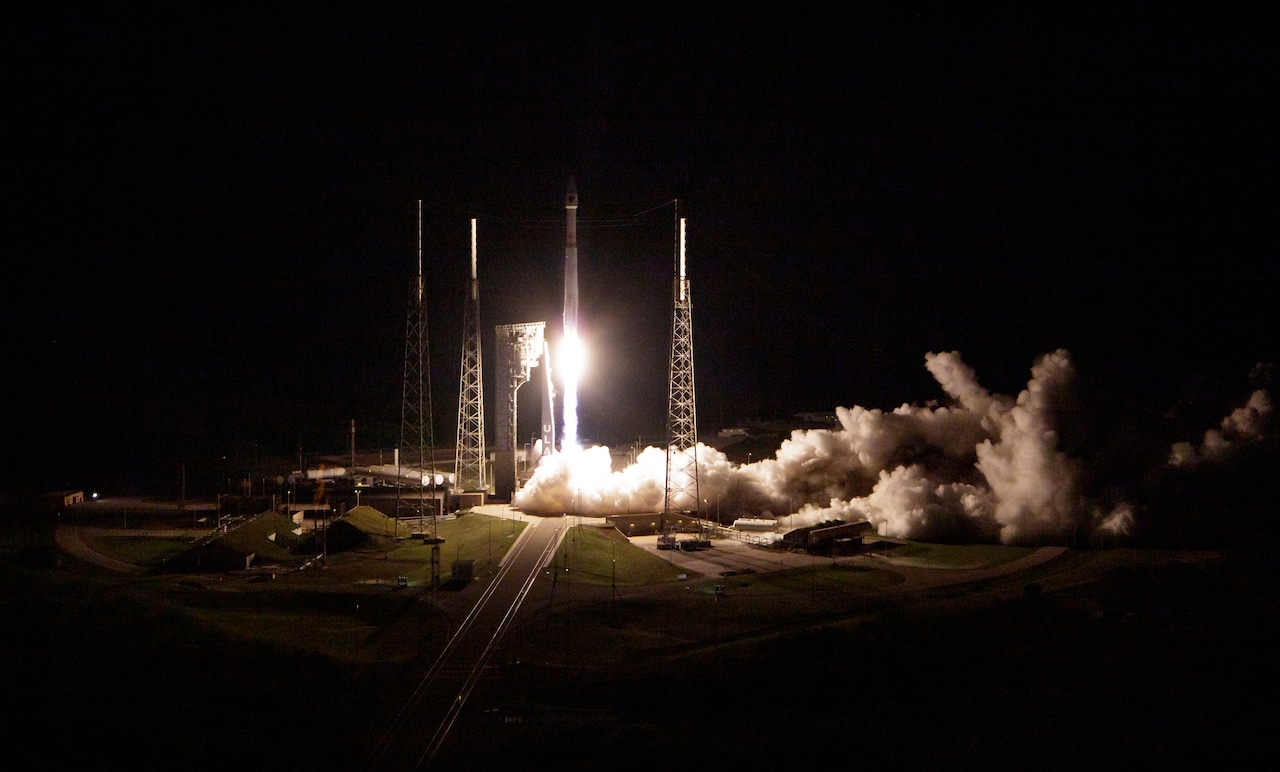
Lucy launched to the stars on Oct. 16, 2021, and is on a trajectory to study eight of the never-before-studied Jupiter Trojan asteroids, NASA said.
The first few asteroids, including Donaldjohanson, make up part of the main asteroid belt that intersects the solar system between Mars and Jupiter. After two months of photographing Donaldjohanson, Lucy will continue until it reaches the first Jupiter Trojan asteroid Eurybates and its satellite Queta in 2027.
Lucy’s 12-year mission should conclude with the study of the asteroid Patroclus and its satellite Menoetius on March 3, 2033.
The names of both Donaldjohanson and the spacecraft share a common thread with scientific exploration on Earth.
The asteroid was named after anthropologist Donald Johanson, who in 1974 discovered what was then the oldest and most complete pre-human skeleton ever found, NASA stated.
When the skeleton was found in Ethiopia, “Lucy in the Sky with Diamonds” by The Beatles played on the radio. Johanson and others named their find Lucy.
“And just as the Lucy fossil provided unique insights into human evolution, the Lucy mission promises to expand our knowledge of planetary origins,” the agency added.