
Next month, Jews around the world will participate in a centuries-long tradition of lighting candles, dining on fried food and gathering with loved ones to celebrate Jewish history.
Hanukkah, also spelt Chanukah, is the Jewish eight-day, wintertime “Festival of Lights,” honoring the rededication of the Holy Temple — a time where a small group of faithful Jews fought off the Syrian-Greek army to protect their faith in the second century BCE.
This year, the Festival of Lights begins on the evening of Wednesday, Dec. 25, and ends Thursday, Jan. 2, 2025.
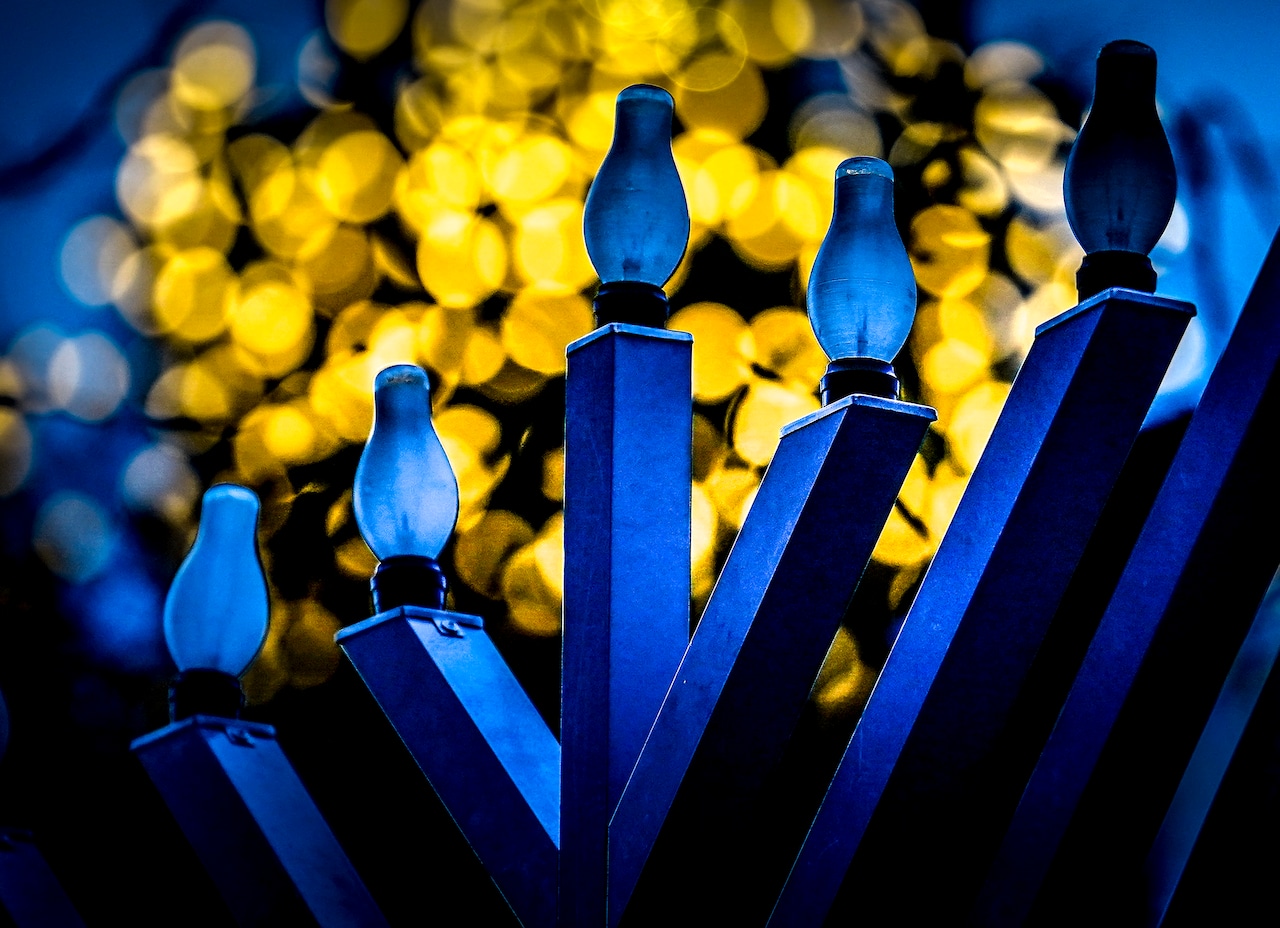
On the evening of Dec. 25, Jews will mark the beginning of the holiday and honor the miracle of the oil, by lighting the first candle of the menorah, a nine-pronged candelabra.
But this year, the celebration is kicking off much later than in years past.
In 2024, it begins two and a half weeks later than it did in 2023, a week later than in 2022 and nearly a month later than in 2021.
That’s because the Hebrew calendar, and all Jewish holidays, are determined by the phases of the moon — also known as a lunisolar calendar.
Hebrew calendar
Every month of the Hebrew calendar follows the phases of the Moon, and every year follows the Earth’s orbit around the Sun.
According to Chabad.org, towards the beginning of the Moon’s cycle, it appears as a thin crescent which signals a new Jewish month.
It grows until it is full towards the middle of the month, and wanes throughout the month until it is no longer visible.
It is invisible for about two days and once the crescent reappears, the cycle begins again.
Hanukkah is always celebrated on the 25th day of the ninth month of the Hebrew calendar, Kislev.
Kislev usually coincides with November into December of the Gregorian calendar.
Because the Hebrew calendar is lunisolar, the months vary between 29 and 30 days long. This impacts when months begin and end, also influencing when holidays occur — including Hanukkah.
What is the story of Hanukah and the eight candles lit for the holiday?
In the second century BCE, Israel was ruled by Seleucids (Syrian-Greeks) who “tried to force the people of Israel to accept Greek culture and beliefs instead of mitzvah observance,” according to Chabad.org.
The story says “Against all odds,” a small group of faithful but “poorly armed Jews, led by Judah the Maccabee,” defeated the Seleucids and reclaimed the Holy Temple in Jerusalem.
When they tried lighting the temple’s menorah, a seven-branched candelabra, the band found only enough pure olive oil for one-day, though it “Miraculously,” lasted for eight days “until new oil could be prepared under conditions of ritual purity.”
Today, the miracle of oil is celebrated with the lighting one candle every night of the eight-day-long celebration.