Last fall, the world’s richest and most popular search engine exhibited a moral compass of sorts when it banned advertisements for machines often used to make dangerous counterfeit pills.
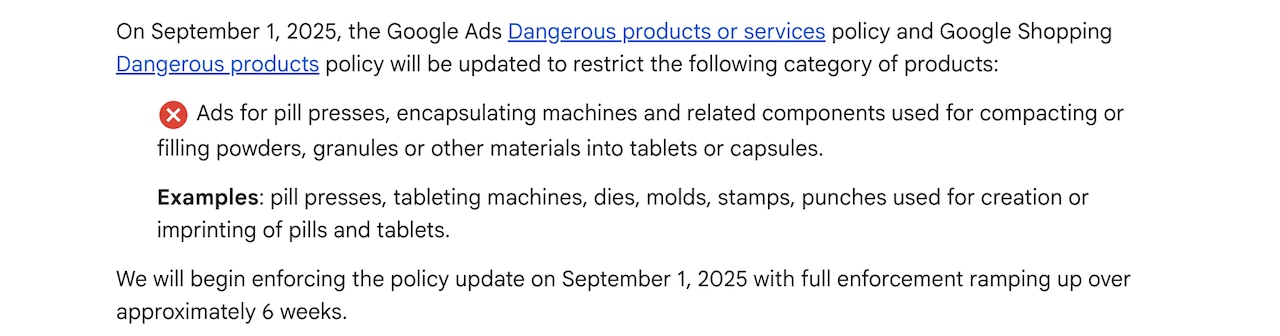
As of Sept. 1, 2025, Google updated its “dangerous products or services” policies to prohibit advertisements for pill presses and their related components, both of which are widely available for purchase online with little regulation.
They’re often shipped from China, where many suppliers are located, into the hands of illicit drug or counterfeit pill manufacturers operating inconspicuously in communities across Massachusetts and the U.S.
A MassLive investigation in 2024 uncovered the presence of pill press operations in the Bay State, part of a larger national wave fueling domestic illicit pill production — and overdose deaths.
Google’s action was viewed as proactive, as the federal government has increasingly gone after online marketplaces for selling the machines. The search engine giant is a global dominator, holding 90% of the market share.
However, months of tracking by the Washington, D.C.–based Partnership for Safe Medicines suggests Google’s policy change hadn’t fully taken hold at the turn of the new year. Advertisements for pill presses were still appearing regularly.
“I’m just disappointed this has happened, and you have to wonder how many deadly pills have been made during this time where compliance has let these ads slip through,” Shabbir J. Safdar, executive director of Partnership for Safe Medicines, said, calling Google’s policy change a “half-baked rollout.”
MassLive’s searches this week for “pill press” and “tablet press” on Google Shopping turned up dozens of advertised machines. They ranged from desktop-sized hand-crank presses to large motorized versions that can produce thousands of pills per hour.
However, after a MassLive reporter contacted Google for this story, a spokesperson on Thursday evening said the company “investigated this issue and took the appropriate action.”
“We prohibit ads for pill presses and encapsulating machines, and listings violating our policies will be removed,” the spokesperson said.
As of Thursday night, no ads appeared on Google Shopping for pill presses or tablet presses when searched. In fact, the searches returned entirely blank webpages.
While advertisements seem to be suspended, pill presses for sale still appear on Google Images and periodically on the general search page.

Highlighting the urgency behind Google’s policy change is an example just this week of the machine’s penetration into mainstream pop culture. A pill press at work made an appearance in the first 10 seconds of the trailer for season three of the enormously popular HBO Max show “Euphoria.”
Why it matters in Massachusetts and beyond
MassLive’s award-winning series on pill presses revealed the increasing dangers of counterfeit pills made with fentanyl and methamphetamine that often look identical to pharmaceutical-grade medication such as Oxycodone, Adderall and Xanax.
Fentanyl in counterfeit pills was a driving factor behind an average of 22 drug overdose deaths per week among U.S. adolescents ages 14 to 18, The New England Journal of Medicine reported in 2022.
The series demonstrated how pill presses and their availability online have shifted drug production from imported pills to domestic manufacturing — and the operations often take place in residential neighborhoods.
In the aftermath of MassLive’s 2024 reporting, two state legislators filed bills on Beacon Hill to regulate the machines and establish specific criminal penalties. Both bills are currently sitting in the Joint Committee on the Judiciary.
Massachusetts and a majority of other U.S. states don’t regulate pill press machines — and that’s because they historically weren’t considered nefarious. Their use originates with pharmacists, and only in the last 10 or so years have they found popularity in the illicit drug trade.
Current U.S. Drug Enforcement Administration regulations can easily be circumvented by buyers with illicit intentions and sellers who turn a blind eye, as MassLive reported when it purchased its own pill press from China as part of its investigation.
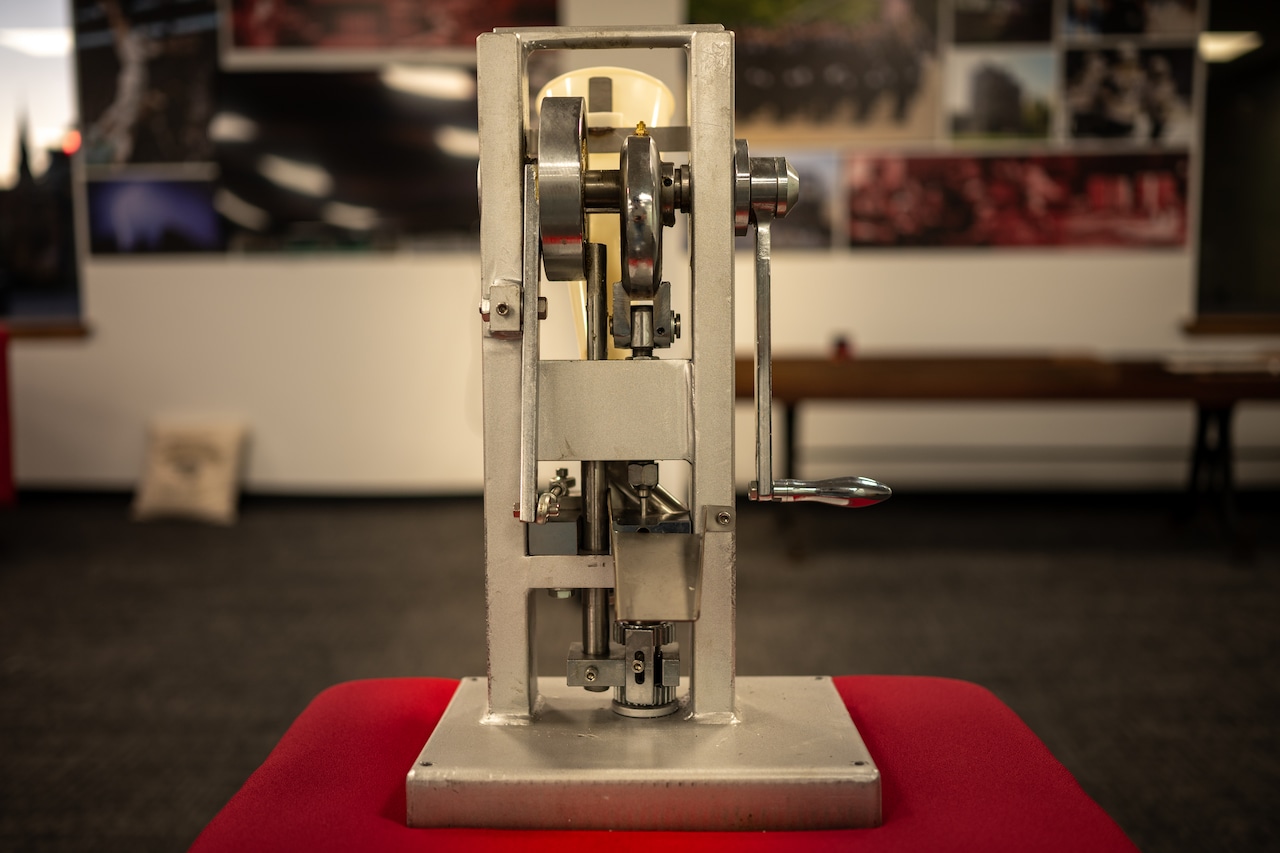
Even basic controls, such as the DEA’s mandated machine registration, don’t necessarily prevent someone from using a pill press to make illegal drugs, MassLive found.
In October 2024, when MassLive published its investigation, pill presses had been found or suspected in at least 25 cities and towns across the state since 2019, according to court documents and law enforcement records. The true numbers are likely much higher because law enforcement often makes covert seizures as part of larger investigations that they don’t publicly disclose.
‘Obviously a whack-a-mole’
In February 2024, eBay agreed to pay $59 million to settle allegations that it violated the Controlled Substances Act by selling thousands of pill presses through its platform. Amazon and Etsy have also banned the sale of pill presses.
At the time of eBay’s settlement, DEA Administrator Anne Milgram said, “eBay and other e-commerce platforms must do their part to protect the public. And when they do not, DEA will hold them accountable.”
The Partnership for Safe Medicines, an industry group comprised of more than 45 nonprofits, made pill presses a research focus in recent years as they watched the machines contribute to a rapid rise in domestic illegal pill production.
The group, which advocates for prescription drug safety, publishes regular reports on the national and global landscape of pill presses and, last fall, decided to monitor Google’s self-imposed deadline to prohibit advertisements.
“We congratulated Google on its announcement,” Safdar said. “We thought it was a good move, and it is a good move.”
It quickly became evident that, while Google may have installed a block of sorts, some ads were still slipping through the cracks.
Google promised a “full rollout” of enforcement within six weeks of Sept. 1, 2025, telling potential violators they’d be issued a warning at least seven days before account suspension.
Google didn’t answer a question from MassLive about how many warnings have been given out or accounts suspended since the policy went into effect.
As of Jan. 6, the Partnership for Safe Medicines counted at least six companies running advertisements for pill press sales on Google Shopping, and the less common term “tablet press” returned several additional ads.
“It’s obviously whack-a-mole, but Google has a big footprint in the world of online sales,” Safdar said. “Google ads are ascendant.”
Google enforces its policies using a combination of technology and manual review by its trust and safety teams, according to the company. It uses the latest advanced AI models to evolve tactics and stay ahead of bad actors, and it works to improve its detection capabilities.
The company also said it provides tools for users to flag ads or free listings on the shopping platform that they believe violate company policies.
Role of the pill press
While the presence of fentanyl in pills appears to have decreased over the last year or so, according to the DEA’s 2025 national threat assessment, the flow into the U.S. of pill presses and their accessories — dies and molds that stamp and shape pills — hasn’t let up.
The Partnership for Safe Medicines analyzed forfeiture records for the first half of 2025 and found a notable increase in seizures of pill presses and related parts by Customs and Border Protection. And that data only includes the machines that were detected and intercepted.
Pill presses have developed a “harm footprint” that goes far beyond the fentanyl crisis, Safdar said, citing fake blood thinners manufactured in Mexico that are made to look like the real thing.
Many Americans seek to buy cheaper medications from Mexico, making them vulnerable to counterfeit pharmaceuticals. The risks have prompted warnings from the U.S. State Department and Mexico’s drug regulator.
Safdar’s organization opposes foreign medicine importation entirely, including current efforts in Congress to legally allow prescription drugs from Canada.
Illegal online pharmacies masquerading as legitimate are increasingly setting up shop around the globe. In 2022, law enforcement raided an illicit pill press operation in Massachusetts believed to be a supplier for two international online pharmacy websites based out of India.
A massive criminal case out of New York last year dismantled an international pill mill connected to at least nine deaths. The operation, according to federal law enforcement, supplied counterfeit pills to fake online pharmacies that were purchased by tens of thousands of victims.

Prosecution of pill press cases
When drug cases involve a pill press, the machine is rarely included in the prosecution because of its murky legal status.
So if a suspected drug trafficker is arrested with a kilo (2.2 pounds) of fentanyl and a pill press, they’ll likely only be charged with possession of fentanyl with intent to distribute. As a result, people who traffic in pill press machines often avoid criminal prosecution.
However, federal law enforcement took a significant step in December 2024 when it announced the prosecution of a Chinese national charged with distributing pill press equipment in the U.S. The woman ultimately pleaded guilty and was sentenced to 52 months in prison in October 2025.
The U.S. Attorney’s Office in the Western District of Texas followed the case with an April 2025 indictment of CapsulCN International Co. Ltd. and three of its employees — also Chinese nationals — accused of illegally importing pill presses and related accessories.
The indictment claims the company and its employees knew the machines would be used for illegal purposes when they sold them to customers via websites, e-commerce platforms and social media accounts.
“This indictment and today’s domain seizures send an unmistakable message to criminals in the People’s Republic of China and across the world — the Department will use every weapon in its arsenal to combat those who facilitate the manufacture and distribution of deadly drugs in the United States,” Deputy Attorney General Todd Blanche said in a statement in May.
If either of the proposed pill press-related bills currently under consideration by Massachusetts lawmakers passes muster, it would become a felony crime to possess, purchase, or sell a pill press with the “reasonable” knowledge it would be used to manufacture a controlled substance or counterfeit controlled substance.
One of the bills goes a step further, directing the state Board of Registration in Pharmacy to adopt rules and regulations for the legal use and licensing of pill press machines.