

Electric shocks were only the beginning. On Tuesday, a former student told lawmakers the abuse at a Canton facility runs far deeper — with an advocate sharing similar accounts from others, including claims of sexual abuse.
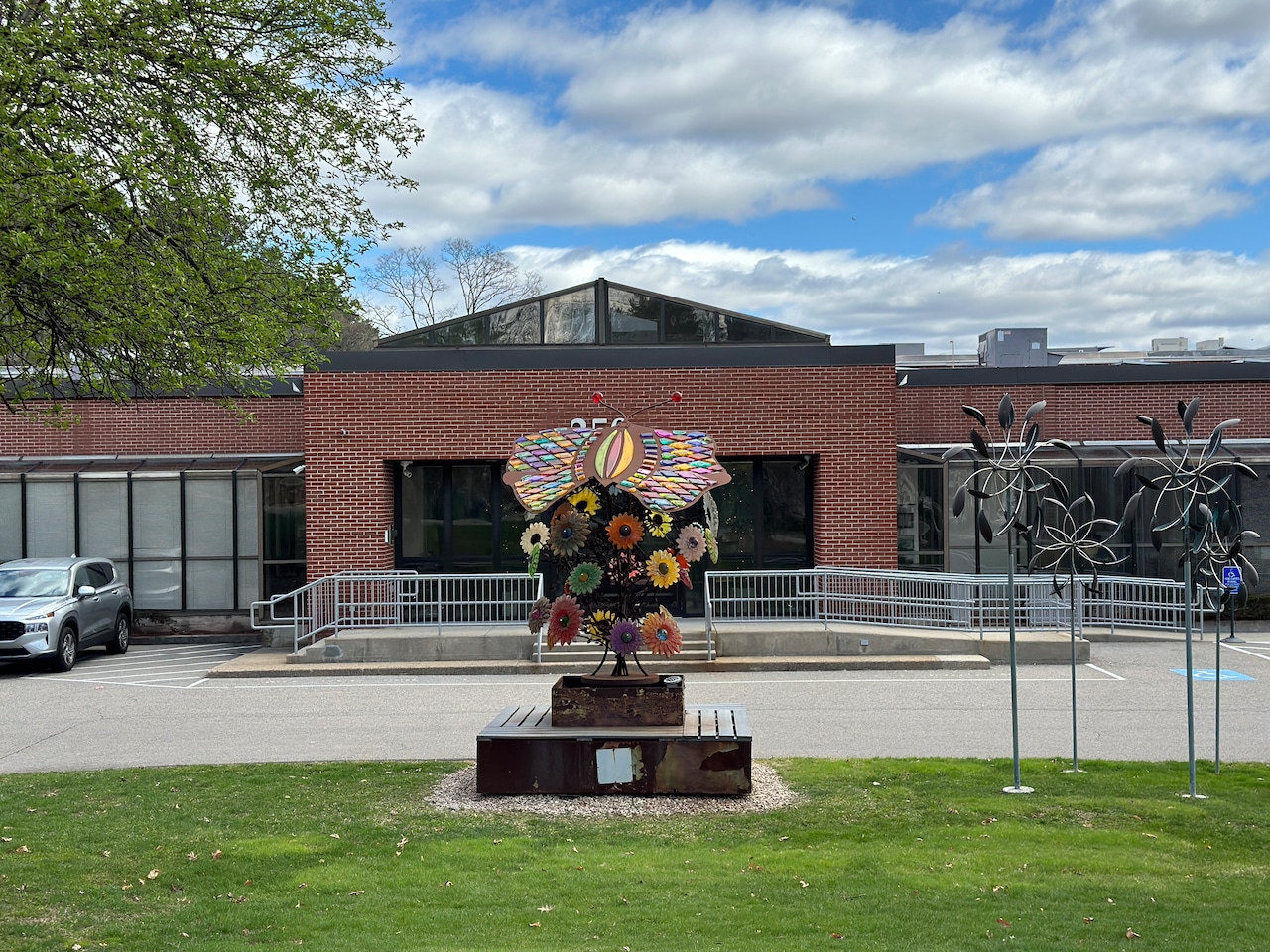
The Judge Rotenberg Center (JRC), a special needs day and residential facility in Canton, is known across the country for using electric shock devices, which are attached to the residents at all times, on people demonstrating self-injurious or aggressive behavior.
It is the only facility in the country to use them and has been the center of many advocates’ concerns for decades.
The JRC has said the device is “lifesaving” and that it is important it “remains available to those for whom all other treatment options have been tried and failed,” the JRC and the JRC Parents Association wrote in a statement after a 2023 court ruling that allowed the devices to continue to be used.
The facility has said that its clients have had behaviors that result in “profound physical injuries including blindness and mutilation” prior to using the devices. They have also injured family members and loved ones.
One parent told The New York Times the device gave her back her “beautiful son,” Anthony Green, who is 24.
“Under the care of JRC’s highly specialized medical team, individuals whose lives have been marked by over-medication, physical and mechanical restraint, and social isolation can learn to live with others in homes, be gainfully employed, and safely live in the community,” a statement read.
There are more than 300 people who attend or live at JRC, and 54 people are approved for the devices.
Tuesday’s Joint Committee on Children, Families and Persons with Disabilities hearing had many people speaking out against bill H.240 and in support of bill H.245.
The first bill would require rules and regulations for the training, certification and licensing of individuals to administer or cause to be administered a procedure using the shock devices, also known as a graduated electronic decelerator (GED).
But the second bill would ban the use of aversive therapy, including hitting, pinching and electric shock for the purposes of changing the behavior of the person. It would also ban the ability to deny a person with a physical, intellectual or developmental disability reasonable sleep, food, shelter, bedding, bathroom facilities, and any other aspect expected of a humane existence.
However, advocates fear the first bill will not stop or improve the situation at JRC, as these devices are already required to be approved through the court system.
Despite years of trying, multiple bills have not been passed before.
In 2023, Jennifer Msumba told the same committee how she regularly wakes up screaming “no, stop!” after living at JRC from 2002 until 2009 and was on the shock devices for all seven years.
Msumba, who is on the autism spectrum, said she came to JRC with these “very strong self harm behaviors,” including putting her head through windows, she told the committee. While her behaviors stopped while she was on the device, her “behaviors weren’t fixed.”
“They were just manifested differently, into explosions. I would hold it in and then all of a sudden explode,” she said.
She now lives at a difference placement, which she said has helped her. But when she arrived, she went back to her old self-harming behaviors.
“Instead of hurting me, they helped figure out why these things were happening and took the time to do so. They helped me learn to cope and self regulate, also allowed access to medication that I really needed,” she said.
In 2021, Msumba released a book, “Shouting At Leaves” regarding her time at the center. She also shares some of her story on TikTok, has performed at Fenway Park, is a filmmaker and is part of American Mensa, which requires scoring in the top 2% of the general population on an accepted standardized intelligence test.
“They didn’t even think I could read,” Msumba said on Tuesday, recalling her time at JRC.
But her three minutes of testimony on Tuesday didn’t focus on just her experience with the GED device, instead she told lawmakers that there is hidden abuse.
“You have no idea what goes on inside there,” she told the lawmakers. “Today, we’re talking about what you know, but you don’t know what’s really going on inside of there. How much abuse happens, how much misuse of the device [happens].”
JRC denied all claims of abuse to MassLive on Wednesday.
On Tuesday, Msumba said the device is used against non-verbal students and used in threatening ways.
“You’re not allowed to say the word no or not follow a direction,” Msumba said. “You will get shocked.”
In 2016, Terri Du Bois told MassLive that when she was living at JRC in 2005, she was sitting in class and needed to re-situate her pants. Her natural reaction was to stand up and fix them.
“All I remember is my face hitting the floor,” Du Bois said.
She got up out of her seat without permission. Staff responded by immediately restraining her, she said.
She was later approved and fitted with a GED.
She said she was shocked for yelling, swearing, getting out her seat without permission and grabbing others.
The devices have also been reported to malfunction. She recalls one day after she got out of the shower when, she said, the device shocked her 10 times.
“I just kept screaming, ‘Get it off of me, get it off of me,’” she said.
Nancy Weiss, a retired University of Delaware professor and past director of the National Leadership Consortium on Developmental Disabilities, has interviewed dozens of former JRC residents.
Weiss said she, too, interviewed people who reported the devices would malfunction and shock people.
She testified Tuesday, reading some of the quotes from her interviews, but did not name any of the individuals.
“Here are the things I got shocks for: rolling my eyes, saying no, cursing, clicking my teeth, looking too long at staff, not following directions immediately, screaming while being shocked. Then they’d give me another shock for screaming and I’d scream during that one. You couldn’t help yourself. Then they’d shock me again. Once I was sitting at my desk, they shocked me on my leg. I didn’t even know for what. I was caught off guard. I hadn’t done anything. The leg they shocked flew up and hit the leg of the desk. Then they shocked me for banging the desk,” Weiss read.
Another quote stated they got shocked for asking for something, saying “good morning” or talking in their first language, Spanish.
“They’d say, ‘no talking out.’ You can’t talk in any environment. Only staff are allowed to talk. If you say anything you’re shocked,” she read.
Multiple people told Weiss they often didn’t know why they were being shocked.
“I remember waking up at 4 in the morning to a staff person pulling my covers off me and telling me to get up. I didn’t understand. She said, ‘Oh, you’re refusing to get up?’ She gave me at least ten shocks. I never even understood why. The other staff person said, ‘I can’t tell you why, I don’t know’ … Most of the time I didn’t know what I was getting shocked for,” the quote read.
The shock devices have also left bruises, scars or lasting pain, people told Weiss.
JRC describes the shocks as a “harmless” and “life-saving” two-second application that are done less than once per month. The people on the devices have also “failed all other possible treatments at numerous facilities across the country, including treatment with harmful psychotropic drugs which served only to chemically incapacitate them.”
JRC did not respond to MassLive’s question asking how they monitor the use of shocks appropriately. But the New York Times showed an observation room at the facility where residents are monitored on multiple screens.
In March 2020, the U.S. Food and Drug Administration banned electrical stimulation devices (ESDs) used for self-injurious or aggressive behavior. But that decision was overturned.
The FDA warned in its petition that the “FDA determined that those devices present unreasonable and substantial risks of both physical and psychological injury.”
“The shocks cause pain that has been described as ‘extremely painful,’ ‘excruciatingly painful,’ ‘like a dentist drilling on an un-anesthetized tooth,’ like a ‘bulging and a ruptured disc,’ like ‘a thousand bees stinging you in the same place for a few seconds,’ and as ‘the most painful thing I’ve ever experienced,’” the petition states.
The strongest jolts that can be given by an employee through a remote control is 41 milliamperes, which is extremely painful and causes a brief loss of muscle control, The Times reported. An electric current of 50 milliamperes is potentially fatal.
One person told Weiss, “It was like two nails being pounded into your skin.”

But advocates have also told MassLive that ending the use of the GED devices won’t solve all the issues.
Msumba said she was “forced to count popsicle sticks for seven years” for a national food company and never paid. Another student told Weiss that staff “kneed me in the eye” and then kept them on “house arrest for 3 weeks so no one could see I had a black eye.” Students said staff members kicked them, pinched them, bit them, dug nails into their skin, withheld food and were forced into house arrest for six months that was like “solitary confinement.” And a fourth former student told Weiss, a staff member blocked a camera as they were sexually assaulted and then later shocked for “lying” about it.
“I thought I was going to die. I was a kid – well, I was a teenager, but still, just a kid –I didn’t know people like that existed. I didn’t know places like that existed,” one person told Weiss.
Msumba said things like this are often hidden from the outside world.
“There are so many violations happening inside of that place that you don’t even, will never know because they hide it,” Msumba said during the hearing. “When people go to visit, they will hide certain students. They will. They will hide certain devices that they’ve developed.”
The facility did not allow The Times to interview anyone wearing the shock devices in 2024. And many of the people connected to the devices do not speak or have limited communication.
In 2022, three people told investigators from the Association for Behavior Analysis International that they didn’t want the devices, including one person who begged to be taken away, The Times reported.
Msumba is urging lawmakers to hear voices that can speak.
“… you have to stop this because it’s torturous to your mind and body. Everyone in there is suffering,” Msumba pleaded on Tuesday.
If you purchase a product or register for an account through a link on our site, we may receive compensation. By using this site, you consent to our User Agreement and agree that your clicks, interactions, and personal information may be collected, recorded, and/or stored by us and social media and other third-party partners in accordance with our Privacy Policy.




