HOLYOKE — What brings you in today?
Dr. Sundeep M. Shukula can now ask that question with his head up, not buried in a screen taking notes.
“I make eye contact,” he said. “I look at the patient.”
Shukula, an emergency room physician at Cooley Dickinson Hospital in Northampton, uses the hospital’s new AI listening technology not just to record conversations with patients but to help organize all of the notes that must be charted at the end of a busy shift.
“It has to be proofread,” Shukla said. “Nothing is 100%.”
The technology doesn’t work perfectly with young patients or those who don’t normally use English as their first language. Someone who is in a lot of pain or is just not speaking clearly might have trouble making a coherent recording.
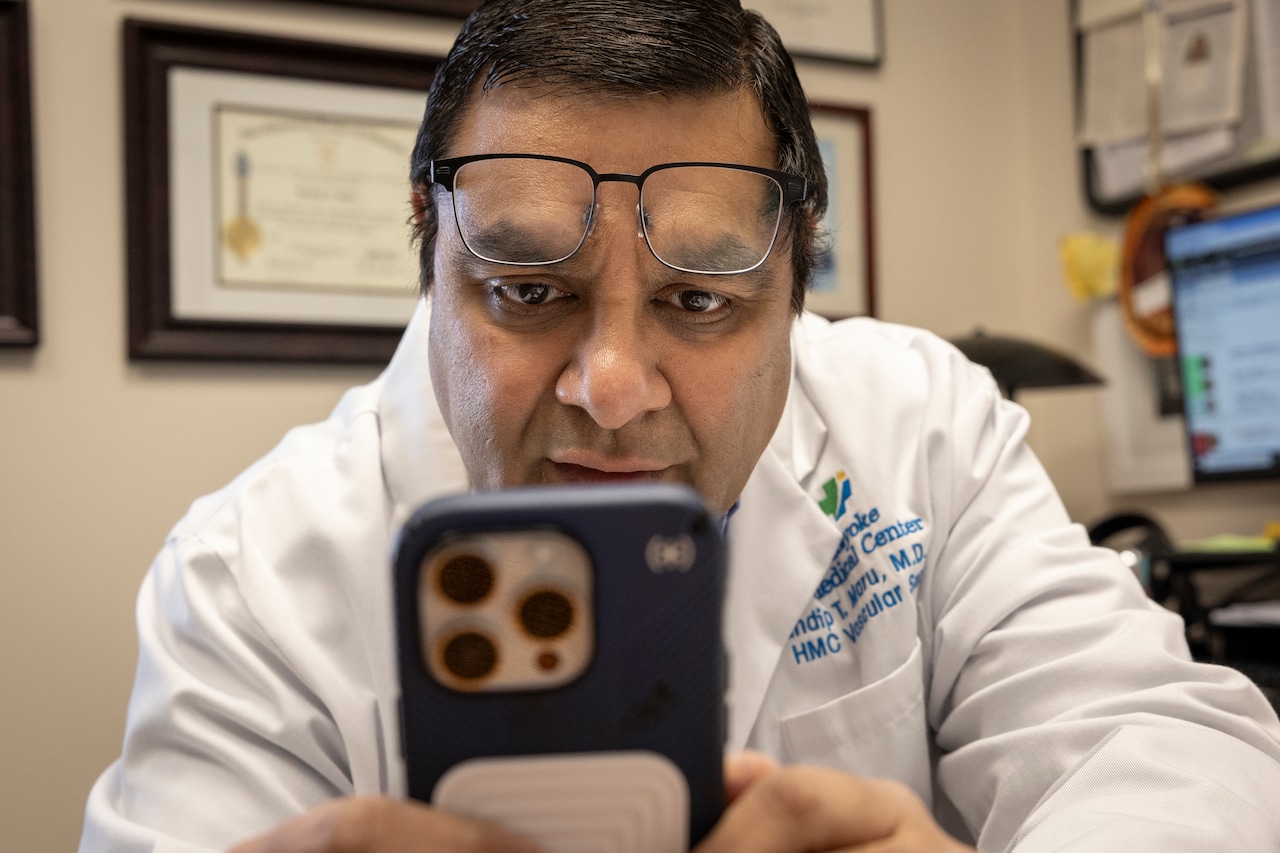
“It kind of works like an artificial intelligence medical scribe,” said Dr. Sandip Maru, a vascular surgeon at Holyoke Medical Center who might see as many as 25 patients on a busy day in the office.
Doctors across the Pioneer Valley, including those at Holyoke Medical Center and Cooley Dickinson in Northampton, started using AI ambient listening technology in 2025.
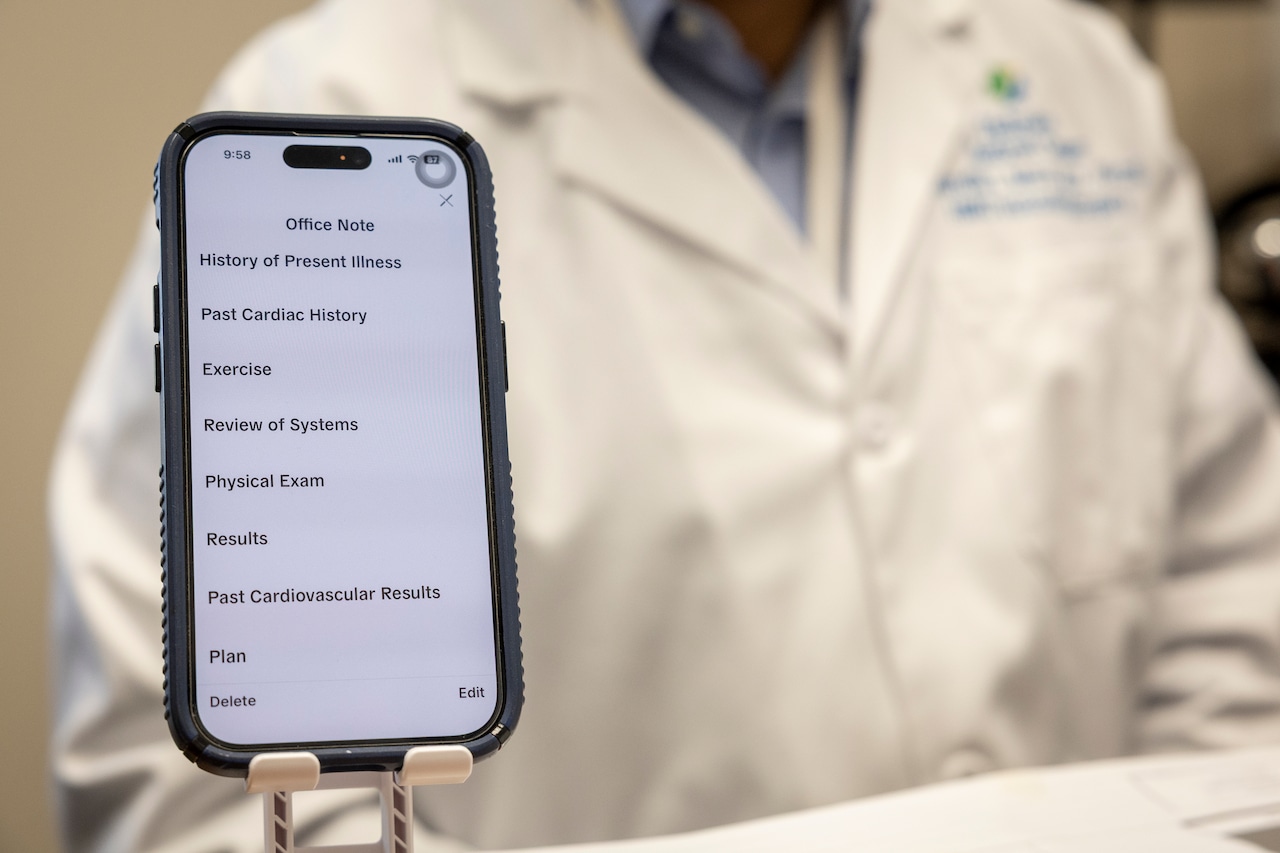
“It kind of works like an artificial intelligence medical scribe,” said Dr. Sandip Maru, a vascular surgeon at Holyoke Medical Center who might see as many as 25 patients on a busy day in the office.
That can make it hard at the end of the day to remember who said what and when.
“And a lot of it is from memory,” he said. “The new technology takes away some of that administrative work.”
Doctors across the Pioneer Valley, including those at Holyoke Medical Center and Cooley Dickinson in Northampton, started using AI ambient listening technology in 2025.
Maru said he needs to edit the text. The program is not perfect. But it saves him hours of work after the clinic day.
In the old days, doctors would take notes on paper or record notes on tape recorders then either listen to themselves or send them out to a transcriptionist.
It was hard to reconstruct what was said.
“And a lot of it is from memory,” Maru said. “The new technology takes away some of that administrative work.”
He always tells patients he’s using a recording device. The recording and the AI software used to transcribe and organize it are compliant with Health Insurance Portability and Accountability Act of 1996 (HIPAA).
Spiros Hatiras, president and chief executive officer of Holyoke Medical Center and Valley Health Systems, said Holyoke piloted the programs in 2025 and will roll them out more fully in 2026.
“It eliminates the busywork,” Hatiras said.
He added that the technology is even good at ignoring the opening, getting-to-know-you portions of the conversation, such as when a doctor asks about the Patriots or the weather.
Holyoke Medical Center uses another piece of AI technology to double-check medical records. It scans for missed steps or abnormalities, or tests that would normally be ordered that haven’t been.
“I think it can only enhance patient safety,” Hatiras said. “It doesn’t make treatment decisions. We’re not there yet,” he said.
Baystate Health is making AI part of its cost-savings push, said CEO Peter D. Banko. The largest healthcare provider is inserting AI into all of its information systems, making more operations self-service.
“So being able to schedule, being able to fill out your paperwork, being able to refill your prescriptions, being able to interact with your physician more real time through some AI agents,” Banko said.
Nearly three-quarters — or 71% — of doctors and nurse practitioners report some use of AI for patient visits, according to an August MGMA Stat poll. But opinions were divided on its impact on staff workload: About 44% said it has not reduced workload, 39% said it has, and 17% were unsure.