

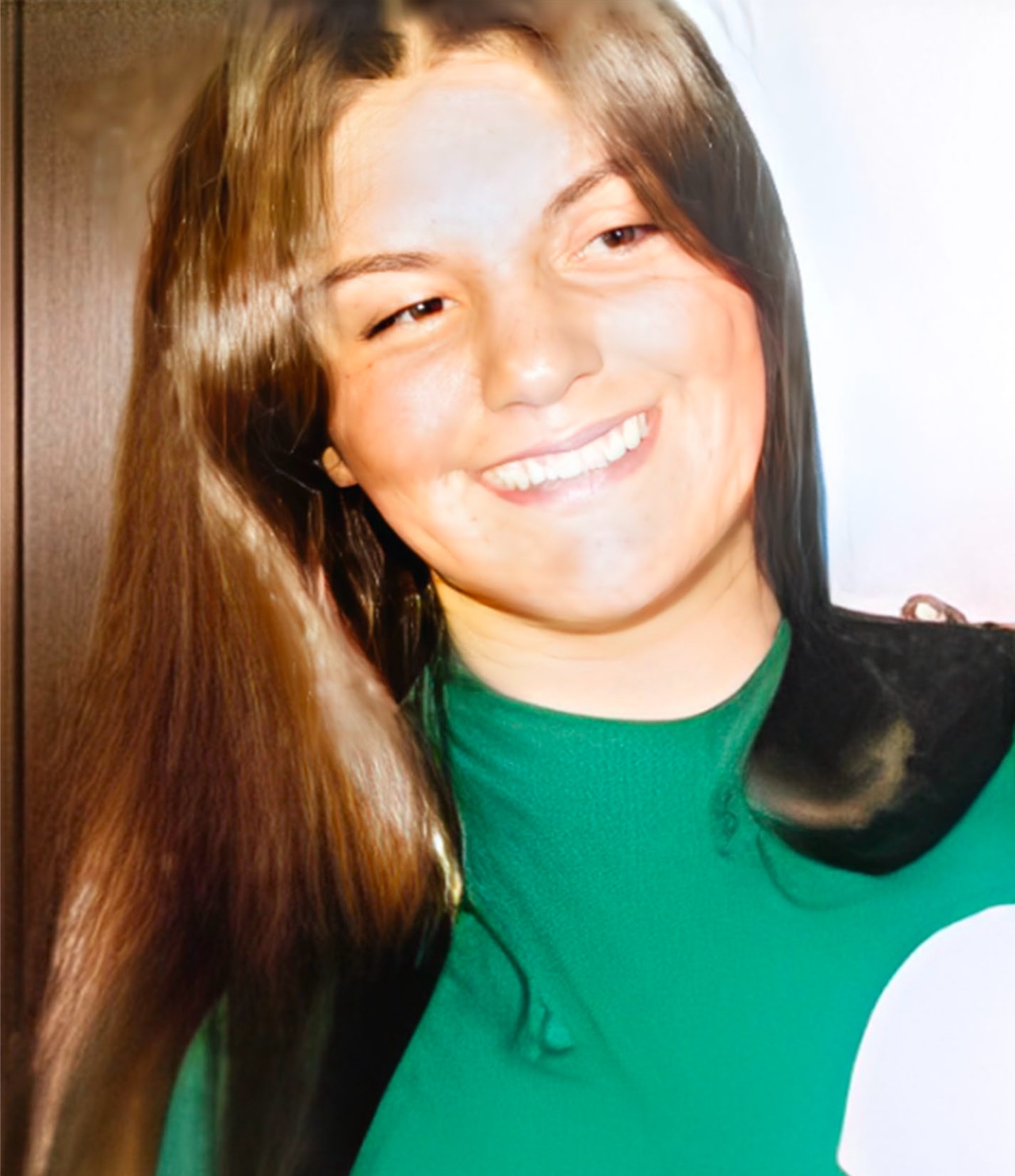
Authorities in New Hampshire announced on Monday that they solved the 50-year-old murder case of Judith “Judy” Lord, a 22-year-old mother killed in her Concord apartment, a case that officials said “spanned generations.”
Lord was found dead in her apartment on May 20, 1975, by her apartment manager, who entered to collect overdue rent, and because he had heard her baby crying for hours. Her 20-month-old son was found unharmed in a crib in an adjoining room.
Ernest Theodore Gable, who is deceased, was initially identified as a suspect after Lord’s death, but a flawed forensic report issued by the FBI incorrectly excluded him. He was Lord’s neighbor and 24 at the time.
“Early in this case, a suspect was identified, but flawed forensic science stalled the case,” New Hampshire Attorney General John Formella said during a press conference Monday afternoon. “Specifically, a 1975 FBI hair analysis report incorrectly excluded what ultimately came to be our suspect and our perpetrator.”
Formella said the FBI report contradicted key physical evidence and other evidence at the time that made Gable the prime suspect.
“The evidence against Mr. Gable was compelling from the start,” Chris Knowles, senior assistant attorney general and head of the cold case unit, said during the press conference.
The investigation found that Lord had been strangled inside her Royal Gardens apartment, where investigators said a “violent and desperate struggle” took place almost entirely in Lord’s bedroom. She was found naked, and evidence immediately indicated that a sexual assault had taken place, officials said.
An autopsy determined she died from homicidal strangulation. Neighbors had reported hearing a violent struggle in her apartment on the day she died. The doors to her apartment were locked on the day of her attack, officials said, and Gable used a window to gain entry.
Lord had her apartment searched earlier on the day she died because she believed individuals were going into her home, officials said.
A forensic report using microscopic hair analysis incorrectly concluded that five hair samples found on top of Lord’s body did not match Gable, which “derailed the entire case for decades,” Knowles said.
“That single flawed report contradicted fingerprints, his motive, his behavior, the compelling timeline that had been put together by investigators, and it was accepted as definitive truth that halted prosecution,” Knowles said. “It created an insurmountable barrier to the prosecution, and as a result, the case went cold.”
The case was reopened in 2003 by the Concord Police Department, which led to a new analysis of the evidence from the case. A DNA sample eventually matched Gable to Lord’s murder.
A review by the Department of Justice in 2015 found that microscopic hair analysis techniques were no longer considered reliable for positive identification in criminal cases, according to Knowles.
If Gable were still alive, he would’ve been charged with first-degree murder, Knowles said. Gable died in Los Angeles on Feb. 1, 1987, while using the alias of Ernest Stansberry, Knowles said.
“Our final thoughts today are with Judith Lord,” Knowles said. “We hope this final resolution, while nearly 50 years in the making, provides some measure of peace and the beginning of closure to Judy’s family and to the entire Concord community.”




