
Decades after her sister was beaten, gagged and left at the bottom of a quarry with cinder blocks weighing down her body, a woman stood before the Massachusetts Parole Board with a painful reminder: This could’ve been your loved one.
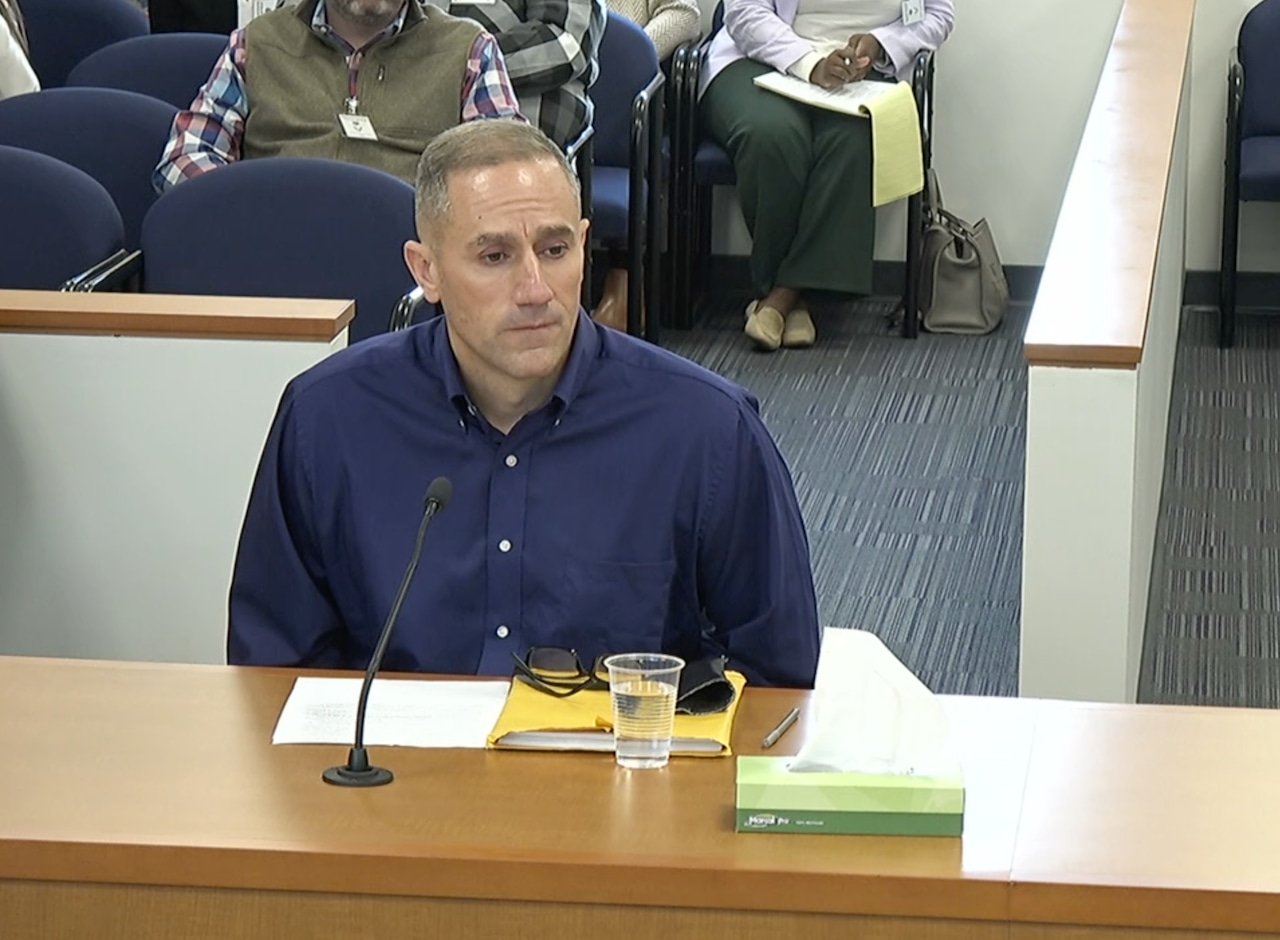
“Do not let this monster, Robert Larkin, out to be around your loved ones,” Sonia Leal‘s sister said during the April 8 parole board hearing. “He is a natural-born murderer.”
In November 1994, 20-year-old Larkin and two other men, Kevin Lynch and Shawn Kane, raped, beat and killed 17-year-old Leal.
During a police interview, Larkin described driving with Kane to what used to be referred to as the Combat Zone in Boston to pick up a sex worker. Kane hid in the back of the vehicle because women had been nervous to get in the car with two men.
While he was hiding, Leal got into the car with Larkin and agreed to go home with Larkin in exchange for $100. Back at Larkin’s home, he paid the woman $75 and had sex with her. When the woman exited the bedroom, another man requested to have sex with her, but she refused due to his inability to pay. The three men began arguing with Leal and she tried to leave.
But Larkin took her purse, and the three men beat her until she lost consciousness.
Larkin then began to worry that his family would find out he paid for sex.
When he got his money out of her purse, he noticed her pantyhose.
“… and I took her pantyhose and the tape and we put them in her mouth so she couldn’t yell when she woke up,” he recalled.
They tied her up with rope and covered her mouth with duct tape. She was dragged to a bedroom, where two of the men raped her.
When the second man left the bedroom, he stated that he thought the woman was not breathing.
“It was like a chaotic feeling. It was panic. There was a million thoughts going through my mind,” Larkin told the parole board. “… this sounds ridiculous now, but at the time it was, ‘Oh, no, her pimp’s gonna kill us.’”
Eventually, they decided to kill her.
“I didn’t see her as a human being,” Larkin said.
They disposed of the body in the quarry and weighed it down with cinder blocks. He felt relief, he told the parole board.
Police found Leal‘s body on Nov. 20, 1994.
When Leal‘s body was recovered, her clothing was torn, and she was bound and gagged. The cause of death was asphyxiation, which the medical examiner opined was due to the gag or tape that was wrapped around her neck.
Larkin heard the body had been discovered on the news.
“I went to panic mode,” he told the parole board, detailing how he went into hiding and eventually went to live with his mother on Cape Cod.
On March 15, 1995 he was arrested for a parole violation in an unrelated crime. Still, police questioned him about Leal.
He denied knowledge of anything. And her family continued to wait for her killers to be brought to justice.
In July 1995, the FBI analyzed the tape around Leal‘s mouth and identified Larkin’s fingerprint on the tape.
On Feb. 12, 1997, following a jury trial in Norfolk Superior Court, Larkin was convicted of first-degree murder, unarmed robbery and aggravated rape. He was sentenced to life without the possibility of parole.
Soon after he was sentenced, he was offered sex offender treatment. But he didn’t want to do it.
“Because I knew I was doing the rest of my life in prison and I was still not ready to face it,” he said. “I didn’t want to do any work back then on myself.”
He continued to make excuses and blaming others, he said.
However, that changed after a couple of Supreme Judicial Court’s decisions.
Larkin said he became more interested in bettering himself when be heard talks of life without the possibility of parole becoming unconstitutional for people around his age.
Larkin, now 51, became parole-eligible following the 2024 Supreme Judicial Court’s decision in Commonwealth v. Mattis, where the court held that sentencing people ages 18 through 20 at the time of the offense to life without the possibility of parole is unconstitutional.
“I am now a 50-year-old man who is grateful to have had the capacity to change. I now treat others with courtesy, respect, compassion and empathy. I am now self aware. I am able to recognize when I am falling short,” he told the parole board in April. “But I am also open to constructive criticism. I do hold myself accountable and will continue to do so moving forward.”
Still, he has not completed the Sex Offender Treatment Program (SOTP).
Leal‘s sister believes mercy is allowing him to live out his life in prison. She believes that if there hadn’t been a Supreme Judicial Court decision, Larkin wouldn’t have taken any classes to better himself.
“The ruling treats murderers as victims while betraying those murdered and their families,” she said.
She also recalled the gruesome facts of the crime.
“This was not just a bullet to the head. This was a horrific, plotted and planned-out, sick, evil murder,” she said.
And, she said, he should’ve come forward prior to the fingerprint.
“… he had nine months to come forward before his fingerprint was discovered. He saw it all in the news. It was on the news for over a year. Who did this to this girl,” she said.
Plus, Norfolk District Attorney Michael Morrissey doesn’t feel Larkin qualifies under the Mattis decision because his violence and deception continued after the age of 21.
“There was no impulsiveness here. This was planned. This was deliberate. There was cover up. There was no peer pressure … His brain was fully formed. He misled the police while he was 21. His actions while in prison, the violence towards others happen well beyond 21,” the district attorney said. “I would suggest to you board members that he wasn’t truthful today. Make no doubt about it. He began his most meaningful programming when there was word that Mattis was in process.”
In a unanimous decision, the parole board voted to deny Larkin’s parole on Aug. 21. He is expected to have a review in three years. During that time, the parole board suggested he complete SOTP and to engage in programming to develop additional insight.
If you purchase a product or register for an account through a link on our site, we may receive compensation. By using this site, you consent to our User Agreement and agree that your clicks, interactions, and personal information may be collected, recorded, and/or stored by us and social media and other third-party partners in accordance with our Privacy Policy.