
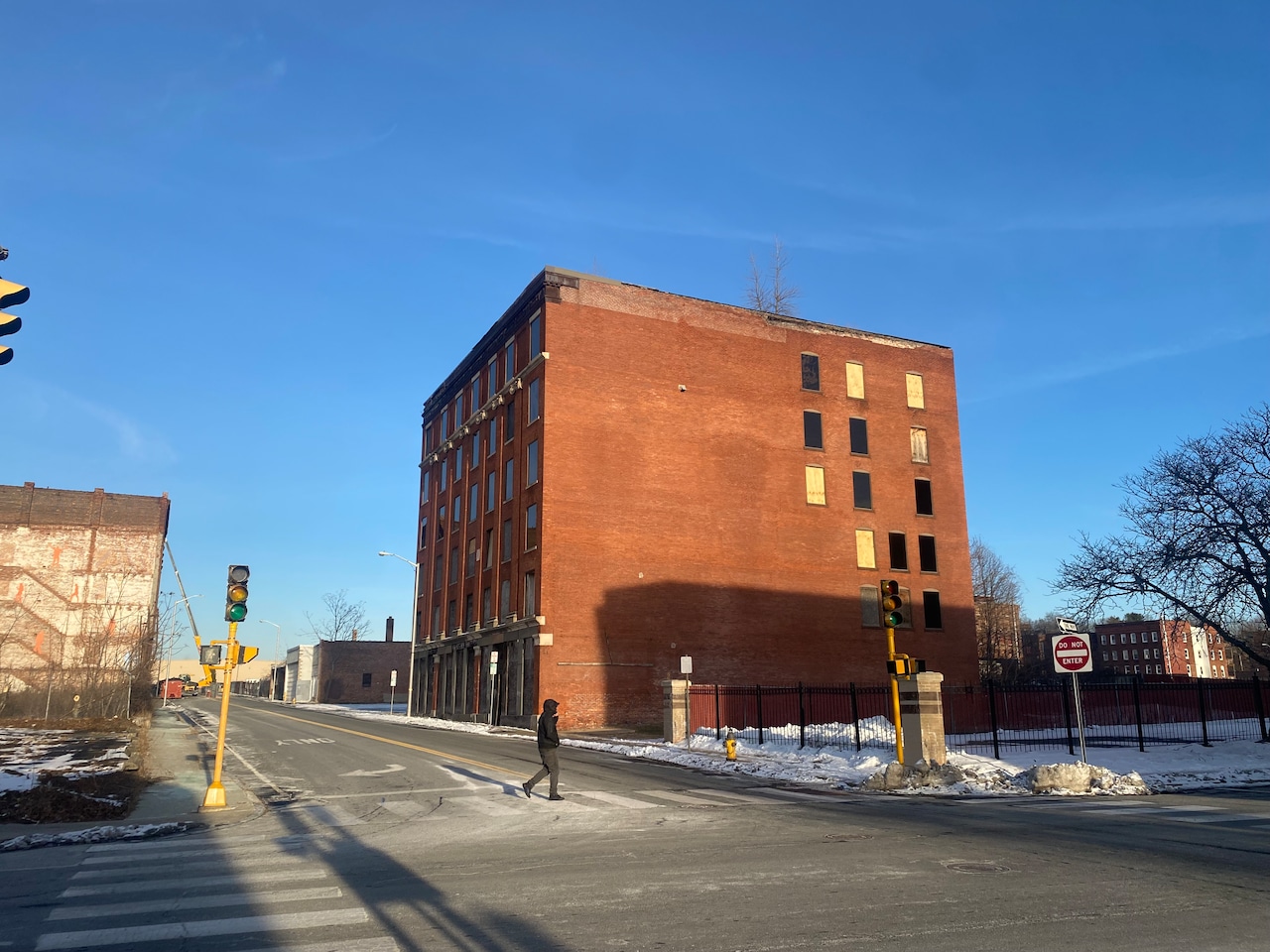
For years, the city of Springfield tried to interest a developer in the six-story building at 135-155 Lyman St., a property it acquired in 2009 for nonpayment of taxes.
But for years, those requests for proposals to revitalize the property, which sits a stone’s throw away from the train station, were unsuccessful.
This week, however, the Springfield City Council voted unanimously to authorize the mayor to transfer the property — and a handful of vacant parcels that sit nearby — to BAR Belmont LLC for $544,000.
“The proposal is to include the property in a major neighborhood redevelopment,” said Brian Connors, deputy development officer in the city’s Economic Development Office. “The developer will first look at reusing the building and then look at what other potential uses could be incorporated into the neighborhood redevelopment.”
BAR Belmont, the real estate company of auto dealer James E. “Jeb” Balise, has acquired several properties in Springfield in recent months, such as a warehouse on Liberty Street.
Most notably, Balise helped make one of the 11 bids for the city’s new courthouse, a proposal that includes properties across Chestnut Street from 135-155 Lyman St. The property is not part of a bid for a courthouse.
Reached for comment, a spokesperson for Balise confirmed the auto dealer planned to purchase the property.
“The Balise team is committed to working collaboratively through the development process to deliver meaningful long-term benefits for residents of Springfield and look forward to sharing additional details as plans progress,” the spokesperson said in an email.
Four bids for property
Connors told the City Council’s finance subcommittee this week that when the city requested bids this time around, it considered four that came in for the Lyman Street property. BAR Belmont had discussed constructing residences in the neighborhood, he said.
“Given the amount of development that will happen on that site, the concept is this property and others may be needed to fulfill some of the goals of the project,” Connors said.
The Lyman Street property is in poor condition and posed a liability to the city, Connors told the panel Monday.
The city said in its request for bids that it would sell the property as-is and would not conduct tours of the building because water had caused the building to deteriorate.
A tree grows out of the building’s roof. A sheet of plywood was pried away from a metal door, which stood ajar.
Built in 1910, the building once housed a discount store and is zoned for commercial and industrial uses. In 2012, the city said it hoped to turn the building into artist residences.