
A case of Powassan virus has been detected in a Martha’s Vineyard resident, the second time it has been found on the island in the last 20 years, according to Martha’s Vineyard Boards of Health.
“The situation is being closely monitored by the island’s local boards of health and shared public health staff, including Public Health Nurse and Case Investigation Coordinator Betsy VanLandingham,” the boards said in a statement released Tuesday.
The illness is the third case of the virus in the United States in 2025, the Centers for Disease Control and Prevention stated.
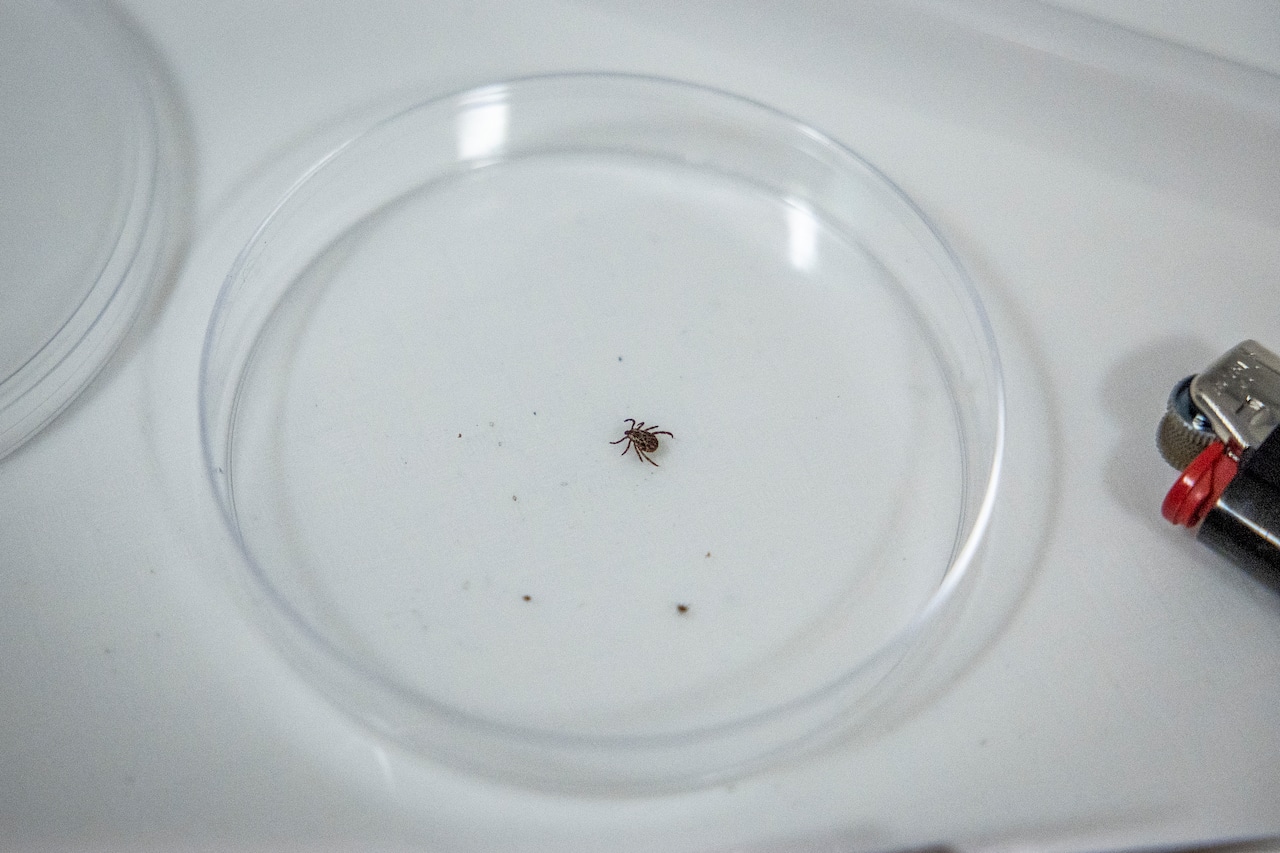
“The virus is present every year in a small percentage of deer ticks; fortunately, severe disease remains very rare,” Dr. Sam Telford, an infectious diseases expert at Tufts University, said in the statement. “Between 1 and 2% of nymph deer ticks on Martha’s Vineyard are infected. This is a similar rate to that seen elsewhere in New England. This suggests that many people who are exposed may successfully fight off the virus without ever knowing they were infected.”
Telford’s lab has tested over 3,500 nymph deer ticks between 2021 and 2024, the statement read.
While health officials did not disclose the name of the person infected with Powassan, the virus was detected in a 1-month-old baby in West Tisbury, according to the Vineyard Gazette.
Lily Belle Sisco, born on June 30, was flown to Massachusetts General Hospital with a 102-degree fever, the Gazette wrote. Due to the infection and more than 20 seizures in one day, Sisco has brain damage, but was reported on Tuesday as being in stable condition.
Powassan can be transmitted after being bitten by deer ticks, officials said. In contrast to other tick-borne illnesses, Powassan can be transmitted within 15 minutes of being bitten and there’s no special treatment, cure or vaccine.
Signs and symptoms include fever, headache, vomiting, weakness, confusion, loss of coordination, speech difficulties and seizures, the health department said.
To prevent tick bites, officials suggest wearing tick repellent with DEET, tucking pants into socks or boots, stay on trails, showering after exposure and talking with your veterinarian about tick control options for pets.
If you purchase a product or register for an account through a link on our site, we may receive compensation. By using this site, you consent to our User Agreement and agree that your clicks, interactions, and personal information may be collected, recorded, and/or stored by us and social media and other third-party partners in accordance with our Privacy Policy.