

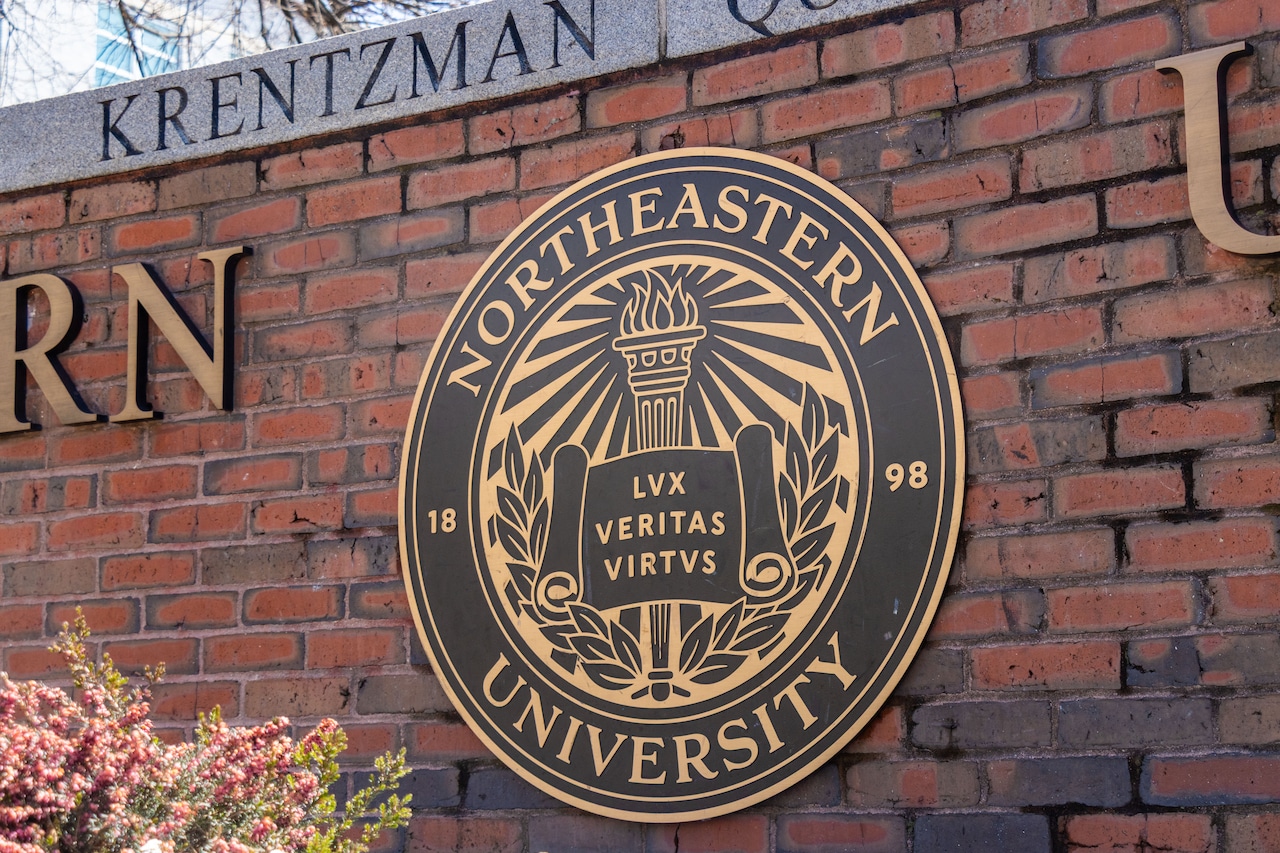
Northeastern University has big plans for growth.
In its Institutional Master Plan for the next 10 years — approved by the Boston Planning Department earlier this month — the school outlined several construction projects, including both academic and residential buildings.
The institution has seen a boom in enrollment in recent years. According to a recent city report, Northeastern’s on-campus enrollment had risen by 17,467 or 66.1% between 2013 and 2024, far more than any other school. The runner-up, Boston University, grew by 2,996 or 10.4% during that period.
A big part of planning the school’s future has been figuring out how to house all of those students. In total, the new master plan calls for more than 1,200 new dorm beds, in addition to 1,370 beds in a new building at 840 Columbus Ave., which has been under construction since August. That project is part of the previous master plan.
The university has also promised millions of dollars to the city for housing-related programs, including some aimed at increasing affordable housing. The agreement is part of Boston’s payment-in-lieu-of-taxes program for nonprofits that do not pay property taxes.
With the broader housing crunch pitting permanent Boston residents against college students searching for off-campus housing, it’s yet to be seen whether the new dorm beds will be enough to quell that competition.
“The approval of the new Institutional Master Plan marks a significant milestone in the ongoing development of Northeastern University’s Boston campus to support our academic mission,” Kathy Spiegelman, vice president and chief of planning, real estate and facilities at Northeastern, said in a statement. “We look forward to working closely with the city and our community partners as we bring this vision to life, ensuring that our physical campus continues to meet the evolving needs of our students, faculty, staff and the broader Boston community.”
Expanding the housing footprint
Over the course of the previous master plan, which ran from 2013 to 2023, Northeastern added 2,589 dorm beds, not including the ongoing Columbus Avenue project.
The first residential project outlined in the new master plan will replace the former White Hall, a 500-bed dormitory building at 21 Forsyth St. It was vacated in 2023 and demolished last year due to structural deficiencies. The new building is expected to create about 1,050 dorm beds.
The second will replace the existing Burstein and Rubenstein Halls, which currently house about 230 beds. The new building is expected to house 910 students.
The existing buildings at 454-464 Huntington Ave., across from the Museum of Fine Arts, were built in the 1920s and “are no longer suited toward contemporary dormitory standards,” according to the master plan.
Members of the community surrounding Northeastern, mainly in the neighborhoods of Mission Hill, Roxbury and the Fenway, have long complained of the school’s student population encroaching on the housing supply that would otherwise be available to permanent Boston residents. While first- and second-year students are required to live on campus, many older students choose to find off-campus apartments.
As Northeastern has grown over the years, it has also bought or leased nearby apartment buildings for student housing, taking homes off the market for permanent Boston residents.
In 2024, Northeastern provided housing for about 44.1% of its students. That left about 6,183 undergraduate and 7,133 graduate students in private, off-campus housing, the most of any college in Boston, according to city data.
Between the new master plan and the 840 Columbus Ave. building under construction, the school is set to create housing for more than 2,500 beds, but that still leaves thousands more without space.
“Residents are unable to compete with students for rental housing, given students’ ability to afford higher prices, which drives up rents, and displaces low- and moderate-income residents,” wrote Cassie White, director of policy and community organizing for Fenway Community Development Corporation, in a public comment letter to the city Planning Department submitted in May.
Other organizations and community members who submitted public comments on the draft master plan called on Northeastern to increase the number of students to be housed on campus in the future and to prioritize the residential projects outlined in the plan. Some called for a goal of housing 75% of undergraduate students on campus by 2034.
“The university must find ways to incentivize and capture more on-campus housing as a significant step in mitigating displacement caused by Northeastern University students living off campus in naturally occurring affordable housing,” wrote Armani White, executive director of the group Reclaim Roxbury, in a May letter also signed by leaders of nine other community groups.
Unprecedented growth
In 2021, the university received a record number of applications and admitted so many students that it was forced to house hundreds in the nearby Midtown, Westin and Sheraton hotels. The school has also leased additional dorm space from Wentworth Institute of Technology.
The school has since finalized a plan to make the Sheraton lease permanent, converting the hotel’s south tower into a dormitory with 854 beds. But it also said in October, it is no longer leasing space from the Midtown Hotel, according to the Huntington News.
The university outlined goals in the new master plan to create 1,000 new dorm beds — not including those in the 840 Columbus Ave. building — over the next five years, the first half of the master plan’s term. The goal is to house 60% of undergraduate students on campus by 2035.
“Northeastern is committed to meeting its students’ housing needs while acknowledging the pressure those needs place on available housing stock in neighborhoods immediately surrounding the campus,” school officials wrote in the master plan.
New aid to the community
Over the course of the 10-year master plan, Northeastern committed to paying between $97 and $112 million to the city in community benefit and mitigation funds. This includes between $45 and $60 million in linkage payments, which are mandatory for commercial developments that require a zoning variance and are used to fund affordable housing and workforce training programs.
Northeastern will also contribute $1 million each year to Boston’s Housing Stabilization Fund or Acquisition Opportunity Fund, programs that maintain affordable housing in the city.
In addition, if the number of students in need of off-campus housing goes beyond 6,800 in the next five years, the university will be required to submit a mitigation plan to the Planning Department for approval through a public process.
“Northeastern’s Institutional Master Plan represents a balanced approach that allows the University to invest in its institutional growth with a renewed commitment to housing stabilization for the surrounding communities,” Kairos Shen, Boston Chief of Planning, said in a statement. “I look forward to working with Northeastern to realize the historic and transformative plans in this IMP.”




