The city of Boston remains at an impasse with the Kraft Group over a deal to offset the effects of a proposed New England Revolution soccer stadium just across the Mystic River in Everett.
With the new stadium expected to draw swarms of fans through Sullivan Square in Charlestown for games and concerts, city officials say the Krafts must make financial commitments that benefit the neighborhood and help it prepare for the masses.
Since February, city officials have met a half-dozen times with representatives for the Kraft Group to hash out details of an agreement. But the city remains in the dark about the technical details of the stadium project and its potential implications for local transportation, noise and air and water, Boston Mayor Michelle Wu said Monday at a press conference in Charlestown.
“We’ve received limited to no answers,” Wu said. The information the city has received “has stayed at a conceptual level that is insufficient for any serious negotiation.”
Wu is seeking a far higher contribution from the Kraft Group than the $750,000 the team owners initially proposed.
“It is an unserious proposal,” she said, adding that it “does not come close to reflecting the strain the stadium would place on our installation infrastructure, our transportation systems and on our neighborhoods.
Woven into the stadium debate are tensions from Wu’s reelection campaign against philanthropist Josh Kraft, the former longtime head of the Boys and Girls Club of Boston and son of New England Patriots and New England Revolution owner Robert Kraft.
Josh Kraft has said that if elected, he would recuse himself from any decisions involving the stadium.
The Kraft Group criticized the press conference as “politically motivated” in a statement to Politico.
“While we encourage community input and advocacy as we work collaboratively to come to a deal that we hope will allow us to build a privately funded soccer stadium on a brownfields site in the environmental justice community of Everett, open the waterfront to the surrounding communities, and provide opportunities for economic development, the appropriate time to do so is not through politically motivated press conferences, but rather, through the formal and public process that has been laid out for the benefit of the communities and we look forward to participating in that process,” the team owners said.
Wu declined multiple times Monday to list a ballpark fnumber she thought would be a fair price for the team to contribute to the city.
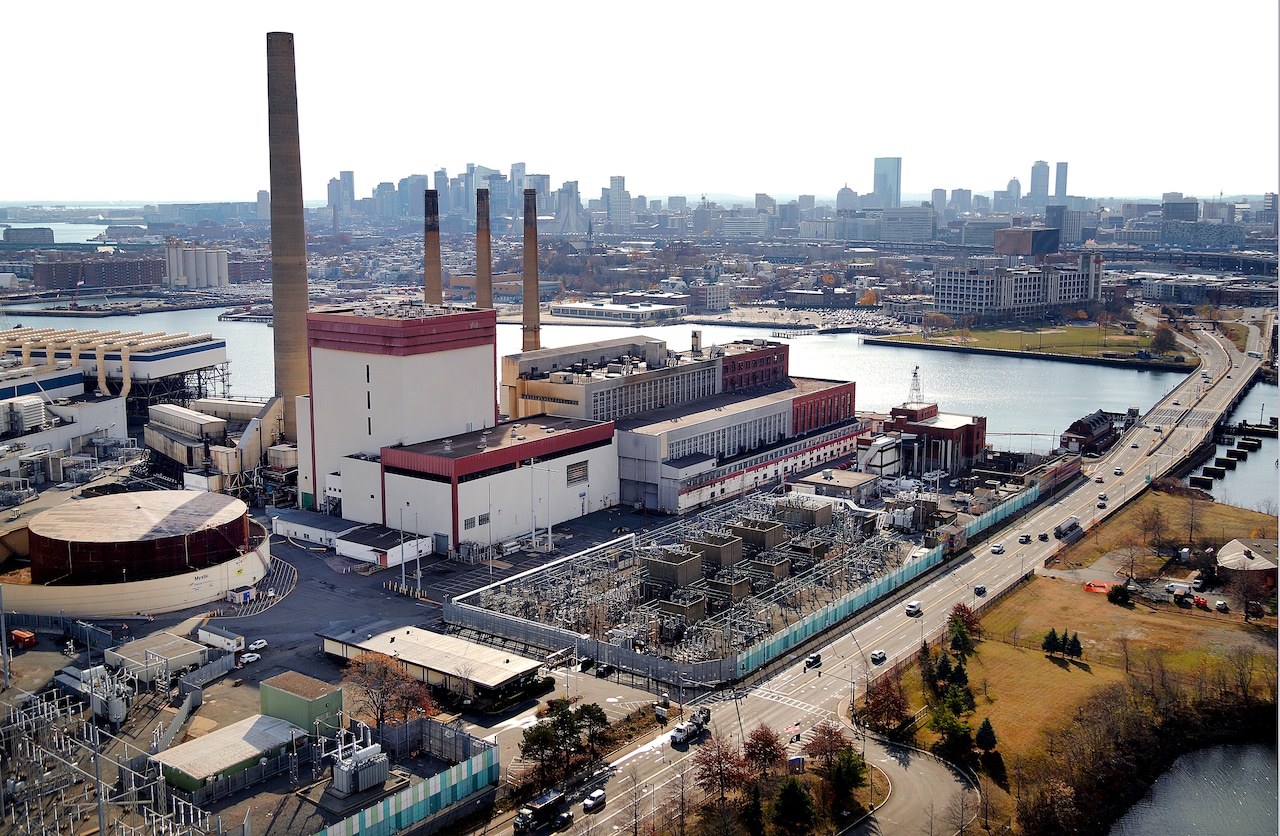
But during the press conference, she also pointed repeatedly to the hulking bronze precedent for a similar deal behind her: the Encore Boston Harbor casino, just across the river, whose owners ponied up $68 million in mitigation funds in a mitigation agreement reached with former Mayor Marty Walsh’s administration.
Without sufficient information on the stadium’s potential impacts on the surrounding area, it is difficult to approximate what the city might want the Kraft Group to contribute, Wu said. Absent that information, the casino provided “the best approximation that we have right now” for how a large entertainment venue would affect the area.
A state law passed last year required the Kraft Group to sign mitigation agreements with the cities of Everett and Boston.
Per the law, negotiations between Boston and the Krafts entered mediation when the sides could not agree on terms by May 1.
If a deal hasn’t been reached by the end of this year, the dispute will head to binding arbitration.
The areas of Boston nearest to the stadium have “a tremendous amount of infrastructure needs,” Wu said Monday.
For tens of thousands of soccer fans or concertgoers, the primary path to the stadium would wind from the Sullivan Square MBTA station across a hectic rotary, down Alford Street’s thin sidewalks and over the Mystic River as cars and tractor-trailers whiz by.
“That rotary is already complicated enough to navigate on its own,” Wu said. “I have pushed a stroller through. You are fearing for your life or your child’s life as you make your way.”
The stadium will “intensify congestion in an area that is already overwhelmed,” Boston City Councilor Gabriela Coletta Zapata, who represents Charlestown, said. “We’ve all sat in traffic in Sullivan Square and over the North Washington Street Bridge when a nearby venue has a concert or a game. The reality is that without adequate planning and infrastructure improvements, it will only get worse.”
About 60,000 vehicles pass through nearby Rutherford Avenue each day, Nick Gove, Boston’s deputy chief of streets for transportation, said. Route 99, which includes the Alford Street Bridge connecting Charlestown and Everett, transports 43,000 vehicles daily.
The area has long been neglected for redevelopment and subject to environmental hazards from the shuttered industrial site where the stadium is proposed, State Sen. Sal DiDomenico, D-Middlesex and Suffolk, said Monday.
Money from the Kraft Group should support a new MBTA commuter rail stop in the area and a bridge to connect the stadium area to Assembly Row, a popular shopping center and residential area in Somerville, DiDomenico said.
“We have an opportunity with the Revolution to now right a lot of wrongs that have happened for so long and create opportunities for economic development, transit options that we have never even dreamed about in the past,” he said.
Yet the $750,000 that the Kraft Group has proposed, Charlestown resident Martin Kane said, “wouldn’t buy a set of streetlights.”
If you purchase a product or register for an account through a link on our site, we may receive compensation. By using this site, you consent to our User Agreement and agree that your clicks, interactions, and personal information may be collected, recorded, and/or stored by us and social media and other third-party partners in accordance with our Privacy Policy.