For Boston residents, the future of their neighborhood streets is on the ballot this fall.
Incumbent Mayor Michelle Wu and Josh Kraft, her top challenger in this year’s mayoral election, have spent months sparring over how best to balance the competing demands for space on the city’s roadways between cars, buses, cyclists and pedestrians.
Central to the debate are the expansion of bike lanes and dedicated bus lanes, the location and manner in which they are installed, and the impact of taking road space from cars.
Wu has championed both as key features of the city’s transportation plan throughout her first term. But when bike and bus lanes arrive, impassioned debate is never far behind.
At his campaign kick-off speech in February, Kraft earned a roaring cheer from the crowd for committing to pausing all new bike lane construction if elected mayor.
Kraft says he is not anti-bike lane and sees them as “a critical piece of our city’s transportation puzzle.”
However, he believes the proliferation of bike lanes under Wu lacks direction and full consideration of the consequences on businesses and motorists.
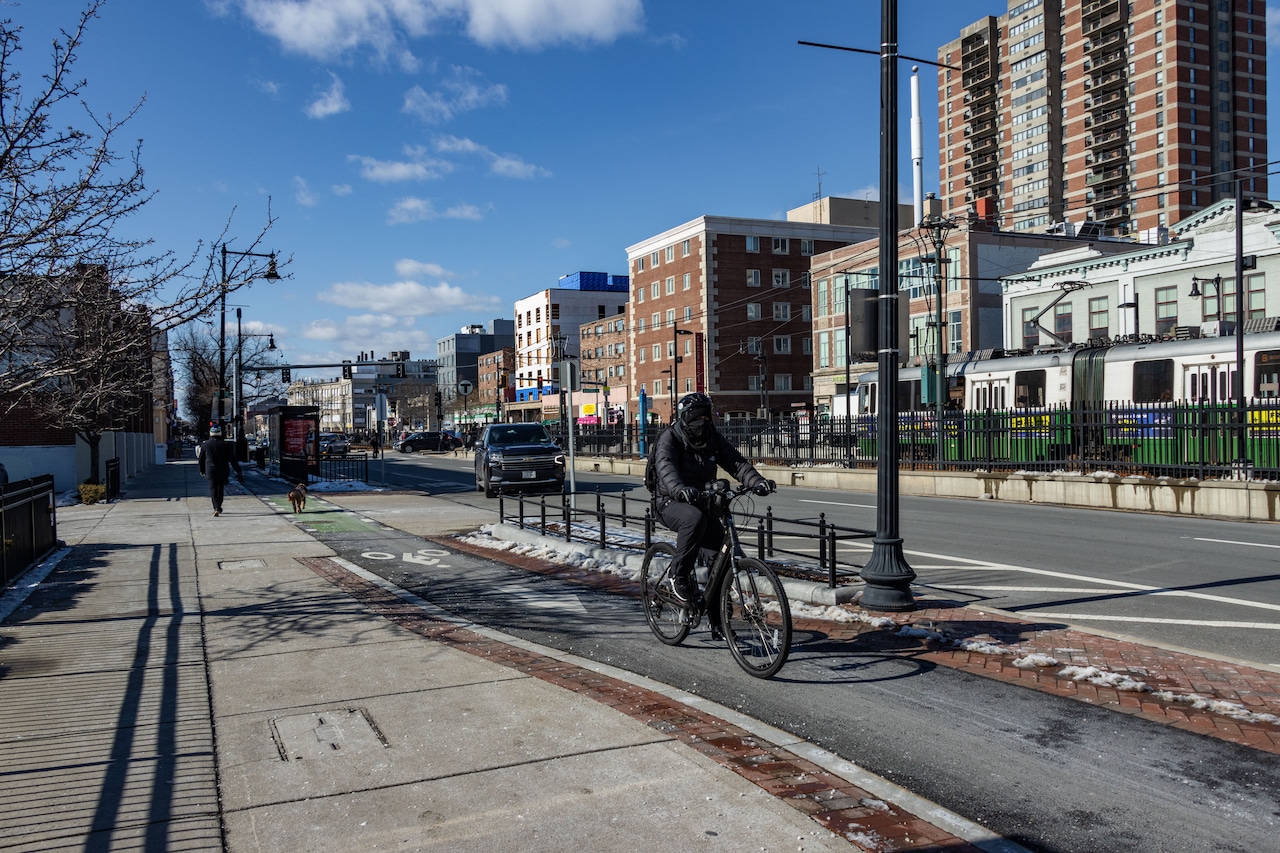
Bike lanes can vary in style, some separated from the road by concrete, and others delineated only by paint. But their common purpose is to protect cyclists from cars, making it easier to pedal without worrying about being struck by a vehicle or an open car door.
Among the most common complaints about bike lanes is that they occupy space that would otherwise be used for cars. When roads become narrower, cars are forced to slow down, and when parking spaces are removed to accommodate bike travel, businesses can lose convenient parking for their customers, critics contend.
In a poll conducted by Suffolk University and the Boston Globe in July, half of respondents said bike lanes made travel slower and less convenient, while just 18% said it made travel safer and easier.
The fact that Boston has a reputation as one of the most traffic-congested cities in the country hasn’t cooled the debate.
Wu: ‘It just feels like it’s solvable’
Boston had 17.5 miles of separated bike lanes in 2022 when Wu announced plans to build 9.4 new miles.
The Wu administration hopes to close the gaps in Boston’s bike lane network to create a connected web of lanes throughout the city, part of a wider-ranging plan to reduce congestion and pollution.
“Cities with old infrastructure, cities with historic streets, are perfectly compatible if you do it right,” Wu said in May, speaking with cycling advocates on a ride through the city for National Bike to Work Day.

“I think how we manage deliveries — like where do trucks pull over? How do we think about small businesses and their issues or accessibility — this piece of it, it just feels like it’s solvable,” she said.
In 2022, Wu said the city’s goal over the next three years was for half of residents to live within a three-minute walk of a “safe and connected bike route.”
Today, it is unclear how many residents fall under that umbrella. Wu’s office did not respond to MassLive’s request for an estimate last week, nor did it provide the total number of miles of bike lanes the city now has.
The mayor’s plan also included expanding public bike share availability, building more speed humps and installing raised crosswalks near parks, libraries, community centers and schools.
Kraft: Hit pause, study the issue
Kraft began his campaign calling for a temporary pause on new bike lane construction to allow for a review of their effectiveness.
Included in that would be a study of how bike lanes impact small businesses that could lose access to street parking or convenient delivery spots as bike lanes are installed.
Kraft also said he would instruct Boston Police officers to crack down on double parking and unauthorized electric scooters to protect cyclists, drivers and pedestrians alike.
“Under Michelle Wu, moving around Boston has become more difficult for everyone due to her haphazardly installed bike lanes, inability to fix potholes and disregard for the condition of our sidewalks,” Kraft said earlier this month.
In February, soon after Kraft’s campaign launch, Wu initiated a 30-day review of street infrastructure installed over the last three years, StreetsblogMASS reported.
In the weeks after, the city removed some plastic barriers that separate bike lanes from cars. Wu said the barriers had been intended as temporary measures. Some were removed for maintenance due to damage from cars and trucks, while others were removed after community feedback, the city said.
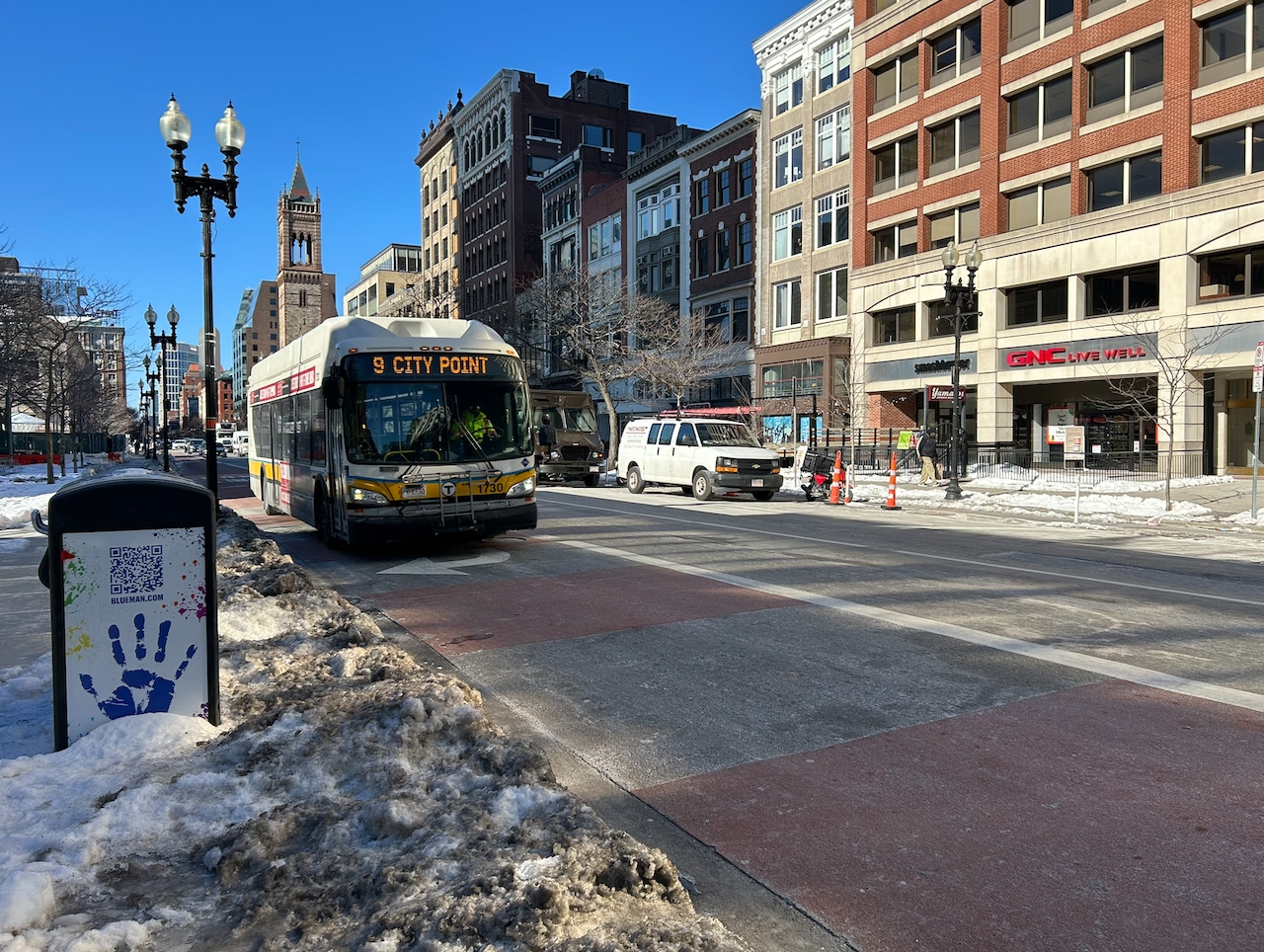
Bus lanes
Wu’s administration argues that dedicated bus lanes enable buses to bypass traffic-jammed streets, keeping public transit running on schedule.
As with bike lanes, Kraft said he would order a comprehensive review of existing bus lanes to measure the time they save public buses and their impact on the surrounding community. He says the city’s focus should move from “bus lane quantity to bus service quality.”
In fundraising emails last week, Wu’s campaign noted that her administration secured fare-free service on three bus routes and repaired 27,000 potholes, 80 miles of roadway and 16 miles of sidewalks.
But her office did not respond to a question from MassLive on how many miles of dedicated bus lanes the city has installed in coordination with the MBTA.
Kraft’s plan also calls for pressuring the state to expand Boston’s influence over the MBTA, arguing the city should have greater representation on the agency’s board given its share of the T’s funding from municipalities.
The city has one representative on the board, which it received in 2023.
Kraft’s proposals for bus and bike lanes are part of a wider-ranging streetscape plan that would also shape the city’s response to potholes, truck deliveries and the spread of motorized scooters and their daredevil-esque drivers weaving in and out of traffic.
Discussing street design on a radio show earlier this year, Wu said changing city streets almost always comes from community feedback.
“Everyone has very different uses of the street. Everyone has very different experiences with whether you’re trying to cross the road as your primary experience with it, or you’re trying to just get your kid home from school and you want to just go as fast as possible,” she said. “Sometimes it’s not possible to make everyone the happiest that they could be with that experience.”
If you purchase a product or register for an account through a link on our site, we may receive compensation. By using this site, you consent to our User Agreement and agree that your clicks, interactions, and personal information may be collected, recorded, and/or stored by us and social media and other third-party partners in accordance with our Privacy Policy.