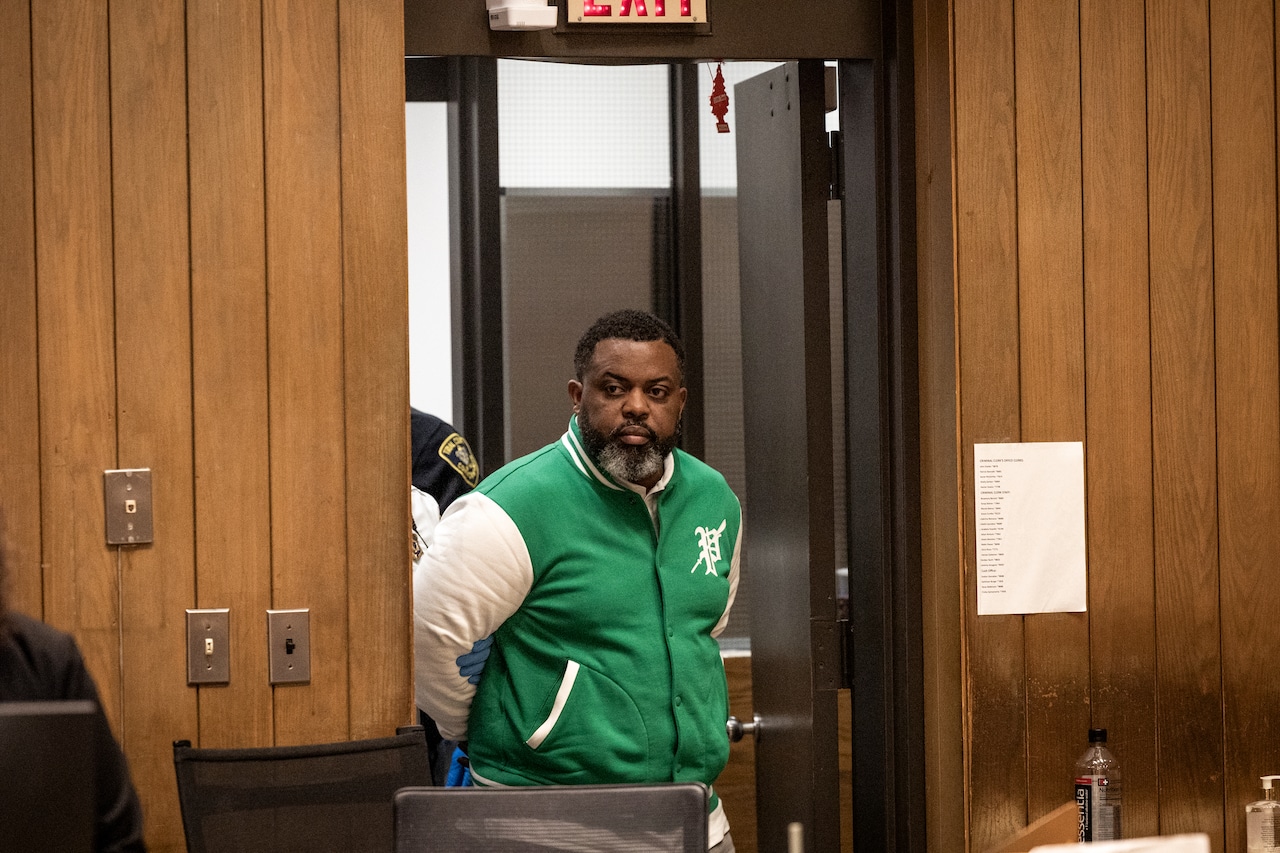
When officials arrested LaMar Cook in late October, accusing him of cocaine trafficking, it was not the first time in recent months investigators tracked shipments of the drug into the region.
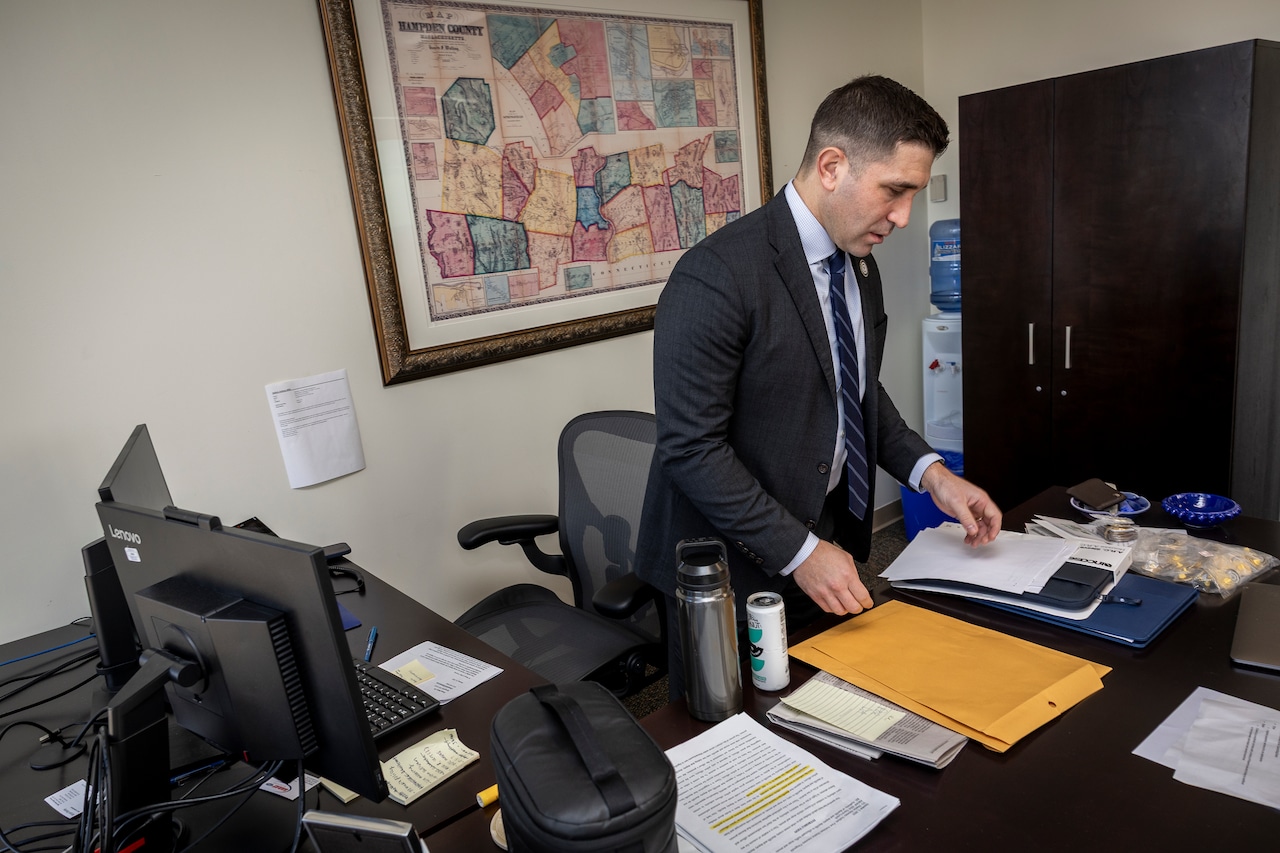
To be sure, Cook’s arrest eclipsed others. He worked as deputy director of the governor’s regional office on Dwight Street. Prosecutors say he tried to receive delivery of about eight kilos of cocaine shipped to the office.
Yet there are 10 pending cases in Hampden Superior Court in which prosecutors allege someone sent drugs through the mail, according to Hampden District Attorney Anthony D. Gulluni. Nine of them involve the shipment of cocaine in amounts warranting trafficking charges.
The cocaine market, says Gulluni, is “a lot different than what it was 20 years ago in Miami.”
After a decade that saw officials fight an opioid overdose crisis driven by heroin and fentanyl, cocaine has seen a resurgence, according to local law enforcement officials interviewed for this story.
“Maybe five years ago, I’d probably see one kilo,” said Detective Sgt. Brian Freeman of the Westfield Police Department, who has worked on a narcotics task force in the region, “and now, see them all the time.”
During the pandemic, the region’s cocaine supply was often cut with non-illicit substances, according to the Massachusetts Drug Supply Data Stream. Now, investigators are finding fentanyl mixed with the cocaine, as 95% of cocaine overdoses involve the presence of fentanyl, according to Gulluni.
At the same time, the price of cocaine has dropped. A decade ago, a kilo of cocaine could fetch $45,000 to $50,000, Gulluni said. These days, a kilo commands a street price of $15,000 to $20,000.
In many cases, cocaine arrives in the region through the mail – often from Puerto Rico — where it is most often turned into crack cocaine. The drug then shows up in the region’s urban areas alongside other narcotics.
To combat drug trafficking operations spread out across the region, and even the globe, law enforcement is relying on task forces to investigate the networks.
Cook, for his part, has pleaded not guilty to the charges and a judge granted him bail. Gov. Maura Healey, when asked about his arrest this week during a visit to Chicopee, described Cook, who collected a $115,000 salary, as a lower level staffer who betrayed the trust of his community. “I hope he is prosecuted to the full extent of the law,” she said.
Seized by law enforcement
Investigators linked Cook to several deliveries of cocaine to Hotel UMass in Amherst, where he used to work as director of hospitality.
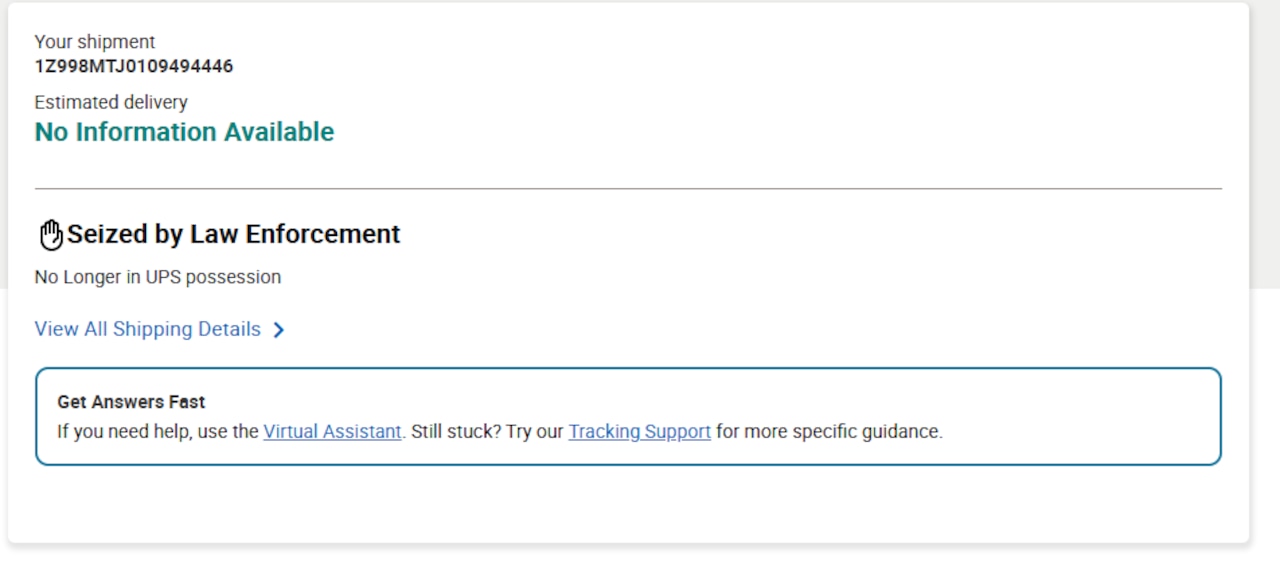
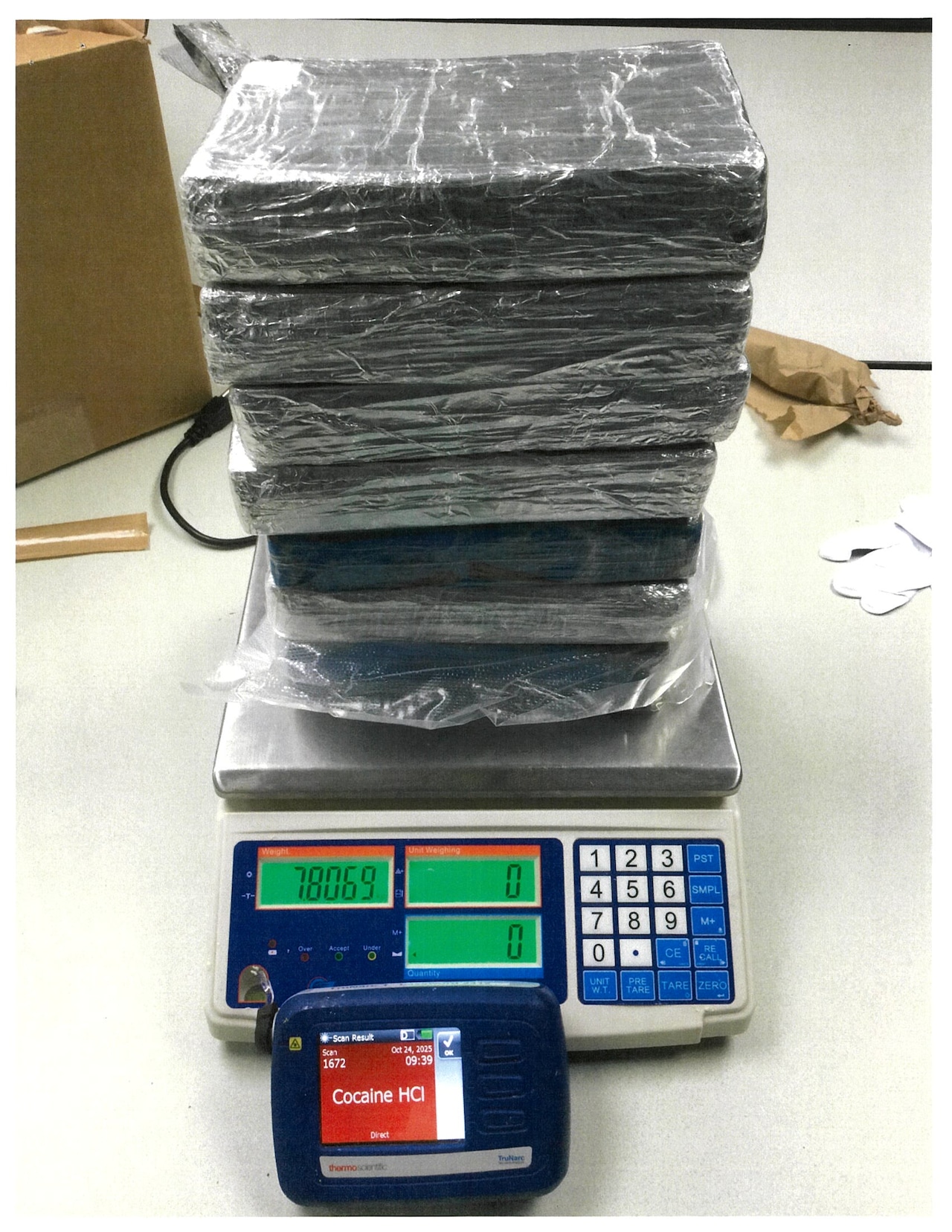
Court records say Homeland Security Investigations intercepted the UPS packages in Louisville, Kentucky, on Oct. 8. The packages, addressed to a Morgan Gordon, contained 12 kilograms of cocaine between them.
We plugged the tracking numbers listed in court records into the UPS tracking portal. Information for both packages said they were seized by law enforcement.
Estimated delivery? “No information available.”
An affidavit by Joshua Kopeski, a trooper with the Commonwealth Interstate Narcotics Reduction Enforcement Team, outlines some of the ways people send packages containing narcotics through the mail.
“I am aware that individuals who send packages containing controlled substances often use fictitious information, including the names of the sender and/or recipient and the return address of the sender. … I am also aware that individuals who send narcotics in packages via the U.S. Mail frequently hide the narcotics inside other, innocuous items in the package in order to disguise that the package contains illegal drugs.”
In the case of packages going to the UMass hotel, no one was staying there under that name.
At the same time, the first few shipments going to a location are often small amounts at first – test shipments, according to Gulluni.
“They’ll send a smaller amount of drugs to a particular address with a cohort involved. If it makes it through … that sort of develops some trust in that process and that address,” he said.
Other cases of cocaine shipments to the area include that of Vicente Gonzalez, a 51-year-old Chicopee man who received packages of cocaine sent from Puerto Rico to his home and another location in West Springfield.
Prosecutors initially indicted Gonzalez along with a dozen other defendants in 2019, accusing them of drug trafficking and money laundering.
Prosecutors said Gonzalez intended to send cocaine to cohorts in New Bedford and the area around Springfield and Chicopee. When investigators searched his house in July 2019, they discovered two kilos of cocaine in his basement.
The federal court convicted Gonzalez on Oct. 3, 2024, and he’s scheduled to face sentencing in January.
It was a case brought with the help of several federal and local agencies.
Task forces for the modern drug trade
Holyoke Police Chief Brian Keenan said law enforcement task forces are a necessity to address the modern narcotics trade. “My manpower, I have no choice,” he said. “They’re force multipliers.”
These days, besides being shipped through the mail, drugs are sold through social media on platforms like Facebook or Snapchat, Keenan said. People may text dealers to meet up at rest stops or hardware store parking lots.
Drug traffickers have often spread out their operations. “You might have a guy who deals drugs in Springfield, who stashes his drugs in Chicopee, who sleeps in Holyoke,” Keenan said.
Over the summer, the Hampden County Narcotics Task Force, led by the district attorney’s office, helped Holyoke address open-air drug trafficking in the city.
Gulluni said that just as drug traffickers cross municipal borders, his task force can easily follow investigations across the county.
In May, the Massachusetts National Guard announced it gave the district attorney’s office a handful of tools to address drug trafficking, such as an X-ray device to detect drugs in vehicles, as well as tools to unlock phones.
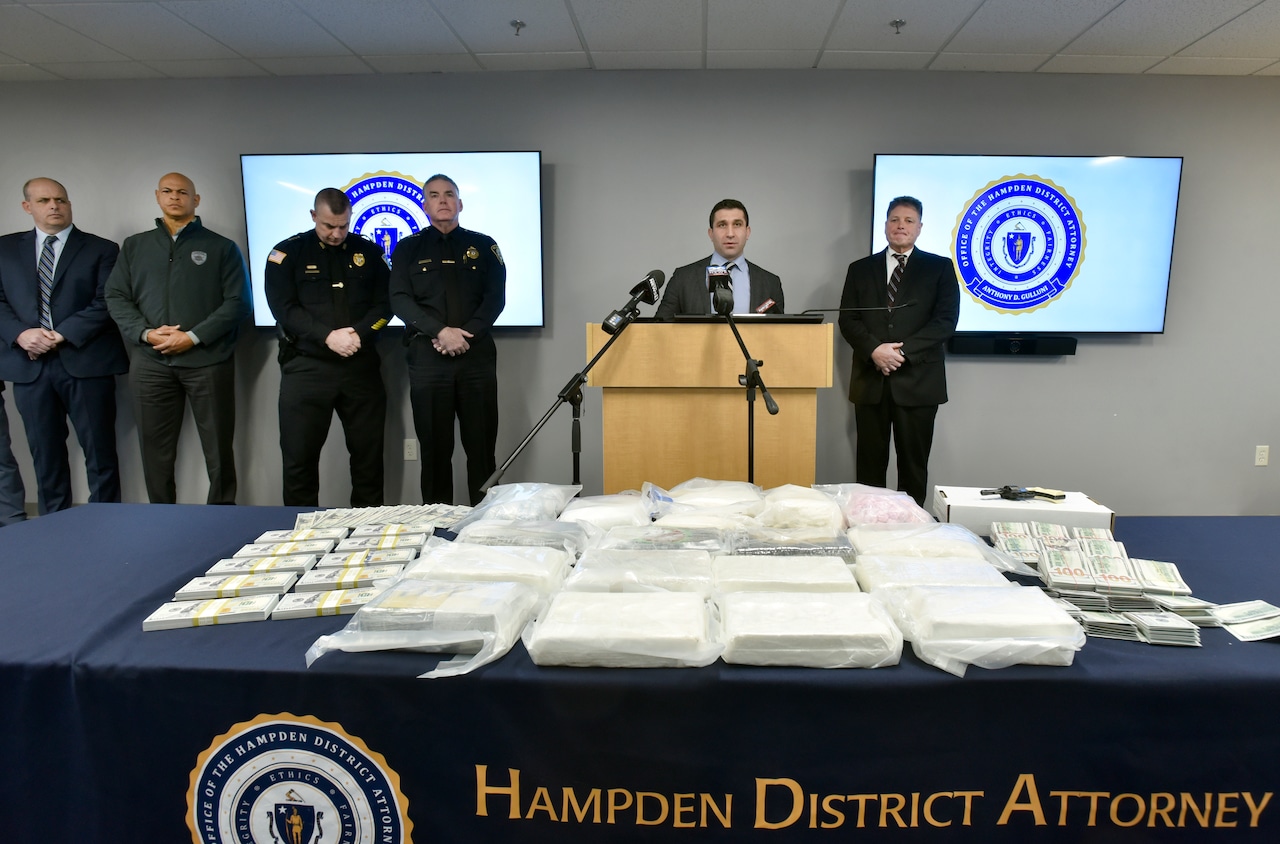
Meanwhile, the State Police runs the Commonwealth Interstate Narcotics Reduction Enforcement Team (CINRET) to track larger drug trafficking organizations that even cross state lines, and the FBI has its Western Massachusetts Gang Task Force.
Supervisory Special Agent Matthew Fontaine, who oversees the FBI office in Springfield, said the bureau brings its ability to follow the evidence to uncover, say, large criminal organizations profiting off addiction.
“The whole point of a task force is to take the resources … from each of the participating agencies and make the best investigative product that we can and have the greatest impact on our community,” Fontaine said.
When he took office about a decade ago, Gulluni said he scheduled a meeting every six weeks for heads of law enforcement agencies in the area to get in the same room, build relationships and make sure they were not tripping over each other’s investigations.
Joining state and local police and handful of federal agencies in the room is an agency whose mission is devoted to combatting the shipment of narcotics through the mail: the U.S. Postal Inspection Service.
When the meeting convenes, “Postal is almost always there,” Gulluni said.
‘Nobody knows we exist’
The U.S. Postal Inspection Service, with about 1,200 agents, has a broad mission, from investigating assaults against mail carriers (which have dropped in recent years) to addressing a rise in counterfeit stamps and labels, according to Danielle Schrage, public information officer for the service’s Boston division.
It’s the nation’s oldest federal law enforcement agency, which celebrated its 250th anniversary in August.
“Outside the law enforcement community, nobody knows we exist,” Schrage said.
In the 2023 fiscal year, the service opened 5,608 investigations across the nation, 2,231 of them about the shipment of narcotics, according to its annual report.
“The Postal Service has no interest in being the unwilling accomplice of anyone who wants to use the mail to distribute illegal narcotics or any other harmful substance for that matter,” Schrage said.
While it does not have narcotic-sniffing dogs itself, the service may partner with agencies to bring in a K9 if the situation calls for it, Schrage said. The goal is to dismantle large-scale drug trafficking organizations. “Part of that is also being strategic and taking out the head of the hydra,” Schrage said.
In the Cook case, however, the shipments to Hotel UMass and state offices on Dwight Street came via UPS. The company has a security team and one of its members talked with Massachusetts investigators, according to court records.
Asked about its efforts to combat narcotics in its packages, UPS spokesperson Glenn Zaccara did not answer a list of emailed questions but wrote that the company works with law enforcement authorities. “Our security methods are kept confidential to maintain their effectiveness,” he said.
One key difference exists between the U.S. Postal Service and companies such as UPS and FedEx, which are deemed courier services under the law. Postal inspectors need to develop probable cause and obtain a warrant before opening a package, Schrage said.
Investigation continues
Gulluni said the investigation into the shipments of cocaine to Hotel UMass and the little state house on Dwight Street is ongoing.
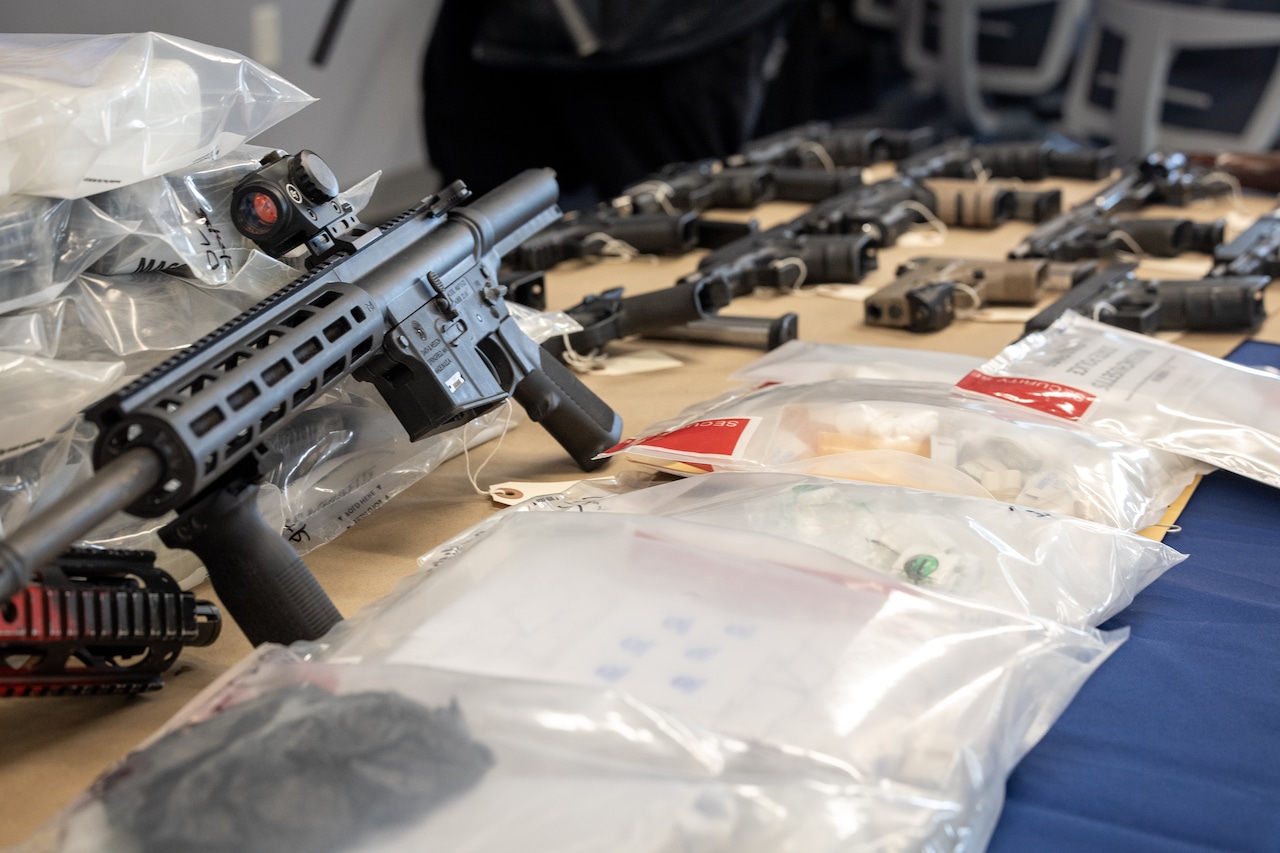
Kopeski, the trooper who filed an affidavit in the Cook case, said the cocaine that officers seized was imprinted with the word “gold,” which appeared to be a way for the cartel behind the narcotic to brand it. It was a newcomer to the scene.
“Investigators with CINRET West have seized several dozen kilograms of cocaine over the years and have never seen this particular imprint before,” Kopeski wrote.
Schrage said that when postal inspectors seize a package, it is the start of an investigation, as agents then begin “pulling the thread,” following leads and trying to figure out how the package ended up in the postal system.
The FBI’s Fontaine said that when investigators embark on investigation, they may have an idea of where it may lead, but “that evidence can lead you to some unexpected places.”
Last month, a package seized in Kentucky led investigators to the doors of a state office building.
If you purchase a product or register for an account through a link on our site, we may receive compensation. By using this site, you consent to our User Agreement and agree that your clicks, interactions, and personal information may be collected, recorded, and/or stored by us and social media and other third-party partners in accordance with our Privacy Policy.