
Don’t try to tell Evan MacKay that the Massachusetts Legislature is challenger-proof.
In 2024, MacKay came within 41 votes of defeating veteran state Rep. Marjorie Decker in the Democratic primary for the Cambridge-based 25th Middlesex District.
While Decker came away with the win, the narrow margin was still a stinging rebuke for the now seven-term incumbent and the House’s chairperson of the Legislature’s Joint Committee on Public Health.
And now MacKay is back in 2026, with a fresh challenge to Decker that comes against the backdrop of a general dissatisfaction with incumbents and a pair of ballot questions aimed at cleaning up and shedding some light on Beacon Hill’s notoriously opaque operations.
Legislative leaders have touted efforts to open up the process to the public. including moves to post plain-English summaries of bills online and earlier notice of committee meetings.
Even so, most of the Legislature’s operations take place behind closed doors. And it is exempt from the state’s open records law.
“The status quo of dysfunction, corruption and secrecy from Massachusetts House leadership is unacceptable, and our communities are demanding change. I am so proud of our grassroots movement for transparency and accountability,” they told MassLive.
MacKay said they spent last fall “collecting signatures for good government ballot questions designed to break up this broken status quo of politicians benefiting financially for ignoring the will of their voters and ignoring good government demands.”
MacKay isn’t the only one.
With just about a month to go before nomination papers officially become available, and with less than nine months to go before the Sept. 1 primary, candidates already are starting to emerge in key races across the commonwealth.
“There’s a growing sense of frustration with the Legislature,” Scotia Hille, of the advocacy group Act On Mass, told MassLive. “I don’t have to say it. Secretary of State Bill Galvin said it. We see 11 ballot questions, which shows a broad dissatisfaction with the Legislature.”
“There is a growing public awareness, and folks are starting to see it reflected in the challengers who are being brought to the table,” Hille said.
David L. Lander, a top adviser to Boston Mayor Michelle Wu and the chair of the city’s 21st Ward Committee, is among them.
He’s running against veteran state Sen. Will Brownsberger, D-Suffolk/Middlesex, who’s the No. 2 Democrat in the upper chamber.
The challenge is coming, in large part, because of ongoing Senate resistance to Wu’s hotly debated plan to shift a greater share of the city’s tax burden onto commercial property owners.
After clearing the Boston City Council and the state House of Representatives, Wu’s tax shift once again hit a brick wall at the end of last year, leading to a 13% tax hike for residential homeowners in the city.
“We need a state Senate that stands up for our knowledge economy, brings down costs and isn’t stuck defending a broken status quo,” Lander said, according to The Belmontian, a local news site.
That division between the establishment and the insurgents is right there in the numbers.
Forty-nine percent of respondents to a Suffolk University/Boston Globe poll released last November said they either “approved” or “strongly approved” of the job the 200-member Legislature is doing, compared to 36% who “disapproved” or “strongly disapproved.”
That tension is classic Massachusetts politics. While voters may disdain the Legislature as an institution, most remain fiercely attached to their local lawmaker.
That is, when they know who they are in the first place — 13.6% of that same poll’s respondents said they were undecided and 1% refused to answer.
But even with those numbers, the path to Beacon Hill won’t be an easy one for those who choose to pursue it.
Most incumbent lawmakers in the majority-Democrat Legislature coasted to reelection in 2024, buoyed by a culture weighted toward incumbents, as well as a historically disorganized state Republican Party.
Put it all together, and you get one of the least competitive climates for legislative races in the nation, according to Ballotpedia.
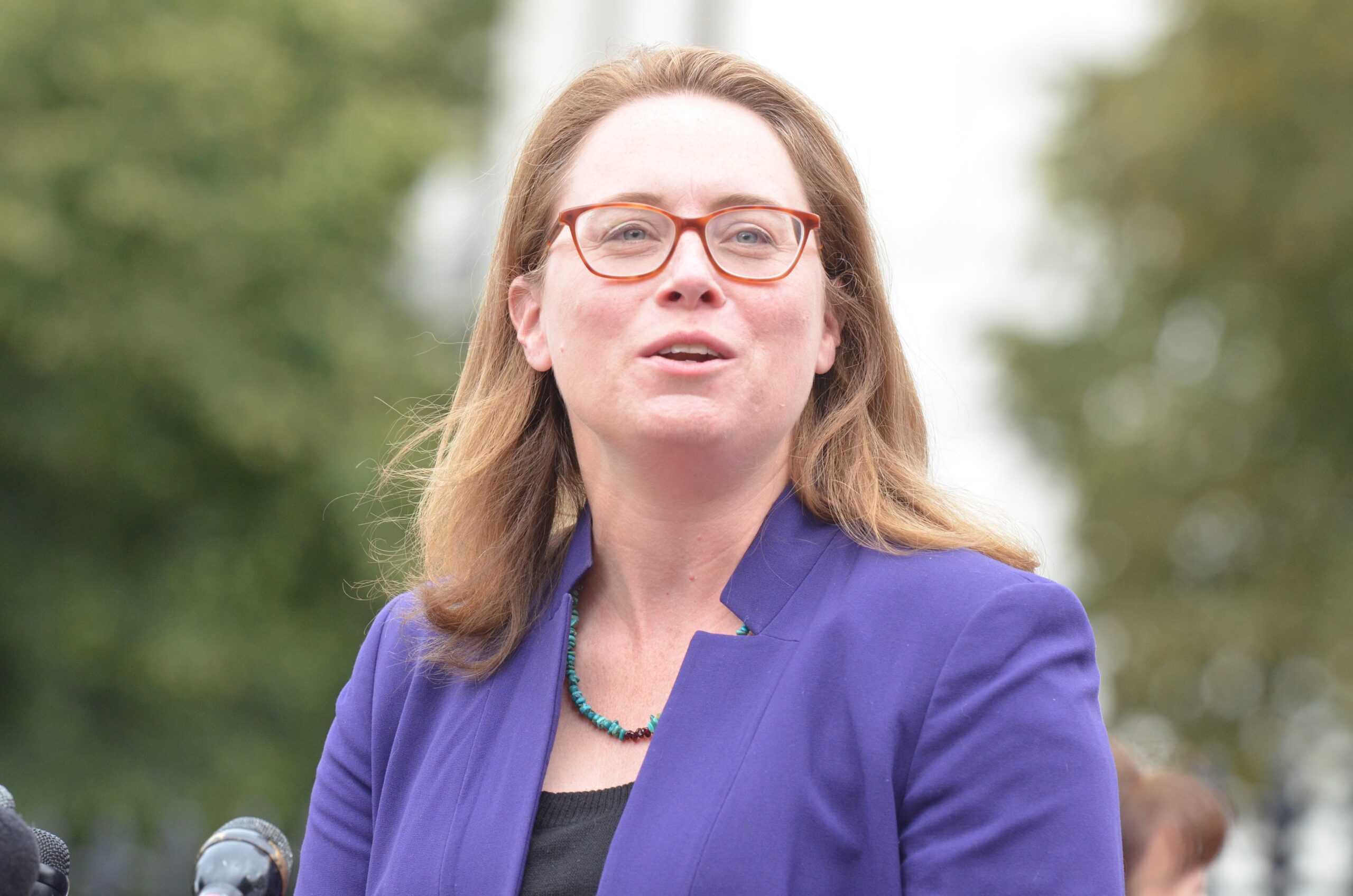
State Rep. Christine Barber, D-34th Middlesex, speaks during an event in 2019. (Steph Solis/MassLive)
State Rep. Christine Barber, who’s running for the state Senate seat being vacated by long-serving Sen. Patricia Jehlen, D-2nd Middlesex, is banking on her experience to catapult her to the upper chamber.
“I’m proud of the accomplishments I’ve achieved in the legislature, because progressive leadership must be about delivering progressive results,” Barber, a Democrat who represents the Somerville-based 34th Middlesex District, told State House News Service.
“Families are struggling with the cost of living, housing and health care. We need leaders that know how to win tough fights and turn values into action,” Barber, the House chairperson of the Legislature’s Joint Committee on the Environment and Natural Resources, said.
Whether Bay State voters choose insurgent candidates or stick with well-known name brands reflects a broader tension within the Democratic Party, where loyalists are wrestling with similar questions about generational change.
“Some voters want steady hands on the tiller. There are other voters who say the Democratic Party needs to change. And we’re seeing that right here in Massachusetts,” UMass Amherst political science professor Ray La Raja said. “There are very different visions of what the Democratic Party looks like, and that will create some tensions.”
Hille falls squarely into that reformer camp. Her group is backing the transparency-minded ballot questions.
One of those ballot questions would put the Legislature and the Governor’s Office under the aegis of the state’s open records law. The other would clean up the stipends, worth thousands of dollars, that are paid to legislative leaders alongside their regular salaries.
The ballot questions still need to clear some procedural hurdles on Beacon Hill before they can go before the voters. But both were overwhelmingly popular in that Suffolk University poll last fall.
“The Evan MacKay race last cycle showed it,” Hille said. “They were centered on transparency and accountability. And I would not be surprised to see further campaigns around those issues that will resonate with voters.”