
SPRINGFIELD — Antoine Diaz remembers growing up in the 1990s in Forest Park as a time marked by riding bikes around the neighborhood and calling up a friend’s landline and asking their parents if they were home to play.
The ‘90s also brought the introduction of OxyContin and the start of rising opioid deaths in the nation, which did not spare him, his friend group or his neighborhood.
In elementary school, he and his twin brother, Christian Diaz, found a tightknit group of friends with its nucleus in Forest Park, and the circle only expanded in high school and spread into their adulthoods.
Diaz’s childhood friend, Brian Metzger, died of an overdose in 2015. He was 34. Then, his twin, Christian, died of an overdose in 2018, when he was 37.
It was then that their families and the Forest Park group of childhood friends decided to act.
Christian McCollum, who met Metzger and Christian Diaz in high school, remembers Antoine Diaz starting to talk about a project at Christian Diaz’s wake and funeral.
“We want to do something,” McCollum said they decided. “We don’t know what we want to do, but we want to do something.”
The group formed The Forest Park Project, a nonprofit, and raised money to help create a sober home for men, which opened several years ago on the edge of the Forest Park neighborhood bordering Six Corners. The project continues fundraising to support the house through events like an annual golf tournament.
This month and into early 2024, INSA Inc. is fundraising at its retail cannabis dispensaries for the project. INSA’s founders and executives Patrick Gottschlicht and Peter Gallagher grew up with Christian Diaz and Brian Metzger, and helped start The Forest Park Project. Support from INSA over the years has been key, McCollum, Antoine Diaz and Mary Ellen Metzger, Brian Metzger’s mother, all said.
In the wake of Christian and Brian’s deaths, The Forest Park Project members talked to people in the community about recovery. “What’s the need?” Gottschlicht recalled them asking.
The answer they got: a sober home, and one that’s well-run.
Opening a house seemed like a big lift, McCollum said. So they turned to the Michael J. Dias Foundation, a nonprofit group that operates several sober homes in the city, to run the house, while the project would donate funds and have its members serve as volunteers. In 2020, Christian and Brian’s House, which can accommodate about 20 men, opened its doors.

Members of The Forest Park Project and friends at Christian and Brian’s House are, from left, Chris McDonald, Christian McCollum, Dave Baker, Breandan Ireland, Pat Gottschlicht, Pete Gallagher and Antoine Diaz. (Submitted photo)Courtesy of The Forest Park Project
“I wish my son had an opportunity to be in a house that like. It’s not a 30-day program. You can go and stay for a year,” said Mary Ellen Metzger, who is part of The Forest Park Project. The friends still often call her “Mrs. Metzger,” harkening back to the days when Gottschlicht lived around the corner and her son played baseball with Antoine and Christian Diaz.

Brian Metzger’s family, from left, Mary Ellen Metzger, Bill Metzger Jr., Eileen Sampson and John Sampson Jr., hold his photo outside Christian and Brian’s House. (Submitted photo)Courtesy of The Forest Park Project
McCollum remembers going to the University of Massachusetts Amherst with Brian Metzger and visiting him from across campus a few days after starting school.
“He already had like 15 friends,” McCollum said. He was genuine, and “he really truly cared about people.”
Brian Metzger was a good student and athletic, and before his battle with addiction, he was “one of those kids you thought could take on the world,” Mary Ellen Metzger said.
He was prescribed OxyContin after a sports injury, and addiction followed, she said.
She remembers his longest stretch of sobriety, nearly a year, was after a stay in a sober home in Pittsfield.
“People were supportive as they could be, but it was his battle,” she said. When he lost, “I think everyone was shocked.”
The opioid overdose epidemic has left grieving parents and siblings starting projects to help, Antoine Diaz said.
“No one is stronger than a family member starting something in honor of their kids,” Diaz said. Grief can be a strong motivator that money can’t match, he said. “You can’t pay someone that much money.”
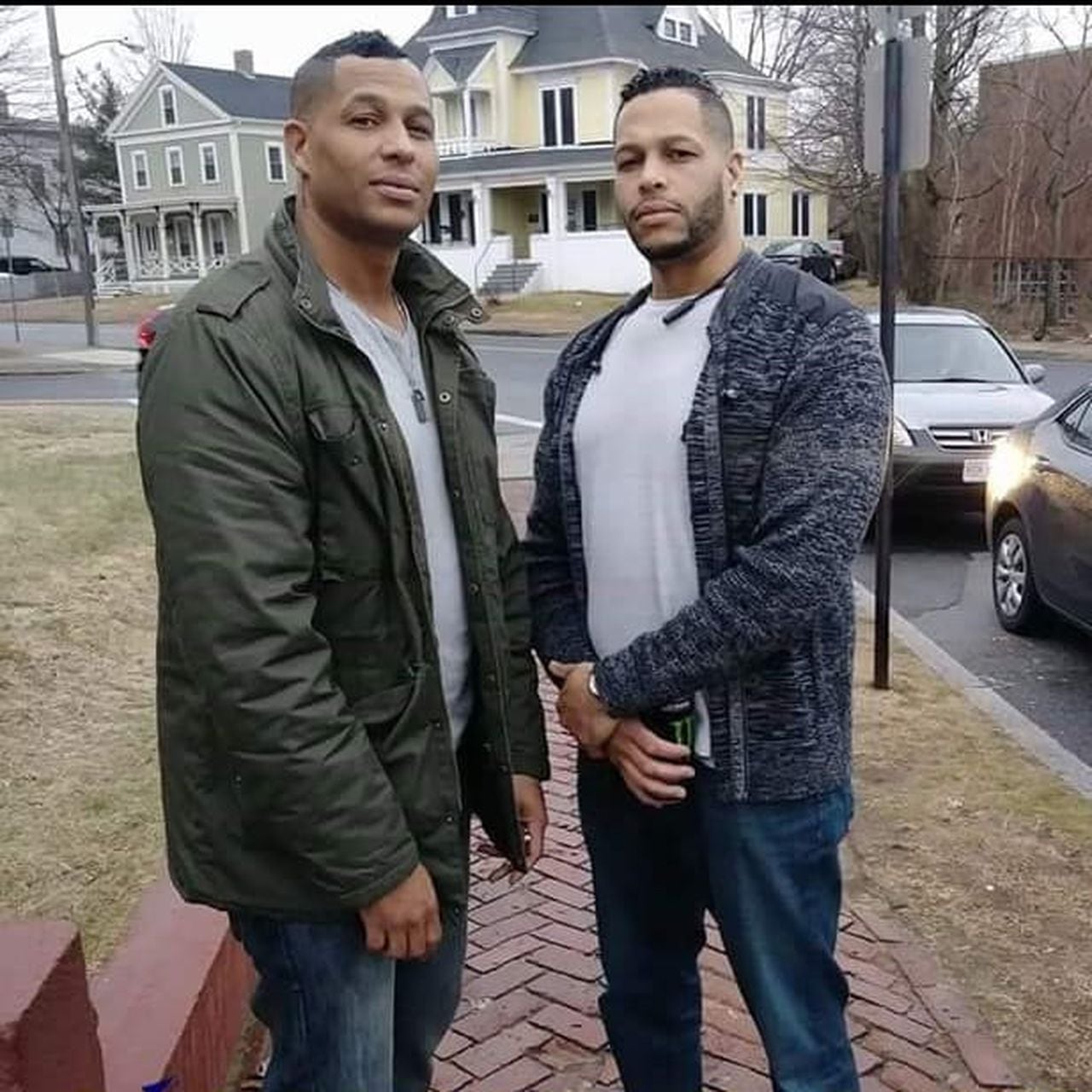
Christian, left, and Antoine Diaz. (Submitted photo)Courtesy of the Forest Park Project
He remembers his twin brother, Christian, as athletic and a person who drew others in. His obituary included a long list of friends who loved him.
McCollum said he had an infectious personality. “He was gifted,” Antoine Diaz said. “And he struggled, like a lot of my friends.”
Antoine Diaz is himself in recovery from addiction. The only difference between him and his twin: When Antoine overdosed, someone was there to reverse it with naloxone. That wasn’t the case for his brother, who was found alone under a bridge.
Similar to Metzger, a football shoulder injury left Antoine Diaz taking OxyContin, and he got addicted and started using heroin.
He was able to find recovery more than a decade ago. “It’s a beautiful thing when it blossoms,” he said.
A sober home
Christian and Brian’s House can accommodate about 20 men and regularly has a waitlist.
There’s just not enough sober housing to meet the need, said John Shea, director of operations at all three homes that the Michael J. Dias Foundation runs.
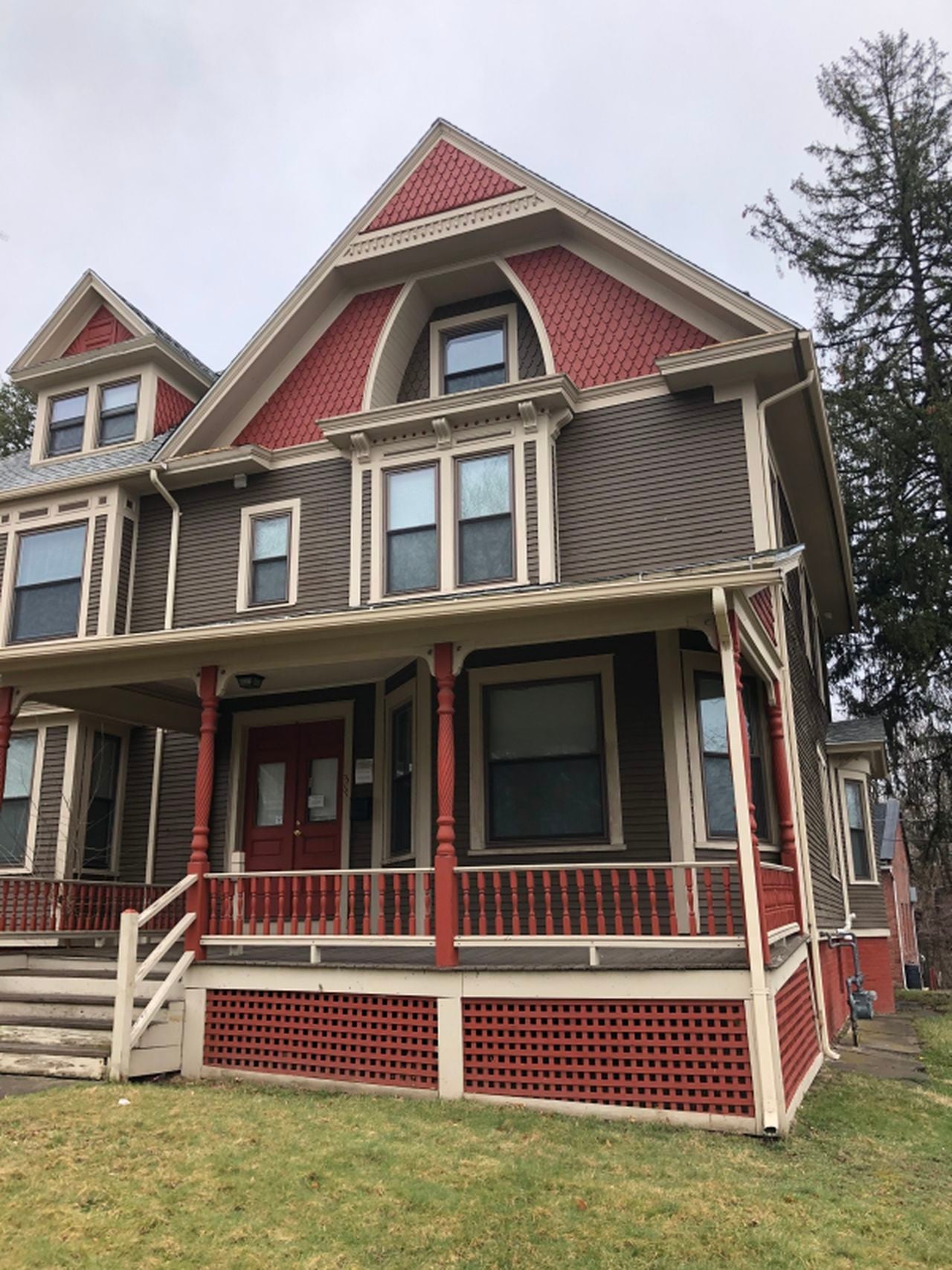
The outside of Christian and Brian’s House, a sober home in Springfield. (Submitted photo)Courtesy of The Forest Park Project
“The goal is to provide a safe environment for men in recovery to focus on that and be around other men trying to stay sober and get their lives on back on track,” Shea said.
People can live there for up to a year to 18 months, depending on the person, he said.
Men can come to the house after they have been sober already and gone through detox or an initial treatment program, said Karen Blanchard, the foundation’s executive director.
It’s a structured environment, which is not what everyone wants. “It has to be a good fit,” she said.
After living there for 30 days, men must either work or volunteer in the community. They also attend 12-step meetings, like Narcotics or Alcoholics Anonymous, and can get support from a peer mentorship program, Blanchard said.
It is a nonclinical home that does not take health insurance, said the nonprofit foundation’s leader. “That’s what we pride ourselves on,” Blanchard said.
Grace Dias started the foundation after her son, Michael Dias, was battling addiction and took his own life in 2009. He was 19. The foundation opened Michael’s House, a sober home, in 2014. Several years later, the organization added Sean’s Place, named after Sean Wilczynski, a Ludlow man. Christian and Brian’s House is the foundation’s third and most recent addition to its housing roster.
The Forest Park Project has just started talking about the potential of a women’s recovery home, for which there’s strong demand, Gottschlicht said.
In the past few years, overdose rates have continued to climb, Gottschlicht said.
“There’s still a lot to do,” he said “People need help. These houses are important.”