They called it “Untenable Toll,” but it could have and maybe should have dubbed “What Might Have Been.”
Episode VI of HBO’s “Celtics City” documentary that aired Monday night covers the time between the Celtics’ 1986 championship to Larry Bird’s 1992 retirement.
The title “Untenable Toll” came from a Bill Walton quote about how injuries, beginning in 1987 began to break down the Celtics.
The episode is a well-told melancholy look at what did happen set against what might have if the Celtics stayed healthy, just a little longer.
Here are 9 Takeaways from Episode VI —
Red Auerbach is fading — Auerbach, who comes off as the chessmaster genius in a league filled with checkers players from the first five episodes, appears to be aging in this one.
He admits on Bob Costas that the Celtics didn’t do a background check on Len Bias, shortly after Bias’ death.
And he’s portrayed as having made a mistake not dealing Bird or McHale late in their careers.
Danny Ainge foretells the future, kind of —Ainge recalled teasing Auerbach that he should trade McHale and Bird shortly before Auerbach actually traded Ainge to Sacramento.
But Ainge makes the point that time is undefeated. Years later he then traded aging stars Paul Pierce and Kevin Garnett to help set up the Celtics’ next run of contention.
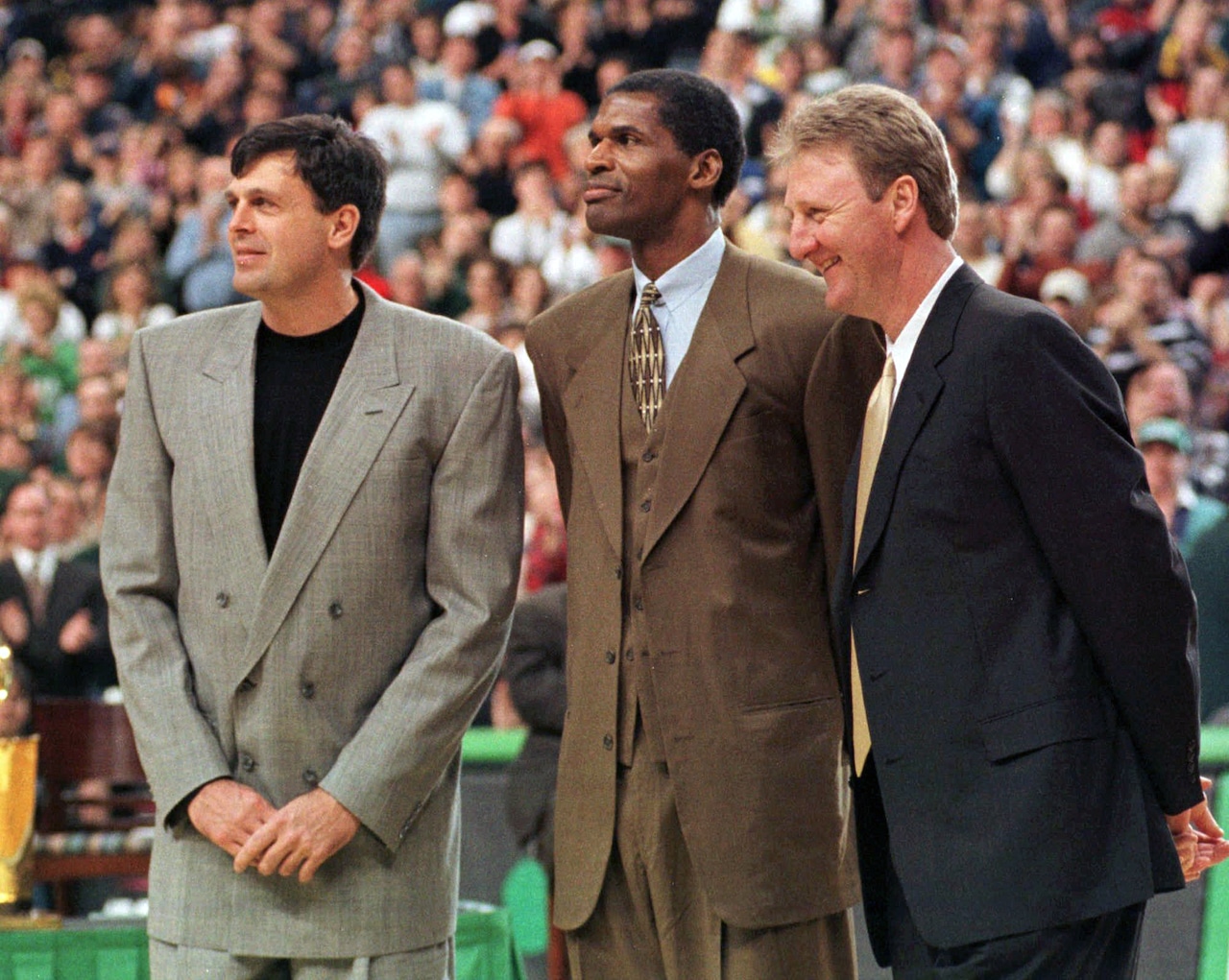
The Celtics’ Big Three still hate Bill Laimbeer — There’s nothing wistful as Larry Bird, Kevin McHale and Robert Parrish talk about the Pistons’ dirty big man. They still hold Laimbeer in low regard when they talk about him decades later and they don’t love the rest of those Pistons team much either.
McHale comes off heroic throughout — For much of his career, McHale was perceived as talented but not nearly as fiercely driven as Larry Bird. But his willingness to play through considerable pain in 1987, trying to keep the Celtics’ repeat hopes alive, cements his place in Celtics’ lore.
The Celtics 1991 series win over the Pacers gets just due — So many retrospective looks back at the Big-Three-era Celtics don’t spend much time with the 1991 first-round series against the Chuck Person-Reggie Miller led Indiana Pacers.
The documentary does a nice job revealing it as one of the last times that Larry Bird was still Larry Bird.
Oddly, the episode makes no mention of Bird being on the Dream Team.
James Worthy is everyone who hates the Celtics — While Pat Riley and Jerry West both look pained to talk about the Celtics, James Worthy seems excited that he’s allowed to swear on HBO and likes being the spokesman for everyone watching who hates the Celtics.
Bill Walton’s man cave/rec room looks awesome – The filmmakers were fortunate to have interviewed Walton before he died a little less than a year ago. Walton’s unique perspective is fun to listen to on just about any subject. His affection for the Celtics and his experience in Boston is always joyful to observe.
They interviewed Walton at his San Diego home in a room that looked very Walton and very, very cool.
The man cave/rec room/conservatorium appears to both a library filled with books as well as a shrine to his love of percussion instruments. Drums of any variety imaginable and cymbals are displayed everywhere.
Reggie Lewis tragedy is still coming — Throughout the episode, it felt Reggie Lewis death would be covered imminently. It started with Len Bias’ overdose death shortly after the Celtics drafted him in 1986 and felt like “Untenable Toll” might be bookended with two tragic deaths.
But Lewis’ death will presumably be covered in future episodes.
The later episodes are partially a love letter by Bill Simmons about the time he spent watching the Celtics with his father — Compared to all the heavy hitters the documentary features during its nine episodes, Bill Simmons’ dad doesn’t need to be included.
But if including those scenes with his father were part of the driving force that spurred Simmons, who is a producer, to make “Celtics City” altogether, then they were certainly worth it.
And who is to say? Maybe most people, given the same chance to create that memory with their father, would have done the same thing.