
Massachusetts is home to many Hispanic leaders who are driving change, shaping communities and charting their own paths forward.
MassLive is highlighting eight standout leaders from across the state — individuals poised to make an impact in 2025 and beyond. Their work spans education, entrepreneurship, politics, advocacy, innovation, and the arts, including a celebrated poet.
These leaders were selected through nominations from readers, Hispanic organizations, and the editorial teams at The Republican newspaper and MassLive.
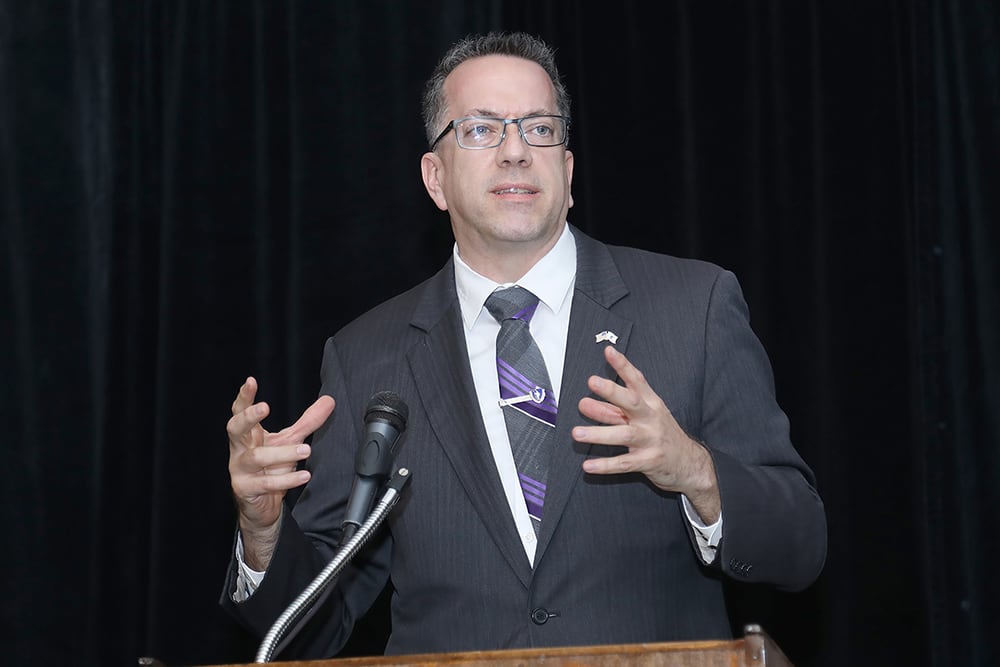
Aaron Vega, who’s had a varied career from yoga studio owner to former state representative, will take over as president and CEO of the Western Massachusetts Economic Development Council on Jan. 1, 2026.
(Photo courtesy of Ed Cohen, File)
Aaron Vega
Aaron Vega of Holyoke has had a varied career.
The Western Massachusetts native started out working on documentary films and later opened a yoga studio. Eventually, he became a Holyoke city councilor before joining the state Legislature representing the 5th Hampden district.
Vega is currently the director of planning and economic development for Holyoke. And soon, he’ll be doing the same for a much broader part of Western Massachusetts, taking over as president and CEO of the Western Massachusetts Economic Development Council on Jan. 1.
Since leaving elected office in 2021 and starting his current position in Paper City, Vega said one of the most important parts of his work has been helping spur housing production. In the past couple of years, he said, Holyoke has brought in close to $3 million in state subsidies for new housing projects.
He has also worked to stimulate tourism in the area and attract new businesses, making new housing all the more important. Part of that has been promoting the city’s cultural offerings, including art galleries and diverse food options.
“[We’re] really trying to make sure that Holyoke was talked about when we talked about Western Mass.,” Vega said. “We’re not building new cities in America, but we’re rebuilding cities, and that’s what we’re doing in Holyoke.”
As he transitions to leading the larger region, Vega said one of the most important goals is increasing the population, which would in turn increase school funding and governmental representation at the state and federal levels. But to do that, Western Massachusetts needs more housing, entertainment and jobs. In particular, he sees food science and computer technology as industries the region wants to attract.
Vega wants people to view Western Massachusetts as a hub, similar to Cambridge being considered a technology or biotech center.
“Because it’s so big and spread out, we have to think of ourselves as a hub, as a place where, whether you’re in Greenfield or you’re in Chicopee, you know that you’re part of this Western Mass. ecosystem,” he said. “I want to make sure that everyone in Western Mass. is pulling on the same rope.”
Even when he’s not at work, Vega is often still leading the way to grow the community’s arts and culture. He sits on the boards of the Community Foundation of Western Massachusetts and New England Public Media, and serves as chair of the cultural nonprofit Mass Humanities.
Vega’s heritage plays a big part in his work. His father, Carlos Vega, came to Holyoke as a young child from Ecuador, and despite his family’s struggles, eventually became a community leader. He is memorialized by the Carlos Vega Fund, another charity organization his son helps lead, which supports grassroots social justice efforts.
He is particularly passionate about promoting Latino-owned small businesses and providing opportunities for those who need them.
“I understand the struggles of living paycheck to paycheck. I understand the struggles of new Americans coming here,” he said. “It’s very important, I think, for Western Mass. to understand that there’s Dominicans, there’s Puerto Ricans, there’s Ecuadorians, there’s Mexicans, Colombians. But together we make up this Latino community.”
Gladys Vega
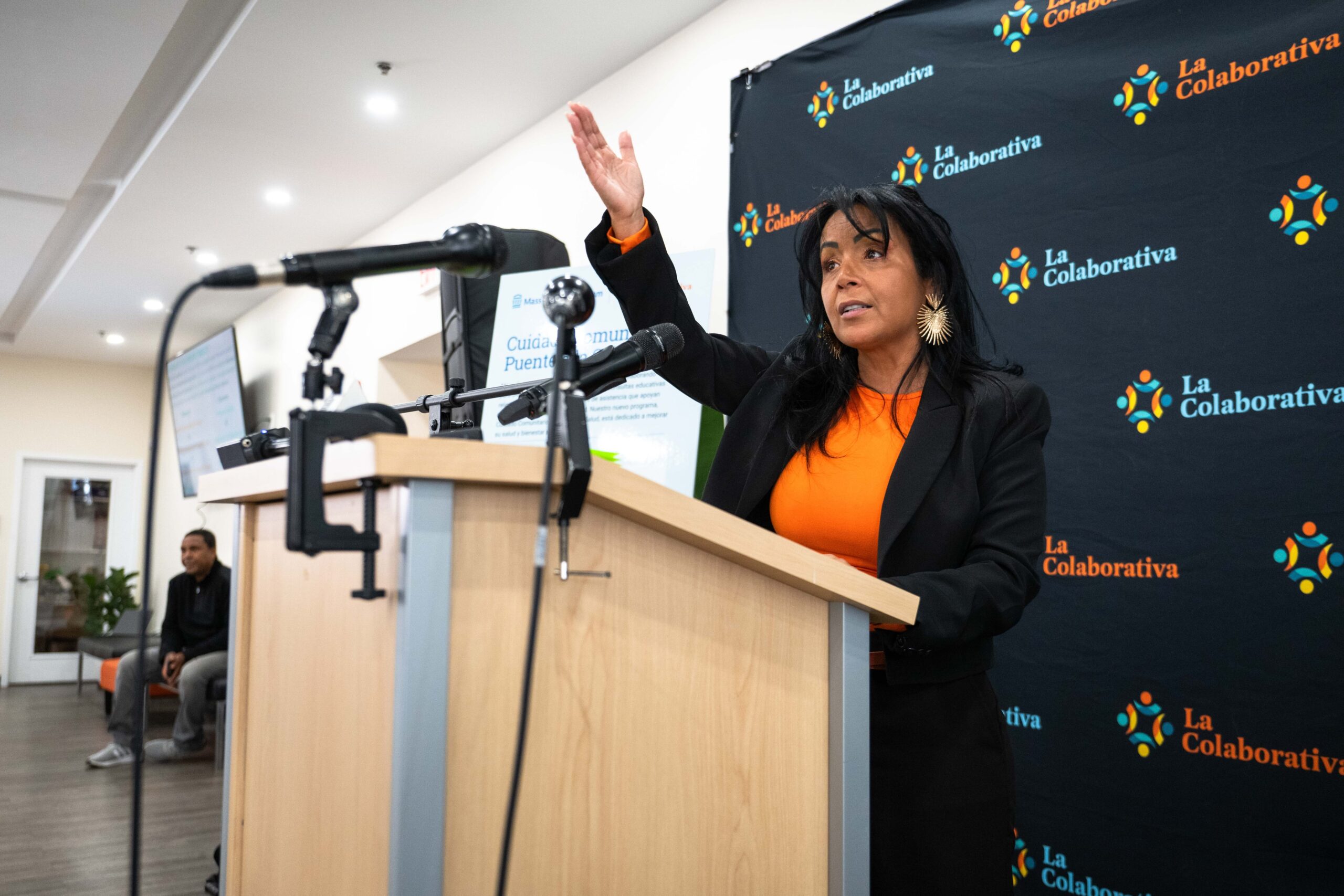
Gladys Vega, CEO and president of La Colaborativa, speaks during a press conference at La Colaborativa’s Survival Center in Chelsea, on Oct. 16, 2024, to announce La Colaborativa Community Care: Bridge to Health/Puente a La Salud, which will offer essential health care services. (Photo by Andrew Burke-Stevenson/The Boston Globe via Getty Images)
Gladys Vega
Gladys Vega is a leader with the nonprofit La Colaborativa in Chelsea and surrounding communities, including East Boston, Lynn, Everett and Revere. She and her team are a beacon of hope for many people in the midst of a crisis.
The nonprofit handles virtually any situation — tenant rights, immigration, trouble in school, youth employment — and makes an immediate impact.
By her estimates, La Colaborativa sees about 300 walk-ins a day, people who come to the organization in danger of domestic violence, problems with landlords and food insecurity.
As federal immigration officials target communities such as Chelsea, Vega is increasingly seeing anxious parents worried about their children and what may happen if one day U.S. Immigration and Customs Enforcement (ICE) detains them without warning.
“Parents are terrified of being detained when they’re walking their children to school,” Vega said. “When they’re on their way to work or on their way home from work. Families are completely horrified in the essence of thinking that they’re going to be kidnapped and forced to be separated.”
Her organization is helping families with training from legal experts, drafting contingency plans for children’s guardianship if parents are detained, and providing mental health services for often traumatic experiences.
Vega has worked at La Colaborativa for more than three decades, and her passion for her community is apparent to anyone who talks to her. She serves as president and CEO, a position she’s held since 2006.
La Colaborativa credits her as the architect of nearly all of the nonprofit’s programs, initiatives and community organizing campaigns.
Her work has been acknowledged by U.S. Sen. Elizabeth Warren, D-Mass., who visited the organization’s Survival Center and spoke with local residents anxious about the federal crackdown.
“We are in this fight together,” Warren told one mother.
Vega is also vice chair of the Governor’s Advisory Council on Latino Empowerment, which was established in 2023.

Elias Torres is the founder and CEO of Agency and co-founder of Drift, a Boston-based marketing and sales software maker. (Kevin Thai/Courtesy of Agency)
Elias Torres
Elias Torres of Belmont is onto his third startup, Agency, with a goal of generating $1 billion in revenue with 100 people.
The former HubSpot executive wants to redefine customer experience with his company, and says we are living in “super interesting times” amid advancements in AI technology, according to a recent podcast episode by Sequoia Capital.
His vision for the Boston-based Agency is to bring AI-led customer experience to scale “beyond our wildest imaginations without needing a human at every step of the way.”
He’s worked with companies as a consultant that struggled to scale their customer service operations, and built a model that learned from every customer interaction and classified what worked and what didn’t. From there, he began tailoring his advice to each customer, including videos that explained the full benefits of a company’s services.
The moment clicked for him, Torres said on the podcast, and he and a partner decided to “disrupt the entire industry” to solve the problem of companies that want to scale the customer experience.
Torres grew up in Nicaragua during a communist era, and he told the podcast that he remembered growing up having just enough food for the next meal.
“It’s a lot of scarcity, right?” Torres said. At 17, when he arrived in America, he worked cleaning offices and at McDonald’s, he told the podcasters.
Fast-forward to the late 1990s, and he’s working at IBM building a chatbot to look up people’s phone numbers. Before Agency AI, he co-founded and worked as chief technology officer at Drift, a Boston-based marketing and sales software maker.
Drift was acquired by Vista Equity Partners in 2021. The new funds brought the company’s valuation to over $1 billion.
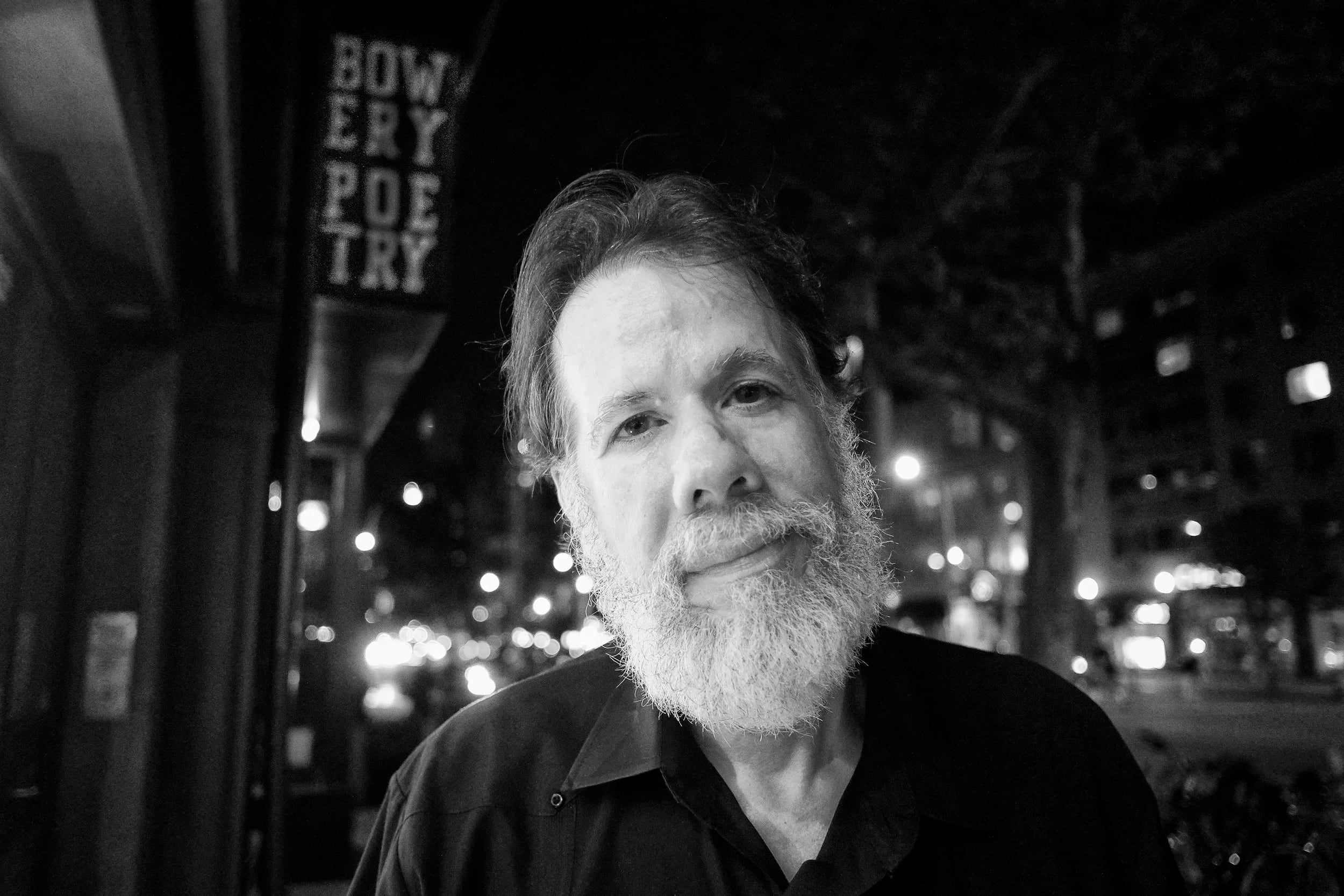
Martín Espada, poet, lawyer, academic, advocate — and winner of the National Book Award. (Photo by David González, courtesy of Martín Espada)
Martín Espada
The gift of a book changed Martín Espada’s life. And that gift might have changed your life as well.
Not long after he dropped out of college, Luis Garden Acosta, a leader in New York City’s Puerto Rican community, handed Espada a poetry collection and a prediction.
Garden Acosta told him, “You’re going to be a poet.”
Espada took the book, “Latin American Revolutionary Poetry,” and grunted some perfunctory thanks, he recently recalled to MassLive.
“Then I looked at it,” Espada, who is of Puerto Rican descent, said. “I was hooked. I realized I belonged to a history, and I was gonna honor it.”
Decades later, Espada, now 68, teaches poetry at UMass Amherst, and he has a National Book Award under his belt. And, perhaps most importantly, he believes in the power of art as advocacy.
As a young adult, Espada used his skill with words to advocate for underrepresented members of the Latino community in Massachusetts through the legal profession.
After graduating from Northeastern University Law School in Boston in 1985, he worked for a nonprofit law firm that fought to preserve bilingual education, and then as a tenants’ rights lawyer in Chelsea.
Though Espada published his first book of poetry in 1981, it wouldn’t be until 1990, when he published “Rebellion is the Circle of a Lover’s Hands”, that he began to win awards and gain notoriety.
“The fact that I was a poet-lawyer was something everybody found strange. Whether it was the press or people in my life, the lawyers didn’t understand the poetry, the poets didn’t understand law,” he said. “I was regarded as a sort of strange creature, like something out of Greek mythology, with the body of a lawyer and the head of a poet running out of the woods.”
Throughout his career, Espada worked to bring poetry to a vast range of communities across New England and the country.
He’s done poetry readings at a boxing gym in Willimantic, Connecticut, a tortilla factory in Grand Rapids, Michigan, and at the Worcester County House of Corrections in West Boylston.
“Self-expression builds self-confidence. Self-confidence leads to self-defense in an often hostile world for the Latino community,” he said. “It’s a hostile world for many Latinos, and more and more so every day.”
In April, Espada published his latest book of poetry, “Jailbreak of Sparrows.” Since then, he’s continued his advocacy in Massachusetts, giving poetry readings at the College of the Holy Cross and Worcester State University, and hosting an immigrants’ rights fundraising event in his home community of Shelburne Falls.
“Part of what leadership means in the Latino community and beyond is defending the most vulnerable people in our community,” he said.
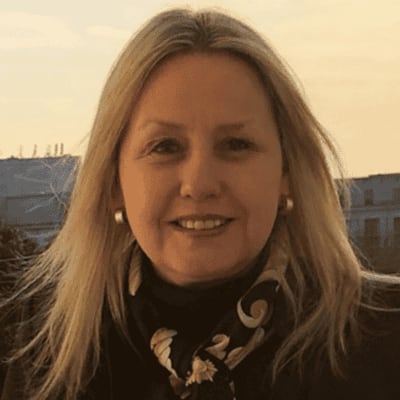
Carolina Alarco is a biotech executive with more than 25 years of experience in the biopharmaceutical industry. Founder of Latinos in Bio and BioStrategy Advisors. (Courtesy of Carolina Alarco)
Carolina Alarco
Not only is Carolina Alarco a leader of life sciences in Massachusetts, but she also works to empower and uplift the work of other Latinos working in the industry.
She founded the Latinos in Bio nonprofit in 2021, an organization that has grown to more than 1,400 members and seeks to forge career paths for its members.
She also founded the consulting firm, BioStrategy Advisors, which provides expertise to biotech companies, from small startups to large firms.
Alarco serves on several boards in Greater Boston, including the Mass General Hospital Board of Trustees, and brings her 30 years of experience in the biopharma industry across her many leadership roles.
She moved from Peru to Boston at 26 to earn a graduate degree in business at Harvard University, then joined a company as a marketing specialist in its early days of a new product. She left 15 years later, having served as its vice president of international commercial operations.
When she first joined Genzyme (now Sanofi) in the mid-1990s, it was one of the few biotech companies in an emerging industry. She was the only Latina in the company, and among a few in the industry as a whole.
Based on data tracked by her nonprofit, Alarco estimates that about 12% of the biotech workforce identifies as Latino — the 2023 U.S. Census estimated that about 20% of the U.S. population is Hispanic.
After leaving Genzyme, where she was a vice president, she was president at Aegerion Pharmaceuticals and then president at Novelion Therapeutics, until their respective exits. Both were commercial-stage, publicly traded Biotech companies.
As for the future of biotech?
“Just wonderful, wonderful technology that is coming out,” Alarco said. “Great companies that have grown from being startups to being large places to work and bringing wonderful therapies to patients, which is the most important thing … That intersection of medical devices, data collection AI will clearly advance medicine at a pace we have not seen before. Ten years from now, it’s going to be a revolution in terms of therapy.”
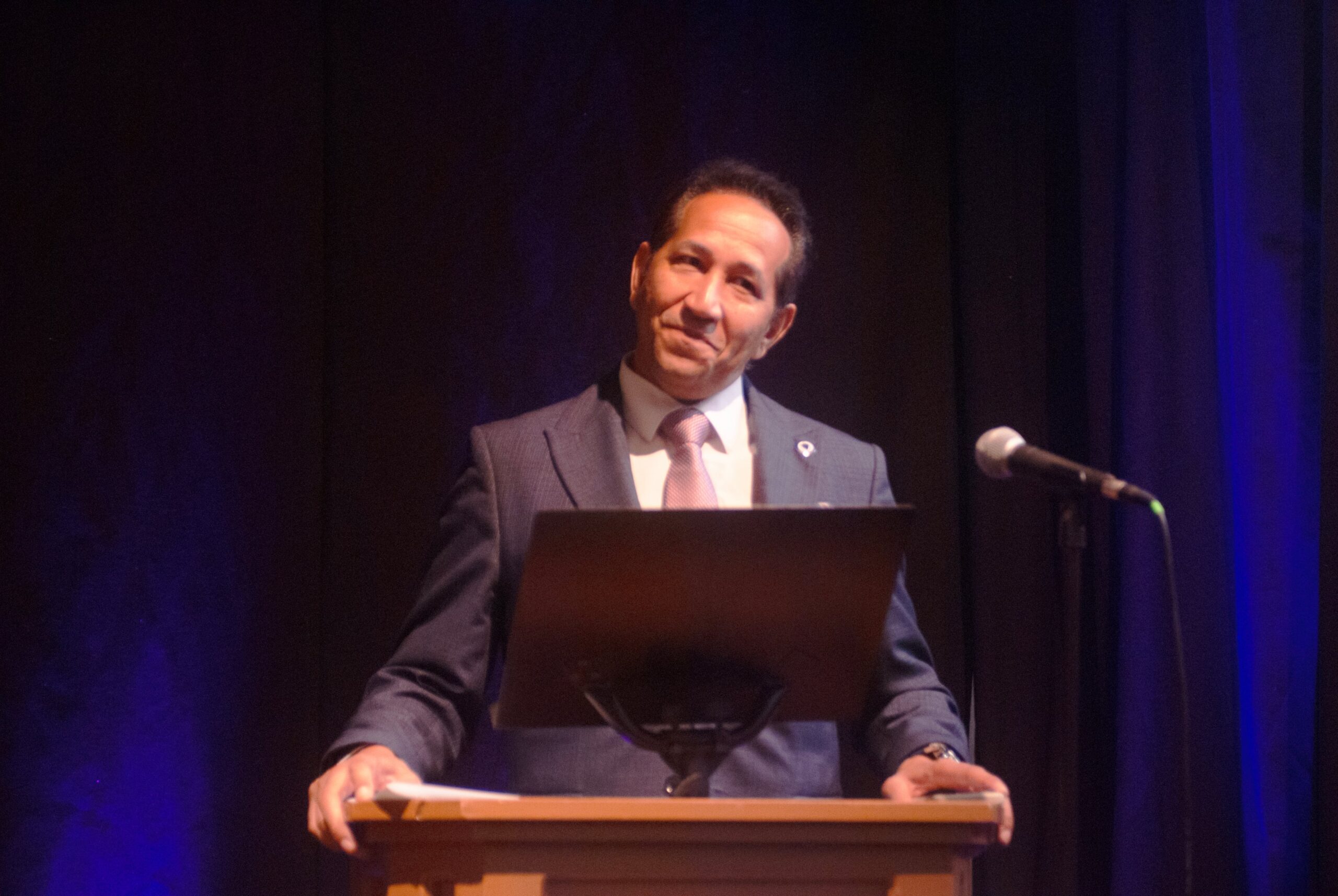
State Rep. Carlos Gonzalez speaks at the groundbreaking ceremony for a new elevator at The Drama Studio in Springfield on Sept. 24, 2025. (Ashley Potter/The Republican)
Rep. Carlos González, 10th Hampden
Rep. Carlos González, 10th Hampden, was first elected to the State House in 2014, and he counts the 2020 police reform bill as one of his most significant accomplishments.
The Springfield lawmaker helped negotiate the final version of the law that created the Peace Officer Standards and Training Commission, a police oversight agency. It provides the public with greater transparency into police officers disciplined for misconduct.
The commission certifies law enforcement officers, provides training, and disciplines officers when appropriate. The goal is to increase public confidence in law enforcement.
González said the commission’s name refers to “peace officers” because lawmakers want to change how officers are viewed in their communities.
Among other recent accomplishments, he led negotiations in the state’s 2024 gun reform bill, which cracks down on hard-to-trace “ghost guns.”
His advice to young adults aspiring to become leaders in their field?
“Education is important, but life experiences are what I believe have allowed me to be as successful as I have been because I was facing the challenges of the past,” he said. “Being able to see my mom and others overcome those challenges — whether poverty, lack of housing, lack of ability to have an appropriate meal, or the lack of being able to pay your bills, or get the best employment opportunity — those issues are not barriers, they are opportunities to learn and grow.”
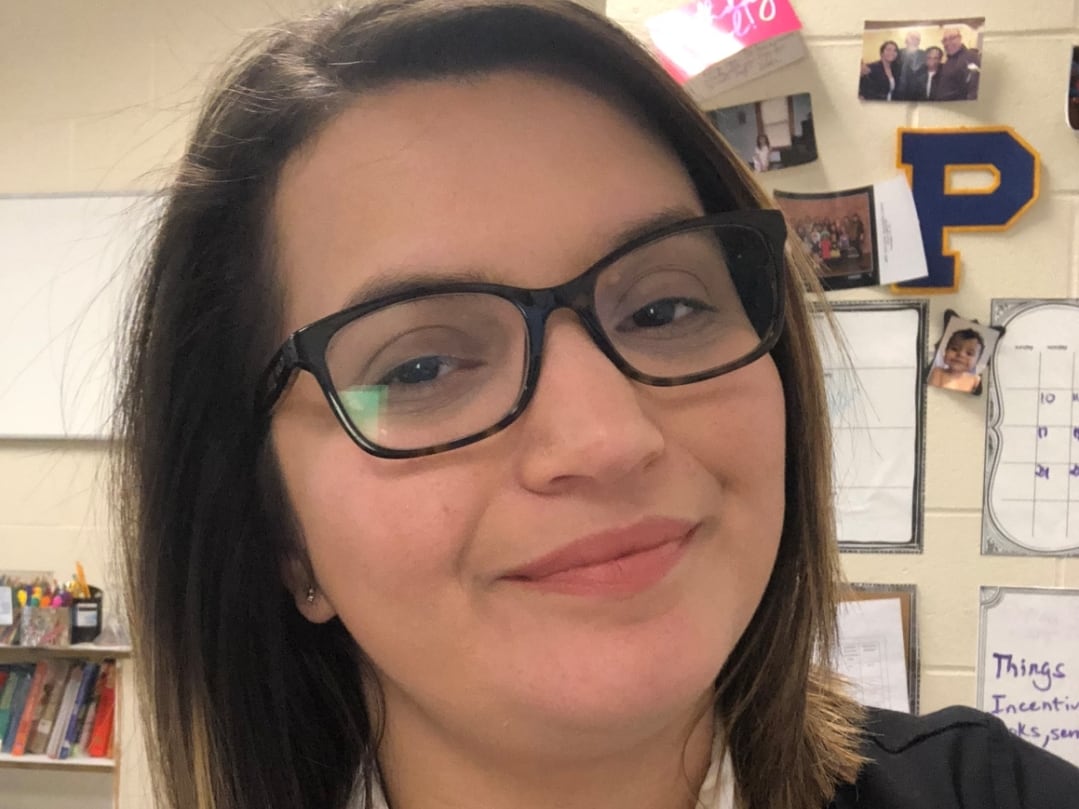
Jazebel Bermudez Vera works at a Springfield charter school as a multilingual learner coordinator. (Courtesy of Jazebel Bermudez Vera)
Jazebel Bermudez Vera
When Jazebel Bermudez Vera walked into her kindergarten classroom in Holyoke, she spoke only Spanish.
“In class, there were no programs, no supports. Only confusion,“ she wrote in an op-ed recently published in The Republican.
“That experience stayed with me,” she continued, “and it’s why, as a multilingual learner coordinator today, I’m determined to make sure no student feels that their home language is a liability.”
Bermudez Vera, 40, was born and raised in Holyoke in a Spanish-speaking environment. Her parents are from Puerto Rico and settled in the Paper City.
She was inspired by her grandmother to choose a career in education, especially as an English Language Learner teacher. Her grandmother was unable to attend school due to Puerto Rico’s struggling economy in the 1950s.
“Knowing she had to stop her own education to help her family and that she’s always pushed me to do better, to do more, and she’s always said, ‘I wish I got to learn what you get to learn,’” Bermudez Vera said, her voice full of emotion.
She started her career as a paraprofessional in Springfield Public Schools in 2012 and became an English Language Learner teacher in Holyoke Public Schools in 2016, where she rose to ELL lead. In January, she became a multilingual coordinator and instructional coach at Veritas Preparatory Charter Public School in Springfield.
Working under the guidance of trained professionals, she wrote curriculum units for the district while teaching in Holyoke.
“One of my favorite units is the one related to Dean Tech (William J. Dean Tech High School), which is vocational education,” she said. “It’s a language for vocational education, and it’s based off … how to write procedures. Speak like your cosmetologist, write like a cosmetologist, read like a carpenter, speak like an electrician and how to do things in their related programs.”
She presented the curriculum unit at the 2022 Massachusetts Association of Teachers of Speakers of Other Languages conference.
At Veritas, her position involves promoting language acquisition while, in collaboration with other teachers, adapting teaching methods to support English language learners so both student and teacher get the support they need to be successful.
She gave an example of a student who wasn’t doing well in math and science. When the student was unable to verbalize what was hindering him, Bermudez Vera coaxed him to write it down on a sticky note.
“I hate math. I hate science. I’m too confused,” he wrote.
That allowed Bermudez Vera to work with the student’s teachers on strategies to help him succeed, which he did. In the end, it was a language issue rather than a lack of math and science skills, she said.
In her work, she is a strong proponent of changing the mindset of educators and policymakers — and students — so they view multilingualism as a valuable asset rather than an impediment.
“My greatest achievement? It’s being able to advocate for students and help them understand how they learn,” she said. “And then help them advocate for themselves in their own learning.”
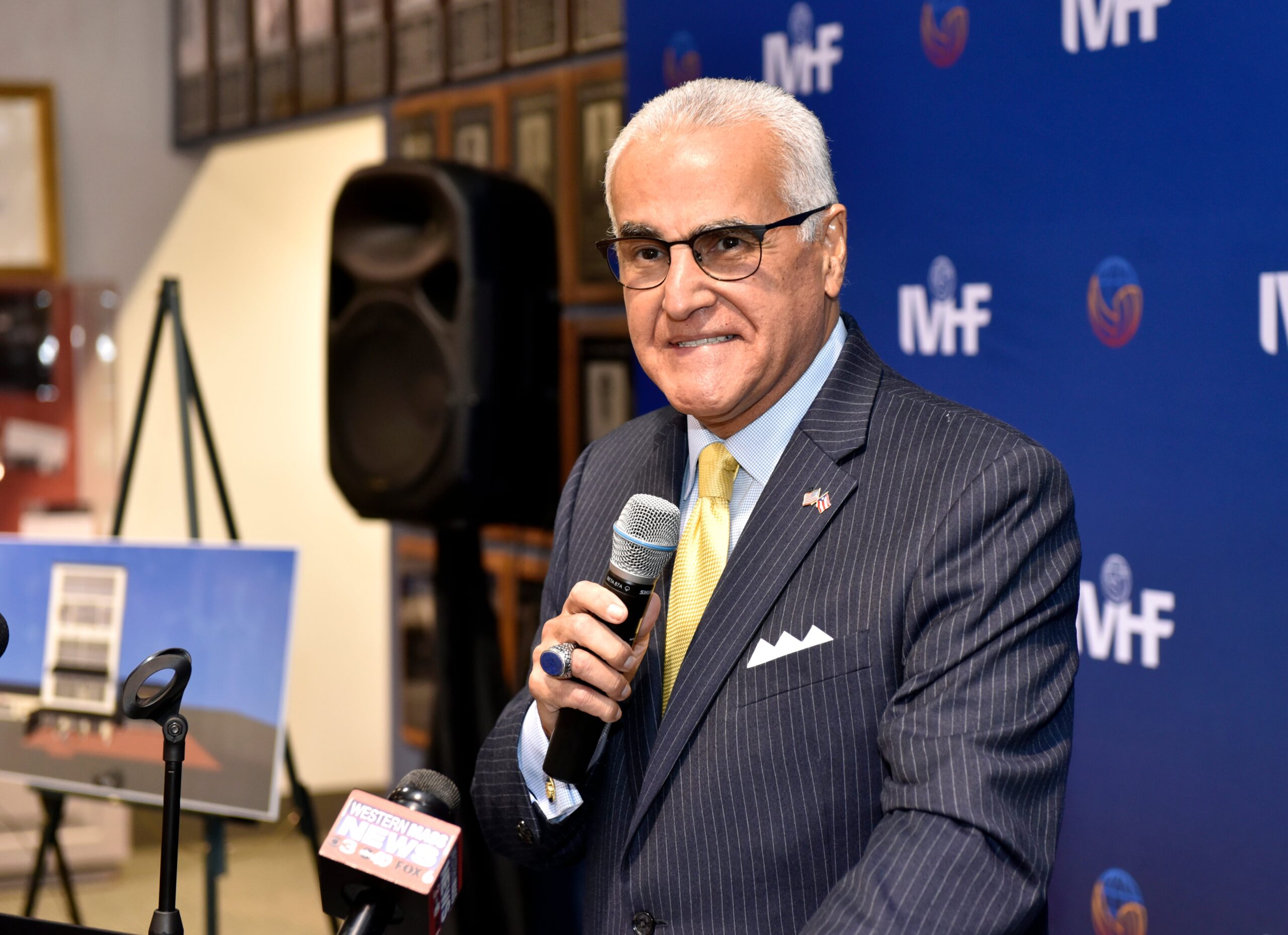
Springfield entrepreneur Cesar Ruiz, head of the USA International Sports Complex Group, speaks during a Feb. 6, 2024, press conference where he announced a project to build a new International Volleyball Hall of Fame and a new sports and recreation complex in Holyoke. (Don Treeger/The Republican)
Cesar Ruiz
Springfield Businessman Cesar Ruiz puts his money where his mouth is.
The entrepreneur has business interests across Holyoke, including the Wyckoff Country Club and a planned sports complex tied to the International Volleyball Hall of Fame.
He is also the CEO of Golden Years Home Care Services.
In August, he launched a new political action committee, with new safeguards but the same goal: electing Latino candidates.
“Nearly 1.5 million Latinos call Massachusetts home, yet Latino voter turnout remains in the single digits in presidential elections and even less in state and local elections,” Ruiz said when he announced the formation of the Latino Agenda Independent Expenditure PAC.
“This is a clear sign of disengagement as well as an opportunity to activate Latino voter power, which The Latino Agenda intends to do,” he said.
A year ago, Ruiz dissolved his old PAC — the Hispanic Latinos Leaders Now Independent Expenditure Committee — and agreed to donate $190,000 to charity as punishment for breaking state campaign finance laws, The Republican reported.
In 2023, the old PAC donated money to candidates in Holyoke, including Kocayne S. Givner, Tessa Murphy-Romboletti and Jose Maldonado Velez, who received $250 each.
Candidates Israel Rivera, Jenny Rivera, Jannelle Mojica and Axel Fontanez each received $500, according to The Republican’s reporting at the time.
Under state law, independent expenditure PACs may not contribute to candidates or other political committees, except for other Independent Expenditure PACs or ballot question committees. They cannot coordinate, directly or indirectly, with campaigns or contribute money to them.
Ruiz owned the mistake, telling The Republican that the violations of campaign finance law were inadvertent and stemmed from not knowing the rules.
“I liken this situation to the time-worn phrase, ‘We were flying the plane as we were building it,’” he said. “We wanted to be engaged in last year’s election process.”
For the new PAC, Ruiz will rely on the advice of people who have run political action committees and campaigns, its director, Tomás Gonzalez, said in a statement.
In addition to Ruiz, the PAC will raise money from other donors through the rest of 2025. PAC officials plan to champion issues and indirectly support Latino candidates from across Massachusetts in the 2026 races, Gonzalez said in an interview.
That would include state legislative and U.S. House races.
As of August, Gonzalez said the progressive-leaning Latino Agenda Independent Expenditure PAC won’t support primary challenges to such senior Democrats as U.S. Sen. Ed Markey or U.S. Rep. Richard E. Neal.
Both now face primary challengers.
Ruiz, then 25, was the first popularly elected Latino to the Springfield School Committee. He is a member of the Western Massachusetts Economic Development Council, serving as clerk.
MassLive reporter Susannah Sudborough contributed to this report.
If you purchase a product or register for an account through a link on our site, we may receive compensation. By using this site, you consent to our User Agreement and agree that your clicks, interactions, and personal information may be collected, recorded, and/or stored by us and social media and other third-party partners in accordance with our Privacy Policy.