

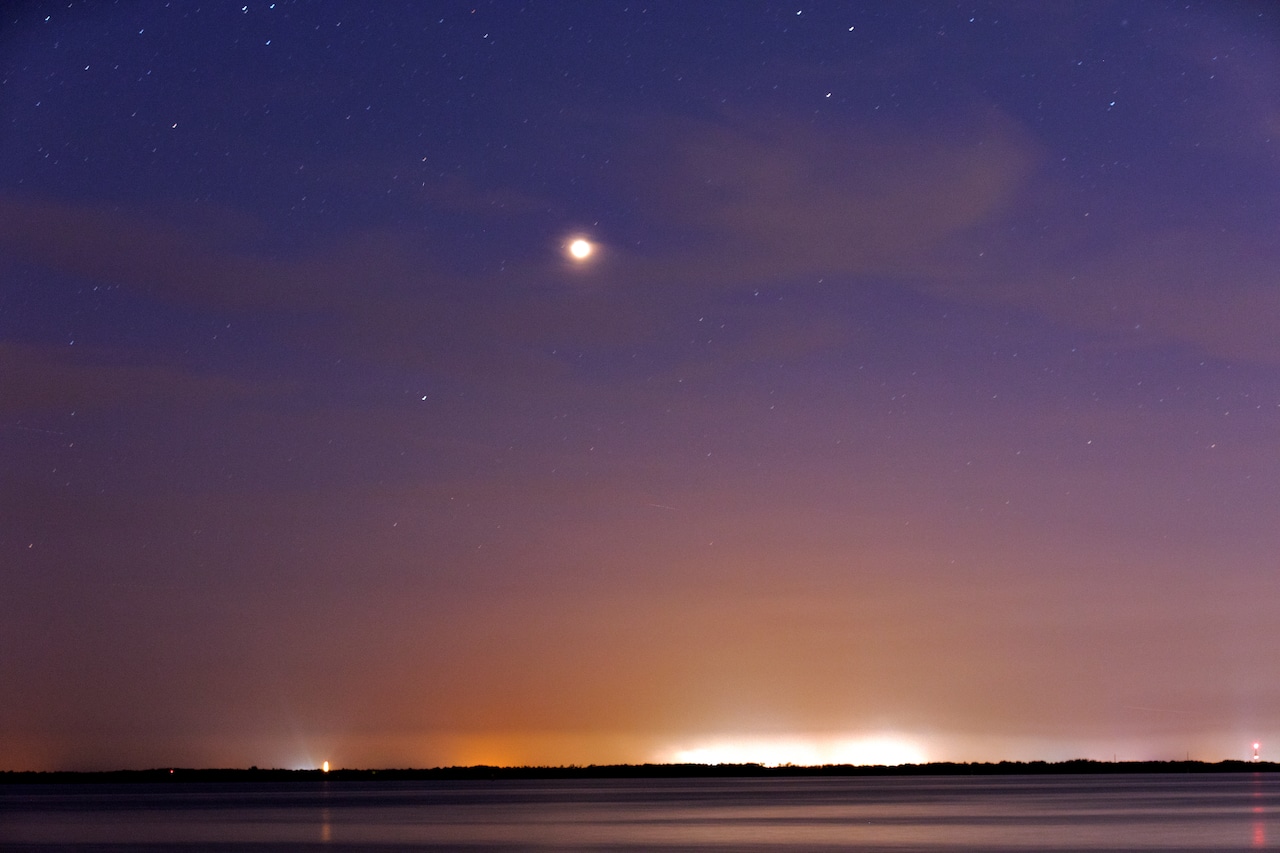
All of Earth’s planetary neighbors — with the exception of the sun — are about to align in a planetary parade in the night sky at the end of February.
Saturn, Mercury, Neptune, Venus, Uranus, Jupiter and Mars should all be visible in the night sky on Friday night, according to StarWalk, the website for the star-tracking app on mobile devices.
NASA describes this type of alignment — in a term used by both professional and amateur astronomers — as a planetary parade. While it’s not unusual to see two or three planets on average, sometimes four or more shine among the stars, mostly visible to the naked eye.
Some of the planets in the night sky are likely to be difficult to see. Following a recent conjunction between Mercury and Saturn, both are likely to be too low along the horizon and too dim for stargazers to see, according to NASA.
Two other planets that will be tricky to spot are Uranus and Neptune, two gas giants at the furthest end of the solar system. StarWalk recommends using binoculars or a telescope to see them.
Each of the planets should be visible in the direction of several constellations.
Mars should be seen in the direction of the constellation Gemini, StarWalk stated. Jupiter should be in the direction of Taurus, Uranus should be seen within Aries, and Venus and Neptune should be seen towards Pisces. To the west, Mercury and Saturn should be visible toward Aquarius.
With a new moon in the night sky, all of the planets should be easier to spot.
There’s another chance to see a smaller planetary parade in 2025, with four planets visible all at once after sunset in late August, NASA said.