
NORTHAMPTON — When people break up with their partners, many write about it in journals or start texting friends.
But when a bad romance rocked Western Massachusetts native Rio Contrada, he responded by writing and directing a feature film about it in Hollywood.
“I dated a school psychologist who cheated on me and gaslighted me,” he told The Republican. “When that happened, I started to write this piece. There was this juvenile take of, ‘How could she do this me,’” he said.
Contrada, 34, was raised in Florence and went to Northampton High School. After graduating from Emerson College in Boston, he moved to Los Angeles to pursue a career in television and film.
He has just completed his first movie, “Splinter,” and after premiering it at film festivals in California, he will be screening it before a Pioneer Valley audience on Dec. 22 at the Academy of Music in Northampton.
“I’m thrilled. It’s always good to have a home crowd. I’m excited to see how an audience of people who share my background and values will take the movie,” he stated.
“Splinter” tells the parallel stories of an adult woman and a little girl, tied together by trauma.
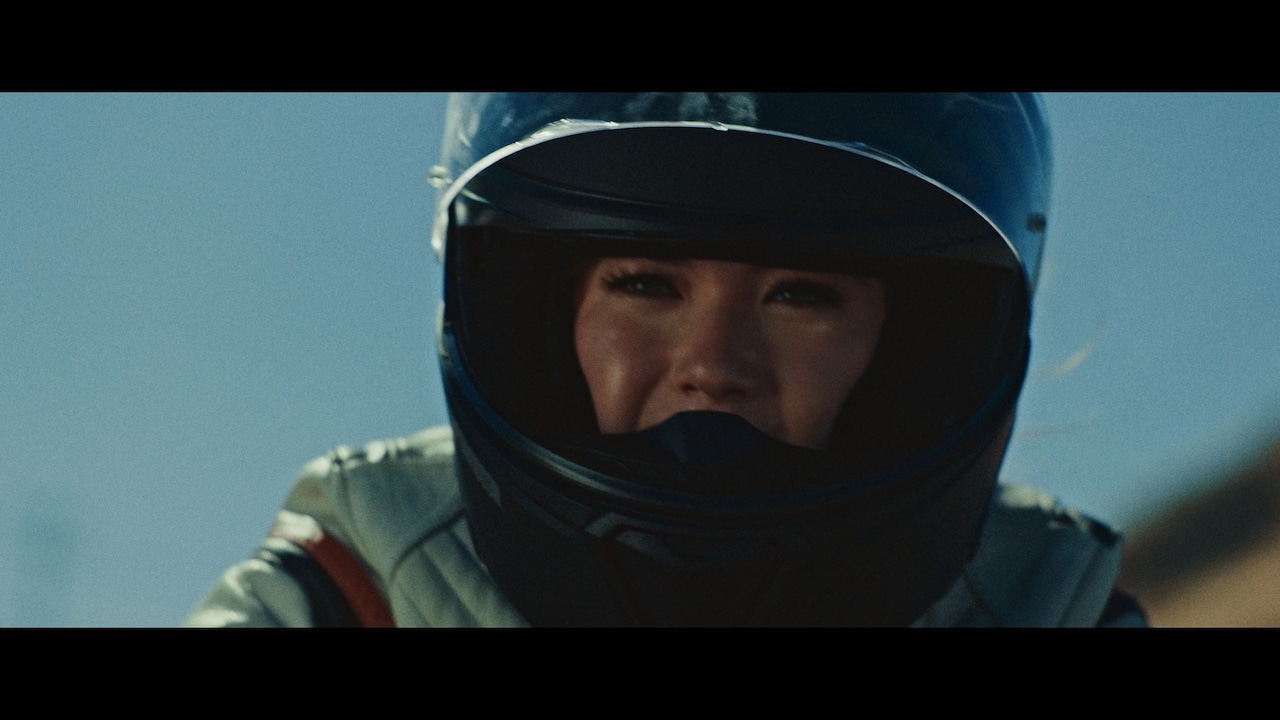
“It’s about a motorcycle riding, pill-popping school psychologist who has to confront her own history of trauma in order to help the second grader she’s working with,” explained Contrada.
The writer-director says the second grader reminds the psychologist of herself. When the child starts biting classmates and refusing to speak, the counselor concludes the little girl is also a victim of trauma.
Fast bikes and sex
In the movie, the character of the therapist chooses a “fast life” instead of dealing with her demons.
“She been riding a motorcycle, doing drugs, having all of the sex. That kind of living fast is a way to avoid meditating on problems we have,” said Contrada.
By the time the closing credits roll on this hour-and-a-half film, Contrada hopes his audience understands mental health care workers are neither superhuman nor immune from their own psychological challenges.
“A lot of people have this sense that people in mental health fields have their (stuff) together, that they’re androids who exist outside of the human condition. In reality, psychologists, therapists, social workers are people that have their own problems,” he said.
When Contrada screens the film in Northampton, he said it will be a tribute to mental health care professionals. He said he plans to donate all proceeds from the showing to the Center for Human Development in Springfield.
Emmy Award-winning actress Debbie Allen plays a prominent role in “Splinter.” Contrada first met her on the set of “Grey’s Anatomy,” where she stars as Dr. Catherine Fox.
Allen is the show’s executive producing director and Contrada was her assistant. He also worked for her production company as director of development.
Managing a ‘Splinter’
The full cast of “Splinter” includes 18 actors and performers. Contrada manages them along with a staff and production crew of more than 70 people.
While he doesn’t don the formal title, the Western Massachusetts native is also the movie’s producer. Since he has no corporate or private financing, he is funding the film with $8,000 he raised through crowdsourcing, along with his salary and savings.
“It’s a great way to make movies because you’re not beholden to a rich financer. But it’s also very difficult. It’s hard to get that money from a large portion of people and having your own money in the movie is not fun,” he said.
“Splinter” was filmed in and around Los Angeles and the Mojave Desert in Lancaster, California.
Contrada said he was able to cut production costs because of support he received from his friends at “Grey’s Anatomy,” who lent him cameras, motorcycles, props and a couple of actors.
“A lot of crew members offered me gear or advice. The movie wouldn’t have been possible if it weren’t for ‘Grey’s Anatomy.’ I got a lot of favors and stuff for free, which helped us save an inordinate amount of money,” he said.
Contrada said beyond his own involvement in the film, the production has strong ties to the four western counties. He said the entire soundtrack comprises original songs written and performed by local musicians.
“I wanted to maintain a connection between my work and my hometown. There’s a million brilliant musicians in Western Mass, just a really flourishing music scene. I went to high school with a lot of them,” he said.
Contrada said he didn’t set out to make a blockbuster—he just wants the film to carry a message of support for mental health care workers. He also advocates action, addressing and removing problems before they fester —like removing a splinter.
Contrada’s father, Fred, was a veteran journalist for The Republican, who died in 2018. The filmmaker said he’s already begun working on his next project — a movie about what divides and connects the generations. It will be based on his relationship with his father.